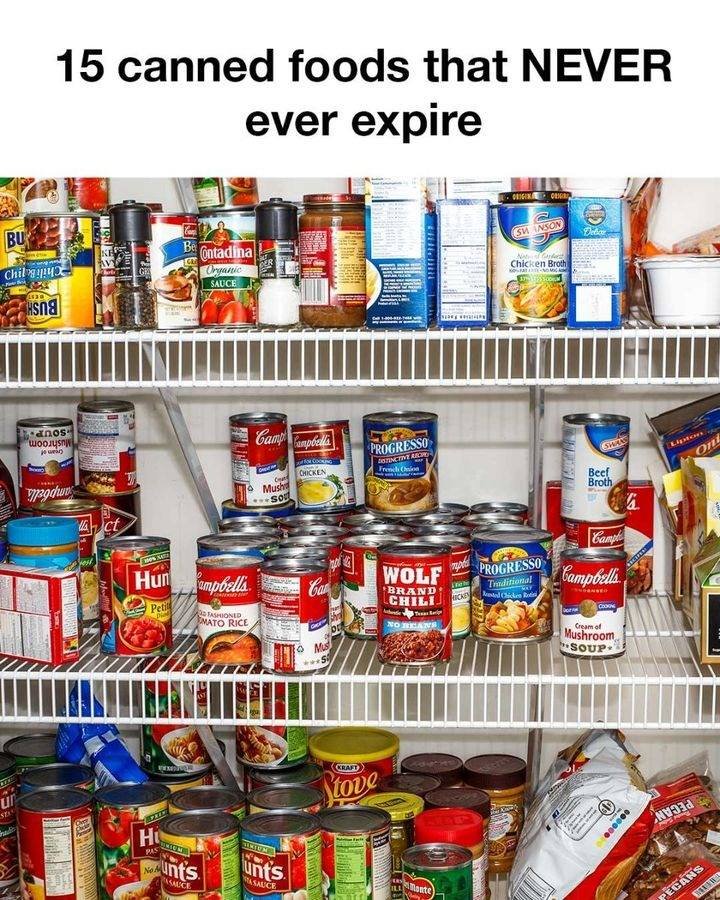
15 Canned Foods That Basically Never Expire (And Why They’re Smarter to Keep Than You Think)
Discover 15 canned foods with an incredibly long shelf life. Learn why they last, how to store them, and smart ways to use them safely.
I’ll admit it.
I used to toss canned food the second I saw a date that looked “old.”
Then I learned something surprising:
Most canned foods don’t “expire” the way we think they do.
In fact, many canned goods can last years — sometimes decades — when stored properly.
That doesn’t mean you should eat anything rusty from 1998. But it does mean that your pantry may be far more resilient than you realize.
Let’s break down 15 canned foods that have an exceptionally long shelf life — and why they’re worth keeping around.
First: What “Never Expire” Actually Means
In the United States, food date labels like:
-
“Best by”
-
“Best if used by”
-
“Use by”
…often refer to quality, not safety.
According to guidance from agencies like the United States Department of Agriculture, commercially canned foods stored properly can remain safe indefinitely, though quality may gradually decline.
The key word: properly stored.
That means:
-
Cool, dry place
-
No major dents
-
No rust
-
No bulging lids
Now let’s get into the list.
1. Canned Beans
Black beans, kidney beans, pinto beans — all extremely shelf-stable.
Why they last:
-
Low oxygen
-
High heat sterilization during canning
Stored at room temperature, they can last for many years.
2. Canned Tomatoes
Whole, diced, crushed — all have impressive longevity.
However, because tomatoes are acidic, they may lose flavor quality faster than low-acid foods.
Still, safety remains strong if the can is intact.
3. Canned Tuna
High-protein, compact, long-lasting.
Tuna remains safe for years when unopened and undamaged.
Great for:
-
Emergency meals
-
Quick lunches
-
Pantry protein backup
4. Canned Salmon
Like tuna, salmon has a long shelf life.
Bonus: It contains healthy omega-3 fats.
Just check for:
-
No swelling
-
No leakage
-
Clean lid
5. Canned Corn
Low acid. High stability.
Corn maintains texture and flavor surprisingly well over long periods.
6. Canned Green Beans
Similar to corn — low acidity equals strong shelf life.
Quality may soften slightly over time, but safety remains if sealed.
7. Canned Carrots
Another low-acid vegetable with excellent longevity.
8. Canned Peas
Compact, nutritious, and very shelf-stable.
Often overlooked — but great in soups and quick meals.
9. Canned Chicken
A highly underrated pantry staple.
It lasts for years unopened and offers fast protein when fresh meat isn’t available.
10. Canned Chili
Prepared chili is shelf-stable due to pressure canning and sealed environments.
Just note:
Flavor quality may fade after several years.
11. Canned Soup
Most commercially canned soups have long shelf lives.
Cream-based soups may change texture over time, but remain safe if the can is intact.
12. Canned Coconut Milk
This one surprises people.
Unopened coconut milk lasts much longer than expected.
Shake before opening — separation is normal.
13. Canned Pumpkin
Not just for Thanksgiving.
Low moisture and proper sealing make pumpkin puree very shelf-stable.
14. Canned Pineapple
Acidic but highly preserved through canning.
Quality may decline faster than vegetables, but still safe long past the printed date.
15. Canned Spam or Shelf-Stable Meats
Products like canned luncheon meats are designed for extended storage.
They’re widely used in:
-
Camping
-
Military rations
-
Emergency kits
Why Canned Foods Last So Long
Modern canning involves:
-
Sealing food in airtight containers.
-
Heating to destroy bacteria.
-
Removing oxygen.
-
Creating a vacuum seal.
This process eliminates harmful microbes and prevents recontamination.
The result?
Shelf-stable food that can last far beyond typical expiration assumptions.
Important: When NOT to Eat Canned Food
Never consume a canned product if you notice:
-
Bulging lid
-
Deep dents near seams
-
Leaking liquid
-
Strong foul odor upon opening
-
Spurting liquid when opened
If in doubt, throw it out.
Food safety always comes first.
Why This Matters in 2026
With rising grocery prices and supply chain fluctuations, more Americans are:
-
Building pantry backups
-
Reducing food waste
-
Planning emergency supplies
Canned goods offer:
-
Affordability
-
Stability
-
Convenience
-
Nutritional value
And knowing they last longer than you thought can save money and reduce waste.
Real-Life Scenario
Let’s say you find canned black beans dated “Best by 2022.”
It’s now 2026.
The can is:
-
Not dented
-
Not swollen
-
Stored in a cool pantry
In most cases, it’s still safe — though flavor may be slightly less vibrant.
That’s a huge difference from assuming it’s automatically bad.
Pros and Cons of Long-Lasting Canned Foods
✅ Pros
-
Long shelf life
-
Budget-friendly
-
Emergency-ready
-
Low prep time
-
Reduced food waste
❌ Cons
-
Possible sodium content
-
Flavor degradation over time
-
Texture changes
-
Nutrient decline after many years
Smart Storage Tips
To maximize longevity:
✔ Store between 50–70°F
✔ Keep away from moisture
✔ Avoid stacking too high
✔ Rotate older cans forward
✔ Label with purchase date
Frequently Asked Questions
1. Do canned foods really never expire?
They may lose quality, but properly stored commercial cans can remain safe for years.
2. What shortens shelf life?
Heat, humidity, and physical damage.
3. Can canned food last 10 years?
Some low-acid canned foods can last a decade or more if stored well.
4. Does freezing canned food extend shelf life?
No — never freeze unopened cans.
5. Is rust dangerous?
Surface rust isn’t always fatal, but deep rust compromising the seal is unsafe.
6. Are “best by” dates legally required?
They’re typically manufacturer guidance for peak quality.
7. Is older canned food less nutritious?
Nutrients may slowly degrade over time, but food often remains safe.
Quick Checklist Before Eating an Older Can
✔ Inspect lid
✔ Check for dents
✔ Look for leaks
✔ Smell after opening
✔ Heat thoroughly if applicable
Canned foods don’t “never expire” — but many last far longer than most people realize.
When stored properly, they can remain safe for years beyond the printed date.
Instead of automatically tossing older cans, inspect them carefully.
You might save money, reduce waste, and build a more resilient pantry in the process.
Have you ever thrown out canned food only to learn later it was still safe? Share your experience — smart pantry habits help everyone.