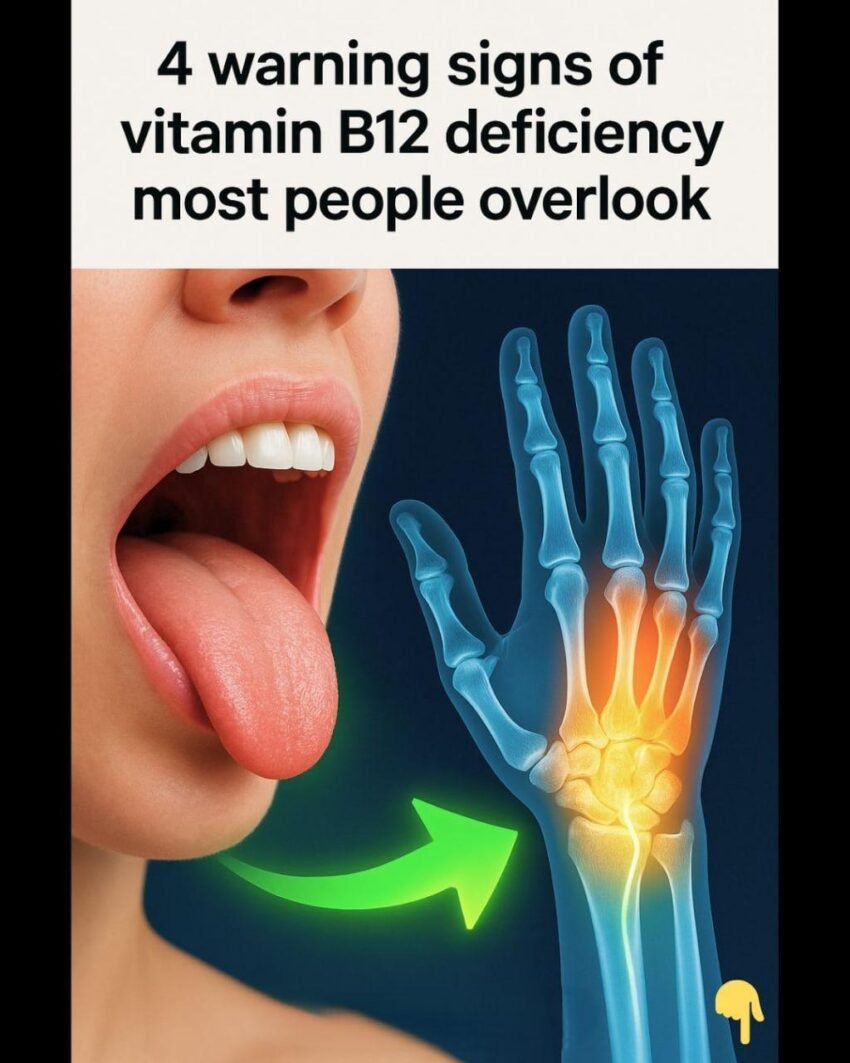
4 Alarming Symptoms of Vitamin B12 Deficiency You Can’t Ignore!
Vitamin B12 deficiency can silently affect your body. Learn the 4 key warning signs, why early detection matters, and how to protect your health.
Why Vitamin B12 Matters
Vitamin B12 is essential for energy production, nerve function, and red blood cell formation. Without enough, your body struggles to function properly, and symptoms may creep in gradually—making it easy to overlook.
Seniors, vegetarians, and people with digestive issues are especially at risk, but anyone can develop a deficiency. Catching it early can prevent serious long-term health problems.
1. Persistent Fatigue and Weakness
One of the most common early signs of B12 deficiency is unexplained fatigue:
-
Feeling tired even after a full night’s sleep
-
Weakness in arms or legs
-
Reduced stamina during physical activity
Why it happens: Vitamin B12 is critical for red blood cell production. Low levels mean less oxygen is delivered to muscles and organs, causing persistent exhaustion.
2. Numbness or Tingling in Hands and Feet
Vitamin B12 is essential for nerve health. Deficiency can cause neurological symptoms such as:
-
Tingling or “pins and needles” sensations
-
Numbness in fingers, toes, or extremities
-
Difficulty maintaining balance or walking
Ignoring these signals may lead to permanent nerve damage over time.
3. Cognitive Changes and Mood Swings
B12 plays a role in brain function and mood regulation. Deficiency can manifest as:
-
Memory lapses or difficulty concentrating
-
Confusion or brain fog
-
Irritability, anxiety, or depression
Early detection is crucial, as prolonged deficiency may mimic dementia or depression in older adults.
4. Pale or Jaundiced Skin
Vitamin B12 deficiency can affect red blood cells and bilirubin processing, leading to noticeable skin changes:
-
Pale complexion due to anemia
-
Slight yellowing of skin or eyes (jaundice)
-
Shortness of breath or dizziness along with skin changes
If these signs appear alongside fatigue or numbness, it’s a strong indicator of deficiency.
Who’s at Risk
Certain groups are more likely to develop B12 deficiency:
-
Seniors: Stomach acid production decreases, affecting absorption
-
Vegetarians and vegans: B12 is mostly found in animal products
-
People with digestive disorders: Celiac, Crohn’s, or chronic gastritis
-
Those taking certain medications: Acid-reducing drugs or metformin
How to Address B12 Deficiency
-
Blood Test: Only a doctor can confirm deficiency with a simple blood test.
-
Dietary Sources: Include animal products like meat, eggs, and dairy, or fortified plant-based foods.
-
Supplements: Oral B12 tablets or sublingual drops; injections may be required for severe cases.
-
Regular Monitoring: Especially for at-risk adults over 50.
Quick Prevention Tips
-
Eat B12-rich foods daily
-
Consider fortified cereals or plant-based alternatives if you avoid animal products
-
Discuss supplement options with your healthcare provider
-
Pay attention to early warning signs to prevent long-term complications
Vitamin B12 deficiency can sneak up silently, but the warning signs are clear if you know what to watch for:
-
Fatigue and weakness
-
Numbness or tingling
-
Cognitive changes and mood swings
-
Pale or jaundiced skin
Early recognition and intervention can restore energy, protect nerves, and support brain health. Don’t ignore these symptoms—your body is trying to tell you something important.