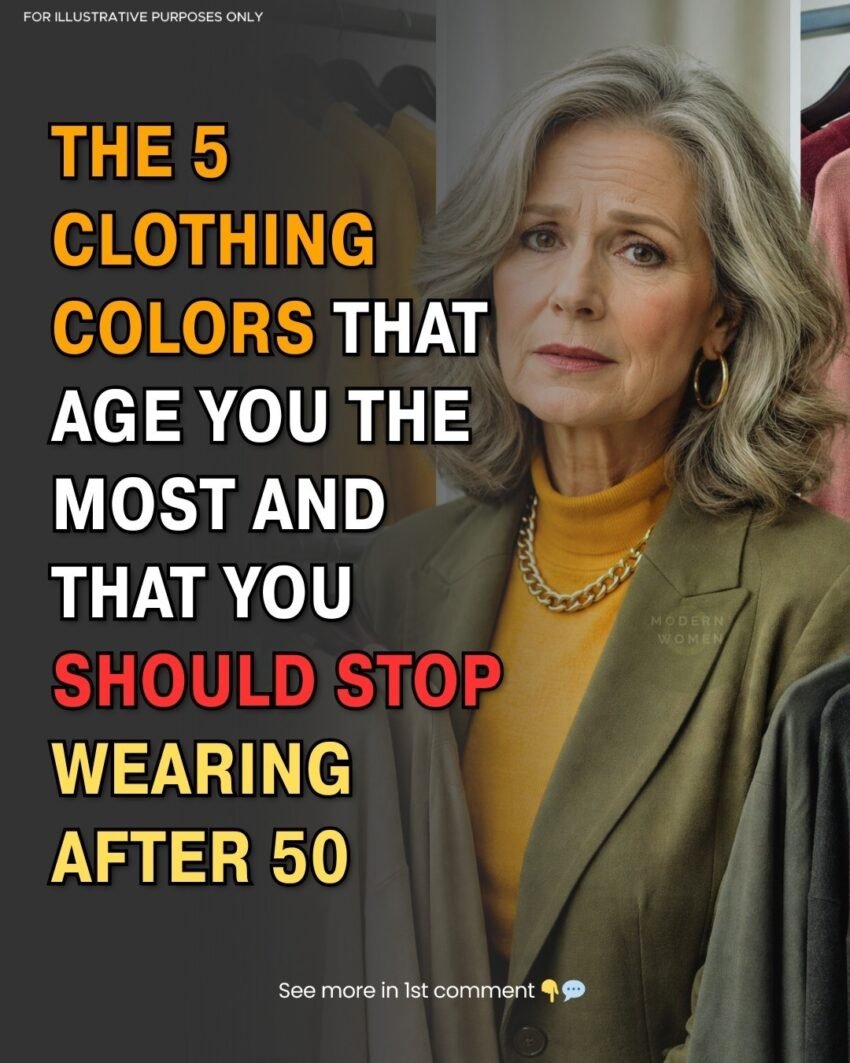
5 Clothing Colors That Can Make You Look Older After 50 (And What to Wear Instead)
Some clothing colors can unintentionally age your appearance after 50. Discover 5 shades that may add years—and the smarter color choices that brighten your look.
The Surprising Way Color Can Add Years to Your Appearance
You may have noticed something curious while getting dressed.
An outfit that once looked elegant suddenly feels… a little harsh. A sweater you used to love now seems to make your skin look dull or tired. Even though the style still fits, something about the color just isn’t as flattering as it used to be.
This isn’t your imagination.
As we age, skin tone, hair color, and natural contrast levels change. Shades that once looked fantastic in our 30s or 40s can sometimes emphasize fine lines, shadows, or uneven skin tone later on.
That doesn’t mean you have to abandon style after 50. In fact, many people say their fashion confidence improves with age.
But understanding which colors work best for mature skin can make a big difference.
In this guide, you’ll discover:
-
Five clothing colors that can unintentionally age your appearance
-
Why certain shades become less flattering over time
-
Better color alternatives that brighten your complexion
-
Practical styling tips for women and men over 50
-
Simple wardrobe adjustments that refresh your look instantly
Let’s start with why color matters so much.
Why Clothing Color Matters More After 50
As people age, several natural changes occur that influence how colors interact with the face.
1. Skin tone becomes softer
Pigmentation changes, and skin often becomes lighter or less even.
2. Hair color changes
Gray or white hair reduces the natural contrast that darker colors once balanced.
3. Facial contours shift
Certain colors can highlight shadows around the eyes or mouth.
Because clothing sits directly near the face—especially shirts, jackets, and scarves—the wrong shade can exaggerate these effects.
The right color, however, can:
-
Brighten the complexion
-
Make eyes appear more vibrant
-
Create a healthier overall glow
Now let’s look at the five colors that often work against mature skin.
1. Harsh Black
Black is a classic wardrobe staple.
But surprisingly, solid black near the face can be one of the most aging colors for many people over 50.
Why black can age your look
Black creates extremely high contrast against lighter or mature skin tones. This can:
-
Highlight wrinkles
-
Emphasize under-eye shadows
-
Make skin appear paler
It also absorbs light rather than reflecting it, which can make the face look more tired.
Better alternatives
Instead of pure black, try:
-
Soft charcoal
-
Deep navy
-
Espresso brown
-
Dark plum
These shades still feel elegant but are much gentler on mature complexions.
2. Muddy Olive Green
Olive green is trendy and versatile—but not all olive tones are flattering.
Certain dull or muddy variations can make skin look sallow or yellowish.
Why it can be aging
Mature skin often develops warmer undertones. When paired with muted olive shades, the result can create a washed-out effect.
More flattering options
Try greens with more vibrancy or clarity, such as:
-
Emerald green
-
Forest green
-
Teal
These colors add brightness and energy without overwhelming the face.
3. Pale Beige
Neutral colors are popular for minimalist wardrobes.
However, pale beige close to the face can blend too closely with skin tone, especially for people with lighter complexions.
What happens visually
When clothing matches skin tone too closely, the face can appear:
-
Dull
-
Tired
-
Less defined
Instead of highlighting your features, the outfit can make everything look flat.
Better neutral choices
Consider richer neutrals such as:
-
Camel
-
Warm taupe
-
Soft mocha
-
Cream
These shades still feel sophisticated but add depth.
4. Neon or Extremely Bright Colors
While bright colors can be fun, neon tones often overwhelm mature skin.
Colors like electric pink, neon green, or fluorescent orange can create too much visual intensity.
Why neon can be unflattering
Extremely bright pigments reflect light aggressively, which may:
-
Highlight uneven skin tone
-
Draw attention to wrinkles
-
Clash with natural hair color changes
Balanced alternatives
Instead of neon shades, try vibrant yet refined colors:
-
Coral
-
Raspberry
-
Turquoise
-
Cobalt blue
These shades feel energetic without overpowering your features.
5. Dull Gray
Gray is another classic color—but some gray tones can make skin appear lifeless.
Particularly flat, cool gray shades can emphasize dullness.
Why gray can age your appearance
Gray near the face may highlight:
-
Dark circles
-
Loss of skin brightness
-
Lack of contrast
Better gray options
If you love gray, choose warmer or textured versions:
-
Heather gray
-
Silver-gray with warmth
-
Gray layered with color
Pairing gray with a colorful scarf or shirt also helps brighten the look.
What Colors Usually Look Great After 50
While some colors may age the face, others can do the opposite.
These shades tend to complement mature skin beautifully.
Universally flattering options
-
Jewel tones (emerald, sapphire, ruby)
-
Soft blues
-
Warm reds
-
Berry tones
-
Soft peach
-
Muted teal
These colors reflect light in a way that adds life and brightness to the complexion.
A Real-Life Example
Imagine two outfits:
Outfit A
Black turtleneck
Dark gray blazer
The overall look is sharp—but the dark tones can deepen facial shadows.
Outfit B
Deep navy sweater
Soft berry scarf
This combination reflects light toward the face, creating a warmer and more vibrant appearance.
The difference isn’t dramatic—but it’s noticeable.
Common Color Mistakes People Over 50 Make
Even stylish wardrobes can fall into these traps.
1. Wearing too many dark colors
An all-dark outfit can feel heavy and dull.
2. Avoiding color completely
Some people stick to neutrals only, missing opportunities to brighten their look.
3. Matching skin tone too closely
Clothing that blends into skin tone reduces contrast.
4. Ignoring undertones
Warm vs cool undertones make a big difference in how colors appear.
Expert Styling Tips That Instantly Refresh Your Look
Small adjustments can transform your wardrobe without buying everything new.
Add color near the face
Scarves, necklaces, and shirts can brighten your complexion.
Use layering
Layering allows you to mix flattering colors with darker pieces.
Try softer fabrics
Materials like cashmere, silk blends, and soft cotton reflect light more gently.
Balance darker pieces
If wearing black, pair it with:
-
A colorful scarf
-
A lighter jacket
-
Jewelry that reflects light
Fashion Trends for Adults Over 50 in 2025
Modern fashion is shifting away from strict age-based rules.
Instead, trends focus on:
Personal expression
Comfort and individuality are becoming more important than following rigid style guidelines.
Elevated basics
Simple pieces with richer colors and high-quality fabrics.
Sophisticated color palettes
Stylists often recommend combining neutrals with one strong accent color.
Frequently Asked Questions
Do certain colors really make you look older?
Yes. Colors can influence how shadows, wrinkles, and skin tone appear.
Should people over 50 avoid black completely?
Not necessarily. Black can still work when balanced with lighter or brighter colors.
What colors make skin look younger?
Jewel tones, soft blues, berry shades, and warm reds often brighten mature skin.
Is it okay to wear bright colors after 50?
Absolutely. The key is choosing refined, balanced shades rather than neon tones.
Does hair color affect clothing choices?
Yes. Gray or silver hair often pairs beautifully with jewel tones and soft pastels.
Are neutrals still safe choices?
Yes—but richer neutrals like camel, navy, and cream tend to be more flattering than flat beige.
Do these rules apply to men as well?
Definitely. Color contrast and complexion changes affect everyone.
What’s the easiest wardrobe update after 50?
Adding colorful scarves, tops, or jackets near the face can instantly refresh your look.
Quick Style Checklist
Use this checklist when choosing clothing colors.
✔ Avoid harsh black near the face
✔ Skip dull olive tones
✔ Replace pale beige with richer neutrals
✔ Limit neon shades
✔ Choose vibrant jewel tones
Small adjustments can make a big visual difference.
Conclusion
Turning 50 doesn’t mean giving up style—it often means refining it.
The colors you wear play a powerful role in how your face looks. Some shades can unintentionally emphasize shadows or dullness, while others highlight your natural brightness and confidence.
By swapping out a few aging colors and embracing more flattering tones, you can create a wardrobe that feels modern, vibrant, and completely authentic to you.
The goal isn’t to follow strict fashion rules.
It’s to choose colors that help you look and feel your best.
If you’re updating your wardrobe, start with small changes—try a brighter top, a richer neutral, or a jewel-toned accessory.
You might be surprised how much younger and more energized you feel.
If you’ve discovered a color that instantly brightens your look, share it in the comments. Style inspiration is always worth passing on.