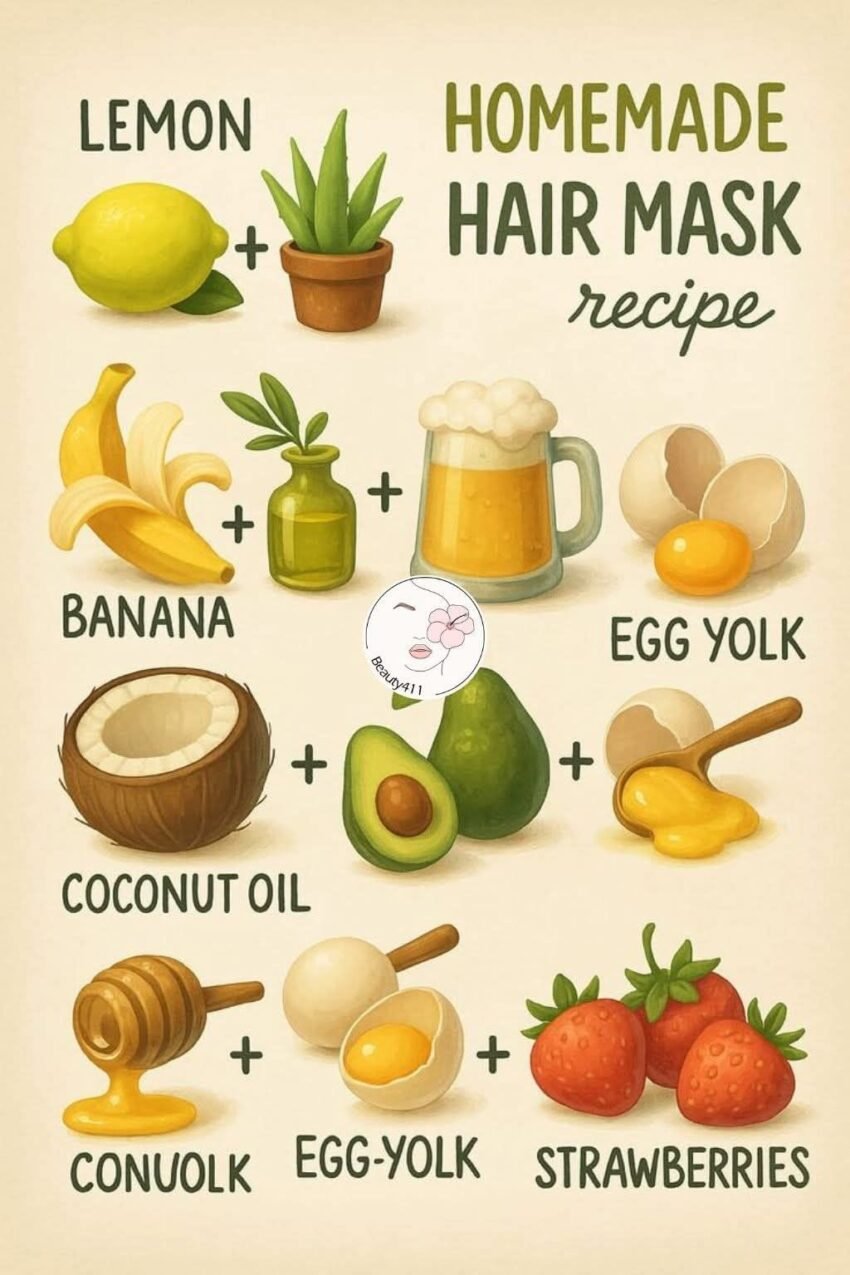
5 Most Effective Hair Masks for Stronger, Shinier Hair (Backed by Real Results)
Discover 5 highly effective hair masks for dry, damaged, or frizzy hair. Easy DIY recipes and expert tips for stronger, shinier hair at home.
When Your Hair Stops Cooperating, It’s Usually Asking for One Thing
You notice it gradually.
Your hair feels rough instead of smooth.
It looks dull under natural light.
Frizz shows up even on “good hair days.”
And suddenly, your usual shampoo and conditioner just aren’t enough.
Here’s the reality most people overlook:
Hair damage builds up quietly—heat styling, stress, diet, weather, even hard water.
The fix isn’t always more products.
Sometimes, it’s about giving your hair deep, targeted nourishment—and that’s where hair masks come in.
This guide walks you through five of the most effective hair masks you can start using right away—simple, proven, and actually worth your time.
Why Hair Masks Matter More Than You Think
Hair masks go beyond surface-level conditioning.
They:
- Penetrate deeper into the hair shaft
- Restore moisture balance
- Improve elasticity
- Reduce breakage
- Enhance shine and manageability
In short: they repair what everyday routines miss.
Who Should Use Hair Masks?
If you fall into any of these categories, this matters:
- Frequent heat styling (blow dryers, straighteners)
- Colored or chemically treated hair
- Dry, brittle, or frizzy hair
- Hair exposed to sun, pollution, or hard water
- Noticeable hair fall due to breakage
Hair Mask #1: Coconut Oil + Honey Deep Repair Mask
Best For:
Dry, damaged, or brittle hair
Why It Works:
- Coconut oil penetrates the hair shaft
- Honey locks in moisture
Ingredients:
- 2 tablespoons coconut oil
- 1 tablespoon honey
How to Use:
- Warm the coconut oil slightly
- Mix with honey
- Apply from mid-length to ends
- Leave for 30–40 minutes
- Rinse and shampoo
Result:
Softer, smoother hair with reduced dryness after just a few uses.
Hair Mask #2: Egg + Yogurt Protein Strength Mask
Best For:
Weak, thinning, or breakage-prone hair
Why It Works:
- Egg provides protein
- Yogurt nourishes and smooths
Ingredients:
- 1 egg
- 2 tablespoons plain yogurt
How to Use:
- Whisk ingredients thoroughly
- Apply evenly to hair
- Leave for 20–30 minutes
- Rinse with cool water (important!)
Result:
Stronger strands and less breakage over time.
Hair Mask #3: Aloe Vera + Olive Oil Hydration Mask
Best For:
Frizzy and dull hair
Why It Works:
- Aloe soothes scalp and hydrates
- Olive oil adds shine and softness
Ingredients:
- 2 tablespoons aloe vera gel
- 1 tablespoon olive oil
How to Use:
- Mix well
- Apply from roots to ends
- Leave for 30 minutes
- Wash thoroughly
Result:
Smoother texture and improved shine.
Hair Mask #4: Banana + Avocado Smoothness Mask
Best For:
Rough, tangled, or unmanageable hair
Why It Works:
- Banana softens hair
- Avocado provides healthy fats
Ingredients:
- 1 ripe banana
- ½ avocado
How to Use:
- Blend until completely smooth (no chunks!)
- Apply evenly
- Leave for 25–30 minutes
- Rinse thoroughly
Result:
Silky, more manageable hair.
Hair Mask #5: Castor Oil + Onion Juice Growth Mask
Best For:
Hair thinning and scalp health
Why It Works:
- Castor oil supports thickness
- Onion juice is rich in sulfur compounds
Ingredients:
- 1 tablespoon castor oil
- 2 tablespoons onion juice
How to Use:
- Mix well
- Apply mainly to scalp
- Massage gently
- Leave for 20–30 minutes
- Wash thoroughly
Result:
Healthier scalp and stronger-looking roots over time.
How Often Should You Use Hair Masks?
| Hair Type | Frequency |
|---|---|
| Dry/Damaged | 2–3 times per week |
| Normal | 1–2 times per week |
| Oily | Once per week |
Consistency matters more than intensity.
Common Mistakes That Slow Results
1. Using Hot Water
Hot water strips moisture—use lukewarm or cool water.
2. Skipping Regular Use
One-time use won’t give lasting results.
3. Applying Too Much Product
More isn’t better—it can weigh hair down.
4. Not Rinsing Properly
Residue can make hair dull.
Expert Tips for Maximum Results
- Apply masks on slightly damp hair
- Use a shower cap to trap heat and improve absorption
- Comb through gently for even distribution
- Avoid roots for oil-heavy masks if you have oily scalp
Real-Life Scenario
Sarah, 29, New York
Issue: Frizzy, dry hair from frequent styling
Routine:
- Coconut + honey mask twice weekly
After 4 weeks:
- Noticeably softer hair
- Reduced frizz
- Easier styling
Pros and Cons
Pros
- Affordable
- Natural ingredients
- Customizable for hair type
- Effective with consistency
Cons
- Requires prep time
- Results are gradual
- Some ingredients can be messy
2026 Haircare Trend Insight
In the U.S., haircare is shifting toward:
- Ingredient transparency
- DIY treatments
- Reduced chemical exposure
Hair masks—especially natural ones—are becoming a core part of weekly routines.
Frequently Asked Questions
1. Can hair masks replace conditioner?
No—they complement it, not replace it.
2. How long before I see results?
Usually 2–4 weeks.
3. Can I leave masks overnight?
Only oil-based ones—others should be rinsed.
4. Are these safe for colored hair?
Yes, but patch test first.
5. Can men use these masks?
Absolutely.
6. Should I shampoo before or after?
Usually after.
7. Can I mix multiple masks?
Better to stick with one at a time.
8. Do masks help hair growth?
They support healthier hair, which can reduce breakage.
Quick Action Checklist
- ✔ Choose mask based on your hair type
- ✔ Apply consistently
- ✔ Avoid hot water
- ✔ Rinse thoroughly
- ✔ Track results over time
Final Thoughts: Healthy Hair Is Built, Not Bought Overnight
Hair transformation doesn’t happen instantly.
But with the right habits, it does happen.
These masks aren’t complicated or expensive—but they work because they focus on what your hair actually needs:
Moisture. Strength. Care.
The most effective hair masks are the ones you’ll actually use consistently.
Start simple.
Stay consistent.
And let your results build over time.
Your Turn
Which hair mask are you trying first?
Share your results, tips, or questions in the comments—and help someone else upgrade their hair routine naturally.