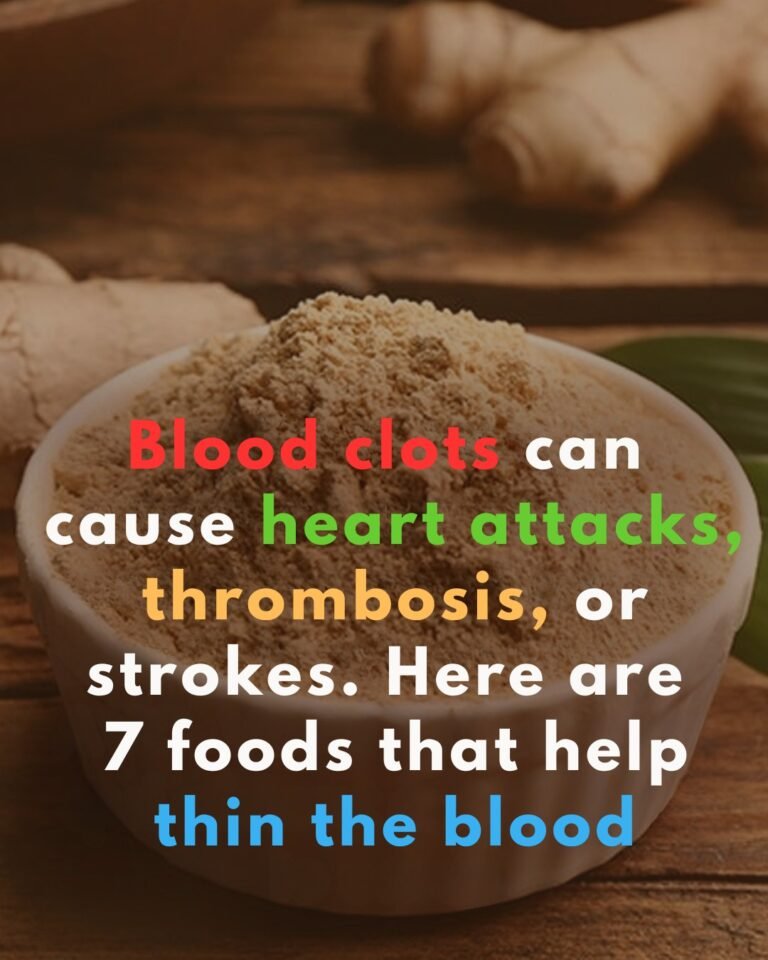
7 Powerful Blood-Thinning Foods You Need to Know About
Discover 7 natural foods that support healthy blood flow. Learn how they work, who should use them cautiously, and how to incorporate them safely.
Healthy circulation is essential for your heart, brain, and overall wellbeing. But did you know that certain foods can naturally support smoother blood flow and help prevent unwanted clotting?
These are often called “blood-thinning foods” — and they can be a safe, natural complement to your diet when used appropriately.
Here’s what you need to know about the 7 most powerful options, how they work, and precautions for safe use.
How Blood-Thinning Foods Work
Blood-thinning foods don’t actually “thin” your blood like prescription medications. Instead, they:
-
Reduce platelet aggregation (the clumping that leads to clots)
-
Improve circulation and artery flexibility
-
Support heart and vascular health
According to guidance referenced by the American Heart Association, these foods can help reduce cardiovascular risk when combined with an overall heart-healthy lifestyle.
1. Fatty Fish (Salmon, Mackerel, Sardines)
Why It Works:
Rich in omega-3 fatty acids, which help prevent platelets from sticking together.
How to Use:
-
Aim for 2–3 servings per week
-
Bake, grill, or steam — avoid heavy frying
Bonus: Omega-3s also reduce inflammation and support brain health.
2. Garlic
Why It Works:
Garlic contains allicin, which naturally improves blood flow and reduces clotting tendencies.
How to Use:
-
Crush or chop fresh garlic and let it sit for 10 minutes to maximize allicin
-
Add to salads, sauces, or roasted vegetables
Note: Raw garlic is more effective than cooked, but both offer benefits.
3. Ginger
Why It Works:
Ginger inhibits platelet aggregation and has anti-inflammatory properties.
How to Use:
-
Add fresh ginger to teas or smoothies
-
Use powdered ginger in cooking or soups
Tip: Combine with honey and lemon for a soothing daily drink.
4. Turmeric
Why It Works:
Curcumin, the active compound in turmeric, helps prevent blood clots and promotes circulation.
How to Use:
-
Mix ½–1 teaspoon into warm milk or curries
-
Combine with black pepper to enhance absorption
Extra: Turmeric supports joint health and reduces chronic inflammation.
5. Berries (Strawberries, Blueberries, Blackberries)
Why It Works:
Berries contain polyphenols and antioxidants that help reduce platelet stickiness.
How to Use:
-
Eat fresh or frozen as snacks, in oatmeal, or smoothies
-
No sugar added for maximum benefit
Bonus: They also support heart and brain health.
6. Citrus Fruits (Oranges, Grapefruits, Lemons)
Why It Works:
High in vitamin C and flavonoids that improve blood vessel health and circulation.
How to Use:
-
Fresh fruit or freshly squeezed juice
-
Add slices to water for a refreshing boost
Caution: If taking certain medications, check grapefruit interactions.
7. Dark Chocolate (70% Cocoa or Higher)
Why It Works:
Flavonoids in dark chocolate enhance nitric oxide production, relaxing blood vessels and improving flow.
How to Use:
-
Limit to 1–2 small squares daily
-
Choose low-sugar options to protect overall health
Bonus: Supports mood and antioxidant intake.
Real-Life Scenario
A 55-year-old man in California wanted to support healthy circulation naturally.
-
Added two servings of salmon and a handful of berries daily
-
Included garlic and ginger in cooking
-
Enjoyed a small piece of dark chocolate each afternoon
After a few months, his routine helped maintain normal cholesterol levels and improved energy, complementing his doctor-prescribed regimen.
Who Should Be Cautious
Natural blood-thinning foods are generally safe, but they can interact with medications like:
-
Prescription anticoagulants (e.g., warfarin)
-
Aspirin therapy
-
Some heart medications
Always consult your healthcare provider before making significant dietary changes, especially if you’re on blood-thinning medication.
Tips for Safe Incorporation
-
Introduce one food at a time to monitor tolerance
-
Maintain a balanced diet — don’t rely on foods alone
-
Avoid excessive consumption — even healthy foods can have side effects
-
Pair with regular exercise and hydration
Common Myths
-
Myth: “These foods replace prescription blood thinners.”
Truth: They are supportive, not substitutes. -
Myth: “More is always better.”
Truth: Too much garlic, ginger, or turmeric can cause digestive upset or interact with medications. -
Myth: “Only supplements work.”
Truth: Whole foods are often safer and more effective for long-term health.
2026 Trend: Functional Foods for Heart Health
-
Growing interest in natural, dietary approaches to support circulation
-
Personalized nutrition apps track intake of flavonoids, omega-3s, and polyphenols
-
Emphasis on lifestyle synergy — diet, exercise, sleep, and stress management
Action Checklist
✔ Add at least 2–3 of these foods into your weekly meals
✔ Monitor your health and discuss with your doctor
✔ Combine with heart-healthy lifestyle habits
✔ Avoid combining with high-risk medications without professional guidance
Incorporating these 7 blood-thinning foods — salmon, garlic, ginger, turmeric, berries, citrus, and dark chocolate — can help support healthy circulation and reduce clot risk.
They work best as part of a balanced lifestyle and under guidance if you take medication.
Which of these foods do you already include in your diet? Share your favorite ways to enjoy them in the comments — your tip could help someone take the first step toward better heart health.