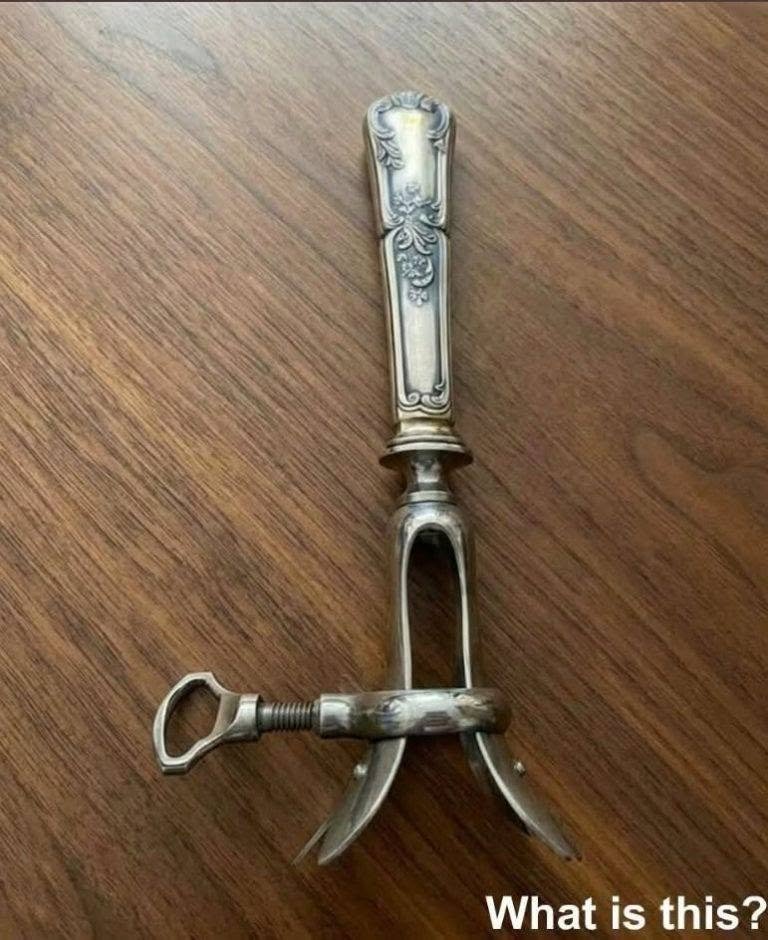
The Mystery Item in Grandma’s Dresser: Solving the Riddle of the Vintage Heirloom
The Quiet Discovery at the Bottom of the Cedar Chest
Going through a beloved grandparent’s belongings after they pass away is an emotional journey filled with nostalgia, laughter, and tearful trips down memory lane. You sort through old photographs, handmade quilts, and vintage jewelry boxes, feeling closer to the history of your family.
Inevitably, you reach into the back of an old dresser drawer or a forgotten cedar chest and pull out an object that stops you dead in your tracks. It’s made of heavy tarnished silver, carved bone, or ornate brass. It looks vaguely like a tool, but it doesn’t plug into anything, has no digital screen, and bears zero resemblance to anything found in a modern home.
You turn to your siblings, parents, or cousins, holding it up with a puzzled look: “Does anyone have any idea what this is?”
If you’ve recently inherited a mysterious antique artifact from your grandmother’s estate, let’s decode some of the most common heirloom gadgets that baffle modern generations—and reveal what that strange little object actually does.
The Usual Suspects: Decoding Grandma’s Antique Drawer
Depending on how far back your family tree stretches, items tucked away in heirloom drawers usually fall into a few fascinating categories of domestic history. Here are the most common mystery items people pull out of vintage dressers:
-
The Edwardian Button Hook: If your mystery tool looks like a long, slender handle ending in a small, curved metal wire loop, you are holding a button hook. In the late 19th and early 20th centuries, fashion required women to wear tall leather boots or fitted garments fastened with dozens of tiny, tightly spaced cloth buttons. Fastening them by hand was nearly impossible, so people used a button hook to snag the thread loop, pull it through the fabric eyelet, and secure it over the button.
-
A Vintage Glove Stretcher: A pair of hinged metal or wooden tongs that look vaguely like pliers, but with rounded, smooth outer prongs. When inserted into the fingers of tight leather gloves and squeezed, they gently stretched the leather back into a comfortable shape after washing or storage.
-
A Sterling Silver Bodkin: A large, blunt-needle-like tool with a wide eye or a sliding clamp mechanism. Victorians used bodkins to thread ribbons, elastic, or cords through the casings of corsets, undergarments, and intricate sewing projects.
-
A Chatelaine Clip: A decorative belt hook featuring a series of hanging chains. Women in the 19th century clipped this to their waistbands to suspend essential daily tools like scissors, keys, thimbles, and smelling salts, keeping their hands free before pockets became standard in women’s clothing.
Why These Items Look Like Alien Technology Today
The reason younger generations stare blankly at these heirlooms is that everyday life has undergone a massive structural revolution.
We live in a world of zippers, velcro, elastic synthetics, slip-on shoes, and disposable convenience. The meticulous, time-consuming rituals required to dress, groom, and maintain household textiles a century ago have vanished entirely. An Edwardian woman getting dressed for church required specialized tools just to button her boots; today, we slip on sneakers in three seconds flat.
Finding these items in a dresser isn’t just a fun puzzle—it’s a physical tangible link to a completely different pace of human history.
Real-World Scenarios: The Family Debate
Imagine inheriting a small, ornate silver object that looks like a miniature crochet needle merged with a letter opener. No one in the family recognizes it. Someone suggests it’s a specialized butter knife; another cousin jokes it’s a dental pick.
You take a photo, post it to an online antique appraisal or history forum, and within ten minutes, a history buff identifies it instantly as a late-1800s Victorian button hook, complete with a monogram carved into the mother-of-pearl handle. Suddenly, you realize you are holding an item your great-great-grandmother used every single morning while getting dressed over a century ago.
Step-by-Step Action Plan: What to Do When You Find an Heirloom Mystery Object
If you are holding a strange antique from an estate clear-out, don’t throw it away or let it sit in a dark drawer. Use this simple playbook to uncover its history:
1. Inspect for Markings and Hallmarks
Look closely under a magnifying glass or smartphone camera zoom for tiny stamps, hallmarks, maker’s marks, or initials. Sterling silver items will often feature stamps like “STERLING,” a lion passant, or maker symbols that can help you date the item precisely.
2. Consult Digital History Communities
Take clear, well-lit photos against a neutral background and leverage online communities. Subreddits like r/WhatIsThis or r/Antiques are populated by passionate historians and curators who can frequently identify obscure domestic artifacts in minutes.
3. Preserve Rather Than Polish
If the object is antique silver, brass, or carved bone, resist the urge to aggressively scrub or polish it with harsh modern chemicals. A natural, aged patina often adds historical character and value. Store it safely in a felt-lined box or display it in a shadow box as a piece of family history.
Comparing Heirloom Preservation Options
| Preservation Method | Pros | Cons | Best Used For |
| Shadow Box Display | Keeps item safe, visible, and acts as conversation decor | Requires wall space or shelf room | Ornate tools, lockets, vintage buttons |
| Archival Storage Box | Protects delicate fabrics and metals from light damage | Hidden away out of sight | Textiles, letters, fragile paper items |
| Daily Use (If Applicable) | Keeps history active and functional | Risk of wear, tear, or loss | Sturdy silver flatware, vintage jewelry |
Pros and Cons of Uncovering Family Antiques
-
Pros of Researching Estate Heirlooms:
-
Connects you directly to the daily lives and routines of your ancestors.
-
Fosters family storytelling and cross-generational bonding.
-
Occasionally uncovers high-value collectibles or rare historical pieces.
-
-
Cons and Challenges:
-
Identifying obscure, highly specific domestic items can take considerable research time.
-
Emotional attachment to objects can make organizing or downsizing an estate difficult.
-
Common Mistakes to Avoid (And How to Fix Them)
-
Mistake 1: Throwing Away Unrecognized Items
-
The Danger: Trashing a rare antique or valuable family heirloom because it looked like “junk” or scrap metal.
-
The Fix: Always pause, photograph, and research unfamiliar items before clearing out an estate.
-
-
Mistake 2: Using Harsh Cleaners on Vintage Metals
-
The Danger: Stripping away valuable antique patina or damaging delicate carved bone, ivory, or celluloid handles with abrasive pads.
-
The Fix: Use mild dish soap and a soft microfiber cloth, or consult an expert before attempting restoration.
-
-
Mistake 3: Assuming Everything Old is Worth a Fortune
-
The Danger: Expecting a common mass-produced trinket to fund your retirement.
-
The Fix: Value family items for their sentimental and historical connection to your lineage rather than their commercial price tag.
-
Expert-Level Insights: The 2026 Heirloom Preservation Standard
In the current era of digital minimalism, family historians and museum archivists emphasize the profound emotional value of tactile heritage objects. As younger generations become increasingly detached from physical history, preserving a single unique item—like a Victorian button hook or an engraved locket—anchors family memory in a powerful way. Digital cataloging apps also allow families to scan, photograph, and attach oral histories to physical heirlooms so future generations never have to guess what grandma left behind.
Frequently Asked Questions
How can I tell if an old metal tool is real silver or cheap plated brass?
Look for hallmarks. Sterling silver will usually be stamped with “925” or “Sterling.” If you see letters like “EPNS” (Electro Plated Nickel Silver) or “BP” (Britannia Metal), the item is a base metal coated in a thin layer of silver.
What should I do with family heirlooms nobody in the family wants?
If younger family members have no space or interest in keeping vintage items, consider donating them to a local historical society, a regional museum, or a specialized antique dealer who appreciates their historical context.
Is it safe to touch old items found in a deceased relative’s house?
Generally yes, but use caution if items are rusted, sharp, or coated in old dust. Wash your hands thoroughly after handling uncleaned antique metal or fabric items.
Why did women in the past have so many specialized dressing tools?
Victorian and Edwardian fashion prioritized intricate, tailored clothing with countless tiny fastenings, hooks, and lacings. Because clothing was handmade or custom-fitted rather than stretchy and casual, getting dressed required an array of specialized mechanical aids.
How can I find out the exact year a vintage item was manufactured?
Check for patent dates stamped directly onto the metal, maker’s marks, or trademark logos, then cross-reference those symbols using online antique database registries.
Can old kitchen gadgets or sewing tools contain hazardous materials?
Some very old plastics (like early celluloid or Bakelite) can be flammable if exposed to extreme heat, and antique painted items from certain eras could potentially contain lead. Standard handling and display precautions are always recommended.
How do I clean tarnished silver safely without destroying it?
Use a specialized microfiber silver polishing cloth or line a bowl with aluminum foil, add hot water and baking soda, and gently submerge the silver piece to lift tarnish chemically without abrasive scrubbing.
What is the best way to record family history stories associated with these objects?
Record a quick video or audio interview with older family members explaining what they remember about the object, who it belonged to, and how it was used, then store those files digitally alongside photos of the item.
Action Checklist
-
Do: Photograph and document every unfamiliar item found in an estate clear-out.
-
Do: Search for tiny hallmarks, patent numbers, or maker’s stamps on metal or ceramic items.
-
Do: Consult online history communities if you get stuck trying to identify an artifact.
-
Avoid: Throwing away unidentified vintage tools before researching what they are.
-
Avoid: Using harsh chemical abrasives or scrubbers on antique metals.
-
Avoid: Assuming an old object is worthless just because its function is unfamiliar today.
Uncovering a mystery item in your grandmother’s dresser is like stumbling across a tiny time capsule from another century. Whether it turns out to be an Edwardian button hook, a vintage glove stretcher, or an heirloom sewing tool, it represents a physical bridge to the past. Take the time to solve the riddle, preserve its history, and let it spark a deeper connection to your family’s story.
Did your grandmother leave behind a mystery item nobody could identify? Drop a description in the comments below, and let’s solve the puzzle together!