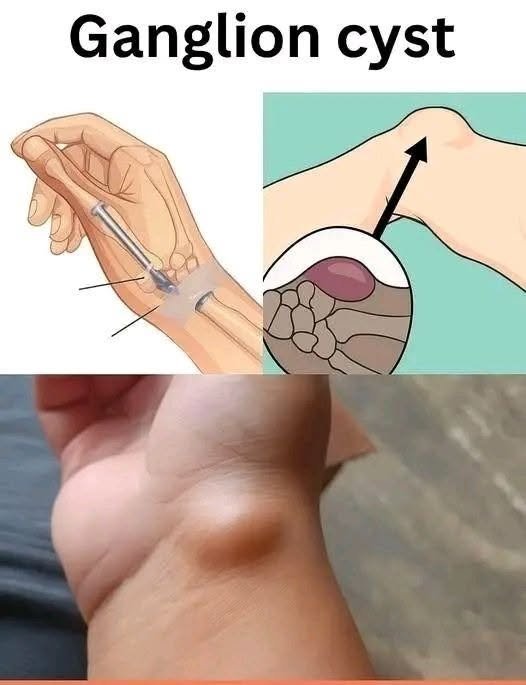
The Complete Guide to Ganglion Cysts: Why They Form, What They Mean, and How to Treat Them
Discover the facts behind those mysterious wrist bumps. Learn what causes ganglion cysts, when they require medical care, and how modern treatment options compare.
Noticing a mysterious lump on your wrist or hand? Explore what ganglion cysts are, why they form, symptoms to watch for, and the best treatment options available.
Finding a sudden, smooth lump under your skin can trigger an immediate wave of worry. You might be typing an email at your desk, sliding on a bracelet, or washing your hands when your finger brushes against a firm, round knot that wasn’t there last week. Your mind instantly races to worst-case scenarios, wondering if the mass is dangerous or if it will require invasive medical procedures.
Most of the time, that unexpected lump is a ganglion cyst: a benign, noncancerous fluid-filled sac that most frequently develops along the tendons or joints of the wrists and hands. While completely harmless from a systemic health standpoint, they can still cause genuine physical discomfort, restrict your range of motion, and create persistent aesthetic frustration.
Understanding what these cysts are, why they choose to pop up in specific areas, and how modern medicine handles them can help replace anxiety with actionable clarity.
What Exactly Is a Ganglion Cyst?
A ganglion cyst is a localized swelling that forms adjacent to a joint capsule or a tendon sheath. Inside the cyst is a thick, clear, jelly-like fluid that is remarkably similar in chemical composition to the synovial fluid lubricating your healthy joints.
These cysts are tethered to the underlying joint or tendon sheath by a small tissue channel called a stalk. This stalk acts as a microscopic one-way valve: joint fluid flows into the sac during movement, but it cannot easily flow back out. As a result, the cyst can swell, shrink, or completely change in size depending on how much activity your hand or foot undergoes.
They most commonly manifest in a few specific locations:
-
The Dorsal Wrist: Appearing on the back of the wrist, this is the single most frequent location, accounting for roughly 60 to 70 percent of all cases.
-
The Volar Wrist: Forming on the palm side of the wrist, these require extra clinical care due to their close proximity to major blood vessels and nerves.
-
The Hand and Fingers: Often developing near the base of the fingers on the palm side, appearing as tiny, hard pea-sized nodules that make gripping objects painful.
-
Foot and Ankle: Less common, but frequently found on the top of the foot or around the ankle joint, where shoe pressure can irritate them.
Why Do They Form? (The Mechanics Behind the Lump)
Medical science does not point to a single definitive cause for every ganglion cyst, but clear patterns tie them to mechanical stress and connective tissue wear.
The prevailing theory suggests that repetitive microtrauma or joint irritation causes the surrounding connective tissue to undergo a process called mucinous degeneration. Essentially, the tissue breaks down and liquefies, forming a localized pool of gelatinous fluid that collects into a sac.
Certain risk factors elevate the likelihood of developing a ganglion cyst:
-
Age and Sex: They occur most frequently in young adults between the ages of 15 and 40, and women are affected roughly three times as often as men.
-
Joint Stress: Gymnasts, typists, musicians, and manual laborers who subject their wrists to repetitive strain or hyperextension see higher occurrences.
-
Previous Joint Injury: Past trauma to the joint capsule or tendon sheath can weaken the structural wall, creating an easy exit point for joint fluid to herniate outward.
Recognizing the Symptoms: When a Lump Becomes a Problem
Many people live with ganglion cysts for years without realizing they have them, purely because the mass is entirely painless and hidden in plain sight. However, when symptoms do arise, they are typically driven by the cyst’s physical size and placement relative to nearby nerves and tendons.
-
A Visible or Palpable Mass: A smooth, round, mobile lump under the skin that may feel firm or spongy.
-
Localized Aches: Dull, aching discomfort around the joint that intensifies after repetitive activity or heavy lifting.
-
Numbness and Tingling: If a growing cyst presses against major nerve pathways (such as the median or radial nerve), it can mimic carpal tunnel syndrome, radiating tingling or weakness down into the fingers.
-
Grip Weakness: Interference with normal tendon tracking can make it difficult to open jars, carry grocery bags, or hold tools securely.
Modern Treatment Options: What Actually Works?
Because ganglion cysts are benign and frequently resolve on their own, treatment is entirely optional unless pain, functional limitations, or nerve compression enters the picture. Historical remedies—such as striking the cyst with a heavy book (the infamous “Bible bump” method)—are clinically obsolete and carry a high risk of damaging surrounding bone and soft tissue.
Modern medicine approaches ganglion cysts through a graduated, evidence-based ladder.
1. Watchful Waiting (Observation)
For small, painless cysts, doing nothing is often the best first move. Clinical studies show that roughly 40% to 50% of untreated wrist ganglion cysts disappear spontaneously over time.
2. Activity Modification and Bracing
If a cyst flares up during intense computer work or athletic training, wearing a wrist splint helps limit repetitive flexion and extension. By reducing mechanical irritation, the cyst is starved of the constant fluid influx that keeps it enlarged, often allowing it to shrink naturally.
3. Needle Aspiration
During this in-office procedure, a clinician numbs the area, inserts a sterile needle, and draws the thick fluid out of the sac. While it provides instant cosmetic relief and flattens the lump immediately, aspiration leaves the cyst wall and stalk intact. Consequently, recurrence rates range between 50% and 60% within a year.
4. Surgical Excision
For painful, persistent, or nerve-compressing cysts that fail conservative care, surgical removal remains the gold standard. Performed as an outpatient procedure, a surgeon removes not just the fluid-filled sac, but crucially excises the stalk and a small portion of the underlying joint capsule or tendon sheath to prevent it from returning.
Comparing Ganglion Cyst Treatment Outcomes
| Treatment Approach | Typical Recurrence Rate | Primary Benefit | Best Suited For |
| Watchful Waiting | N/A (Spontaneous resolution in ~50%) | Zero invasion, cost-free | Small, painless, asymptomatic lumps |
| Wrist Splinting | Varies by compliance | Low risk, stabilizes joint mechanics | Activity-related swelling and mild ache |
| Needle Aspiration | 50% to 60% | Fast, immediate reduction in size | Patients wanting temporary cosmetic relief |
| Surgical Excision | 5% to 15% | Definitive long-term removal | Painful, large, or nerve-compressing cysts |
Common Mistakes to Avoid
-
Mistake: Trying to pop, rupture, or smash the cyst yourself at home.
-
Fix: Never attempt physical trauma. Forcing the cyst to rupture internally can drive mucinous fluid into surrounding tissue planes, causing severe inflammation, infection, or damage to nearby nerves.
-
-
Mistake: Assuming every hand lump is automatically a ganglion cyst.
-
Fix: Always seek professional diagnostic evaluation. Other masses—such as giant cell tumors, lipomas, or vascular anomalies—can mimic ganglions and require entirely different management.
-
-
Mistake: Ignoring numbness or finger weakness.
-
Fix: If your hand falls asleep or loses grip strength, treat it as a medical priority rather than a cosmetic nuisance. Nerve compression requires clinical assessment.
-
Frequently Asked Questions
Can a ganglion cyst turn into cancer?
No. Ganglion cysts are strictly benign, noncancerous lesions. They have zero potential to spread or transform into malignant growths.
Why do ganglion cysts change size overnight?
Because they are connected to joint spaces via a narrow tissue channel, physical activity pumps more fluid into the sac. Rest allows some fluid to drain back out, making the lump smaller in the morning.
Is surgery for a ganglion cyst painful?
Surgical removal is performed under local, regional, or general anesthesia, ensuring you feel no pain during the procedure. Mild post-operative soreness and stiffness are managed easily with short-term medication during the 1-to-4-week recovery window.
Can massaging a ganglion cyst make it go away?
While older folk remedies suggested pressing down firmly to pop the sac, modern medical consensus discourages aggressive home massage, as it can irritate local tissues without destroying the underlying stalk.
Will wearing a splint make the cyst disappear forever?
A splint reduces mechanical irritation and can shrink a cyst by preventing it from filling up, but it rarely closes the structural stalk permanently.
Are volar wrist cysts harder to treat?
Yes. Cysts located on the palm side of the wrist sit directly adjacent to the radial artery and crucial nerve branches, requiring meticulous surgical or aspiration techniques to avoid complications.
What happens if I just leave a painful ganglion cyst alone?
Leaving a symptomatic cyst untreated can lead to chronic aching, progressive grip weakness, and prolonged nerve irritation if the pressure isn’t relieved.
How long does recovery take after surgical removal?
Most patients resume light daily hand activities within a week or two, while full tissue healing and restoration of complete wrist range of motion typically takes two to four weeks.
Action Checklist
-
What to do: Monitor the lump’s size and behavioral changes, try a supportive wrist brace if activity triggers aches, and consult a hand specialist if pain or numbness develops.
-
What to avoid: Attempting to rupture the cyst manually, ignoring progressive grip weakness, and assuming all hand lumps share the same cause.
Finding a lump on your hand or wrist can be unsettling, but armed with the right knowledge, you can take control of your health. Whether you choose peaceful observation or a definitive surgical fix, understanding your body’s signals ensures you make the best decision for your long-term mobility and peace of mind.