The Secret Egg Carton Code: What Grocery Store Insiders Wish You Knew About Your Eggs
There is a routine muscle memory most of us share when shopping for groceries. You walk down the dairy aisle, reach for a carton of eggs, pop the lid open to check for a stray cracked shell, close it, glance vaguely at the stamped date on the side, and toss it into your cart.
To the average shopper, that date looks like a standard expiration deadline—a hard line after which the eggs instantly turn bad. But if you have ever worked behind the scenes in grocery retail, stocking dairy coolers and handling inventory, you learn a fascinating industry secret.
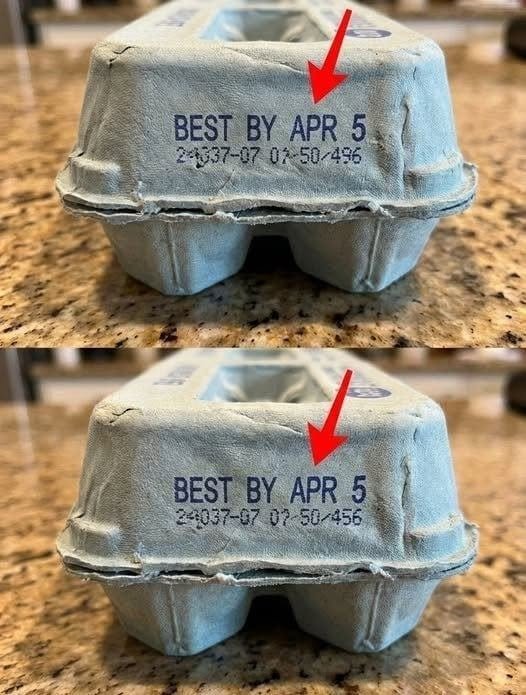
That little string of numbers and letters stamped next to the barcode or expiration date isn’t just a basic sell-by deadline. It is a secret chronological code that tells you the exact day those eggs were collected, washed, and packed. Once you know how to read it, you will never look at an egg carton the same way again.
Understanding How the Egg Industry Works
To appreciate why this code matters, you have to understand the journey an egg takes before it reaches your supermarket shelf.
In commercial egg production, eggs are gathered, cleaned, graded for quality, and packaged into cartons. Federal and state regulations dictate how long those cartons can sit on a shelf before they must be sold, but the rules governing when they were laid are often misunderstood.
Many shoppers assume that the date stamped on the carton is the day the egg was laid. In reality, that date is usually a sell-by or expiration date set weeks into the future. But stamped right alongside it is a code that reveals the true age of the product—a detail most shoppers completely overlook.
Why Knowing the Real Date Matters
In the American kitchen, food waste is a massive financial and environmental burden. Millions of cartons of perfectly good eggs are tossed into the trash every year simply because consumers misinterpret what a stamped date actually means.
Ignoring how egg dating works leads to predictable frustrations:
-
Unnecessary Waste: Throwing away fresh eggs because you think they expired on a arbitrary calendar date.
-
Culinary Confusion: Trying to hard-boil farm-fresh eggs (which are nearly impossible to peel) versus older eggs (which peel like a dream) without knowing their actual age.
-
Compromised Freshness: Not realizing how long a carton has actually been sitting in distribution channels before reaching the display case.
Decoding the hidden numbers on your carton gives you absolute control over your grocery purchases, ensuring you always take home the freshest dozen possible.
The Secret Code: The Julian Date
If you look closely at the side or end of an egg carton, you will often find a mysterious 3-digit number stamped alongside the expiration date. This is known as the Julian Date (or pack date).
The Julian calendar numbers the days of the year consecutively from 1 to 365 (or 366 in a leap year).
-
January 1st is coded as
001. -
February 1st is
032. -
December 31st is
365.
Sometimes, a letter of the alphabet precedes or follows the number (for example, A 125), indicating the specific plant code where the eggs were packed.
This means that if you pick up a carton of eggs in April and see the Julian code 095 (the 95th day of the year, which falls around April 5th), you instantly know those eggs were packed on April 5th—even if the expiration date printed on the carton stretches weeks into May.
Step-by-Step Actionable Guide: How to Inspect Your Eggs Like a Pro
-
Locate the Julian Code: Scan the carton for a 3-digit number stamped near the official expiration date.
-
Translate the Date: Convert the 3-digit number to find the exact day of the year the eggs were packaged. (Pro tip: Keep a quick Julian calendar cheat sheet saved on your phone if numbers aren’t your forte).
-
Calculate the Age: Compare the pack date to today’s date. High-quality eggs retain optimal freshness for up to 3 to 5 weeks past the pack date when kept properly refrigerated.
-
Perform the Float Test: If you have eggs sitting in your fridge and aren’t sure if they are still good, drop them into a glass of cold water. Fresh eggs sink flat to the bottom; older eggs stand upright or float because air has naturally entered the porous shell over time.
Julian Pack Dates vs. Expiration Dates
| Feature | The Printed Expiration Date | The Hidden Julian Code |
| What It Shows | The legally mandated last day the store can sell the carton | The exact 3-digit day of the year the eggs were washed and packed |
| Accuracy | A generalized timeline based on maximum shelf-life limits | A precise, unchangeable historical stamp of birth |
| Kitchen Utility | Tells you when to toss if left too long | Tells you how fresh the eggs are for boiling, poaching, or frying |
| Shopper Awareness | The only detail most people look at | A hidden grocery insider secret |
Common Mistakes and How to Fix Them
-
Mistake: Assuming eggs go bad the exact minute the expiration date on the front of the carton passes.
-
Fix: Use the float test and rely on your senses (smell) rather than panicking over a printed calendar date; eggs often remain safe to eat weeks past that date.
-
-
Mistake: Buying the eggs pushed to the very front of the grocery display without checking the codes.
-
Fix: Reach toward the back of the dairy cooler to find cartons with a more recent Julian pack date for maximum fridge life.
-
-
Mistake: Storing eggs in the refrigerator door where temperature fluctuations cause them to spoil faster.
-
Fix: Always store your eggs on an inner shelf of the refrigerator where the ambient temperature remains cold and constant.
-
Expert-Level Insights and Insider Knowledge
Grocery veterans and food safety experts note that commercial egg grading plants operate under strict federal guidelines, but the shelf life of an egg is heavily dictated by cold chain management. An egg kept at a stable 35°F to 40°F maintains its structural integrity and safety for an astonishingly long time.
Furthermore, culinary professionals actively look for older eggs (those a couple of weeks past their pack date) when making hard-boiled eggs. Freshly laid eggs have a lower pH and cling tenaciously to the inner shell membrane, making them notoriously difficult to peel. Older eggs have lost a tiny bit of internal moisture and gained air space, allowing them to slide out of their shells effortlessly.
Frequently Asked Questions
-
Are eggs still safe to eat after the expiration date?
Yes, provided they have been continuously refrigerated and pass the float test, eggs are frequently safe to consume several weeks past the printed date.
-
What does a letter like ‘P’ before the Julian date mean?
The letter stands for the plant identification code, indicating the specific facility where the eggs were processed and packaged.
-
How long do fresh eggs actually last in the fridge?
When stored properly in their original carton on an inner refrigerator shelf, fresh eggs typically last 3 to 5 weeks past the pack date.
-
Why do older eggs float in water?
As an egg ages, moisture slowly evaporates through the porous calcium shell, and air replaces it inside, causing the air cell to grow and the egg to float.
-
Does the Julian date tell me when the chicken laid the egg?
Not necessarily. The Julian date tells you when the egg was packed, which is usually within a few days of being laid.
-
Can I freeze raw eggs if I bought too many?
Yes, but you cannot freeze them in their shells. Crack the eggs, whisk the yolks and whites together (or separate them), and store them in airtight freezer-safe containers.
-
Why are some grocery store eggs kept refrigerated while others aren’t?
In the US, commercial eggs are washed, which removes the protective natural bloom, requiring mandatory refrigeration. In many European countries, unwashed eggs with the bloom intact are stored at room temperature.
-
How can I tell if a cracked egg is safe to use?
If an egg cracks on the way home from the store, discard it. Harmful bacteria can easily enter through a compromised shell.
Action Checklist
-
What to do:
-
Look for the 3-digit Julian code on your egg cartons during your next grocery trip.
-
Reach toward the back of the dairy shelf for the freshest pack dates.
-
Use the water float test if you are ever unsure about the freshness of older eggs.
-
-
What to avoid:
-
Do not throw away perfectly good eggs just because the printed expiration date has arrived.
-
Do not store eggs in the refrigerator door where temperature swings accelerate spoilage.
-
Do not buy cartons with cracked shells or sticky residue.
-
The next time you shop for groceries, don’t just glance at the basic expiration date. Find the hidden Julian code, decode the exact day your eggs were packed, and shop like a true grocery insider.