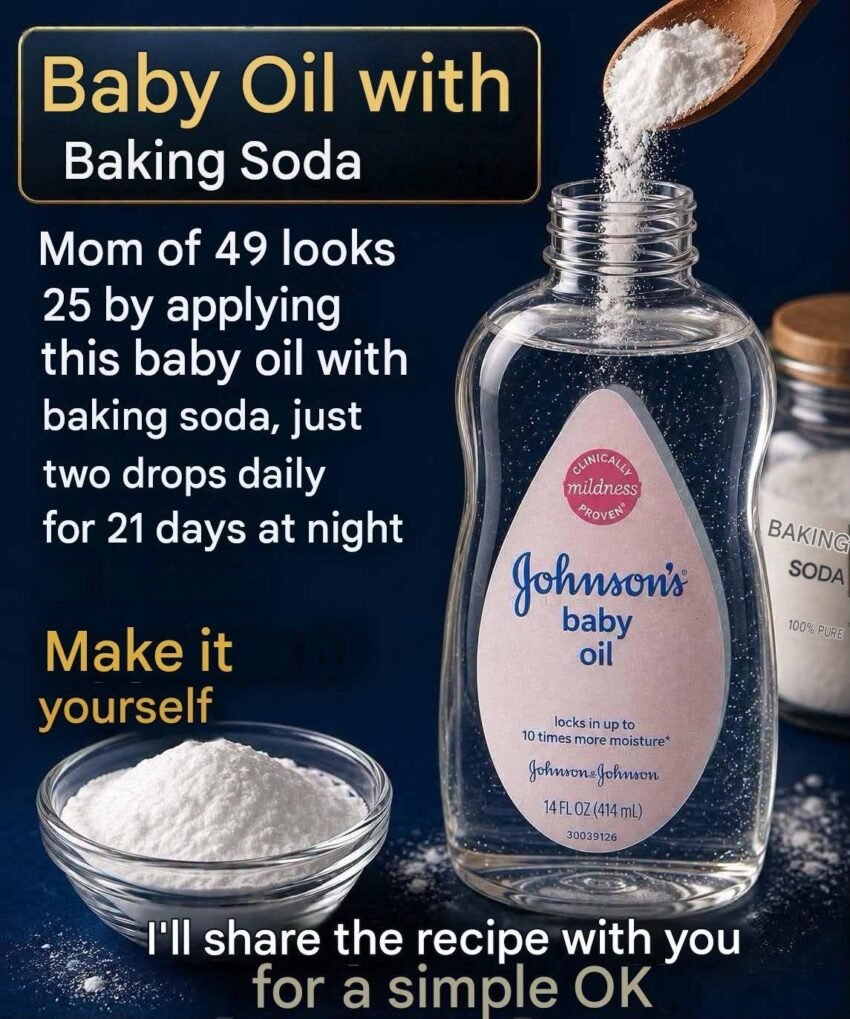
The DIY Skin Trend Explained: What Happens When You Mix Baby Oil and Baking Soda?
A quick scroll through online beauty forums or social media video tutorials reveals a popular and enduring DIY trend: mixing common household baking soda (sodium bicarbonate) with baby oil or mineral oil to create an instant exfoliating paste. Proponents claim this kitchen-and-ursery combination acts as a magic eraser for rough patches, hyperpigmentation, body acne, and dry skin, promising an instantly smooth, glowing complexion.
Before heading to the bathroom to mix a batch, it pays to look past the viral claims. While combining a physical abrasive with a rich emollient can alter the temporary texture of your skin, dermatologists and skin barrier experts urge extreme caution—especially regarding where and how this mixture is applied.
The Chemistry of the Mixture
To understand why this DIY scrub generates such mixed reviews, you have to look at how its two components interact with human skin:
-
Baking Soda (Sodium Bicarbonate): Baking soda is a crystalline powder with a high alkalinity (typically a pH around 9). Its fine granules provide strong mechanical scrubbing power, physically buffing away loose, dead skin cells on the surface.
-
Baby Oil (Mineral Oil): Mineral oil is a heavy, occlusive emollient derived from petroleum. It sits on top of the skin, creating a barrier that locks in moisture and prevents transepidermal water loss.
When combined, the baking soda provides the grit to slough off dead cells, while the baby oil provides slip and immediate post-scrub moisturization, preventing the powder from feeling completely abrasive.
Where This Mixture Can Be Used Safely
Dermatologists generally agree that if you are going to use a baking soda and oil scrub, its application must be strictly restricted to thick, resilient areas of the body—never the delicate skin of the face or neck.
-
The Soles of the Feet: Scrubbing calluses on the heels or thick skin on the balls of the feet with a baking soda paste can help buff away dead, hardened layers.
-
Rough Elbows and Knees: The skin over joints is much thicker and less prone to immediate barrier disruption than facial tissue, making it slightly more tolerant of mechanical exfoliation.
The Hidden Risks: Why Experts Warn Against Using It on Your Face
While many DIY beauty enthusiasts swear by baking soda scrubs for achieving an instant glow, regular use—particularly on facial skin—carries significant dermatological risks.
-
Disruption of the Acid Mantle: Human skin naturally maintains a slightly acidic pH (typically between 4.5 and 5.5). Baking soda is intensely alkaline. Applying it directly to the skin disrupts this protective acid mantle, stripping away natural lipids and leaving the skin vulnerable to bacteria, dryness, and irritation.
-
Micro-Tears and Irritation: The jagged crystalline structure of baking soda acts as a harsh physical abrasive. Vigorous rubbing can cause microscopic tears in the skin barrier, leading to redness, stinging, and long-term sensitivity.
-
Worsening Breakouts: While some people use harsh scrubs to dry out acne, stripping the skin barrier actually triggers inflammation and compromises healing, often causing breakouts to multiply over time.
-
Pore Congestion from Mineral Oil: Baby oil is heavily occlusive. While great for sealing moisture into dry body skin, applying it to acne-prone or sensitive areas can trap debris and exacerbate congestion.
Comparison: DIY Baking Soda & Oil Scrub vs. Formulated Exfoliants
| Scrub Dimension | DIY Baking Soda & Baby Oil | Formulated Chemical Exfoliants (AHAs/BHAs) |
| Exfoliation Type | Purely mechanical (harsh physical abrasion). | Chemical (dissolves the glue holding dead cells together). |
| pH Compatibility | Highly alkaline (disrupts skin’s natural acidic balance). | Balanced or intentionally formulated to match skin biology. |
| Consistency | Varies wildly based on kitchen measurements; unpredictable. | Precisely manufactured for safety and predictable results. |
| Risk of Micro-Tears | High, due to jagged sodium bicarbonate crystals. | Low, as acids work without abrasive friction. |
How to Safely Test and Use Body Scrubs
If you are determined to experiment with physical body scrubs on resilient areas like your legs or feet, follow strict safety guidelines to protect your skin barrier:
-
Perform a Patch Test: Apply a tiny amount of the mixture to the inside of your forearm or ankle. Wait 24 hours to ensure you do not experience redness, itching, or contact dermatitis.
-
Limit Frequency: Never use physical scrubs daily. Restrict use to a maximum of once every week or two to allow the skin barrier adequate time to recover.
-
Use Gentle Pressure: Let the weight of your fingers do the work. Never aggressively scrub or push down into the skin.
-
Rinse and Protect: Wash the area thoroughly with lukewarm water and follow up with a gentle, fragrance-free moisturizer if needed.
Frequently Asked Questions
Can baking soda and baby oil help clear dark spots or hyperpigmentation?
No. Hyperpigmentation originates deep within the lower layers of the epidermis where melanin is produced. Baking soda only buffs off surface dead cells, meaning it cannot reach or alter deeper pigment, and its irritant potential can actually trigger post-inflammatory hyperpigmentation in darker skin tones.
Is baby oil safe for everyday body moisturization?
For most people without sensitive or acne-prone skin, mineral oil is safe and effective at locking in moisture when applied to damp skin right after a shower. However, it does not hydrate the skin actively; it only traps existing moisture.
Why does my skin feel so soft immediately after using a baking soda scrub?
The immediate “baby-soft” feeling comes from the mechanical removal of the outermost layer of dead skin cells combined with the residual coating of oil left behind. However, this temporary smoothness comes at the cost of a compromised skin barrier.
Can I substitute baby oil with olive oil or coconut oil?
While plant-based oils like coconut or olive oil are popular in DIY recipes, coconut oil is highly comedogenic (pore-clogging) and can worsen body acne, while olive oil can feed Malassezia yeast on the skin, potentially triggering fungal acne flare-ups.
Are there safer alternatives for exfoliating the body?
Yes. Gentle sugar scrubs, body brushes, or chemical exfoliants containing lactic acid or glycolic acid offer much more uniform and skin-friendly ways to remove dead cells without the high alkalinity of baking soda.
What should I do if my skin burns or turns red after using a baking soda mixture?
Stop using the mixture immediately. Rinse the area with cool water, avoid active skincare products or fragrances, and apply a soothing, barrier-repairing cream containing ceramides until the irritation subsides.
Action Checklist
-
What to Do: Restrict harsh physical scrubs strictly to thick body areas like feet or heels, perform patch tests, and prioritize skin barrier health above temporary smoothness.
-
What to Avoid: Applying baking soda mixtures to your face or neck, scrubbing aggressively, ignoring signs of redness or stinging, and using high-alkalinity ingredients on compromised skin.
While mixing baby oil and baking soda creates a cheap, kitchen-crafted scrub that leaves skin temporarily feeling soft, its high alkalinity and abrasive texture make it a risky choice that can easily damage your skin barrier; treat your skin with gentle chemistry rather than harsh abrasives.