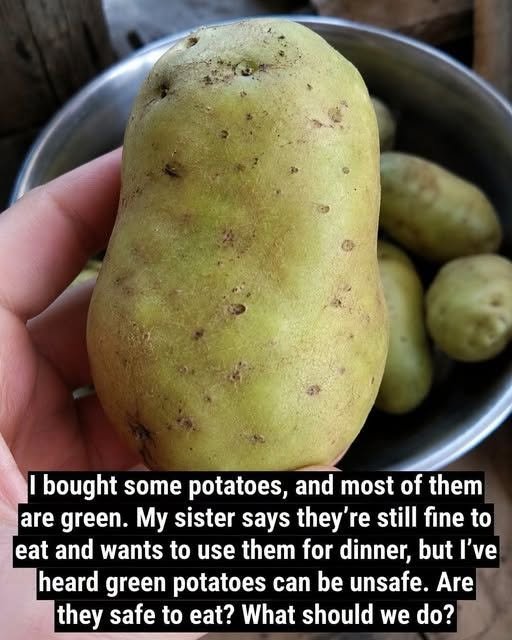
Green Potatoes: Are They Safe to Eat or Should You Toss Them?
You pull a mesh bag of potatoes from your pantry, prep your knife, and find that stark, eerie green hue staring back at you. Your sister waves it off with a casual “just cut the green parts off,” but a nagging voice in your head tells you that vibrant chlorophyll does not belong on a root vegetable.
The Science Behind the Green
Potatoes turn green when they are exposed to light or improper storage conditions. That green color is actually chlorophyll—a harmless plant pigment—but its presence serves as a glaring neon warning sign.
Where chlorophyll goes, solanine follows. Solanine is a natural glycoalkaloid neurotoxin that the potato produces as a chemical defense mechanism against pests, fungi, and ultraviolet light. If a potato is heavily greened or stored in warm, bright places, solanine levels spike dramatically throughout the tuber, particularly in the skin and the sprouts (eyes).
The Health Risks of Consuming Solanine
Eating high amounts of solanine is no minor matter. Unlike normal food-borne bacteria, cooking, boiling, or baking does not destroy solanine; heat leaves the toxin largely intact.
When you ingest toxic levels of glycoalkaloids, symptoms typically begin anywhere from 30 minutes to a few hours later:
-
Acute gastrointestinal distress (severe nausea, vomiting, and painful stomach cramps)
-
Neurological symptoms (dizziness, headaches, confusion, and a burning sensation in the throat)
-
In extreme cases, severe toxicity can require medical intervention, though fatalities from grocery store potatoes are exceedingly rare.
Are They Ever Safe to Salvage?
The verdict depends entirely on the depth and severity of the green tint.
-
Mildly Green: If a potato has a faint, superficial greenish blush on just a small patch of the skin, it can usually be salvaged. You must aggressively peel away all the green skin, dig out any sprouts, and discard those pieces entirely.
-
Heavily Green or Bitter: If the potato is deeply green across a large portion of its surface, or if it tastes bitter when you test a tiny raw slice against your tongue, throw it away. Bitterness is the definitive indicator of high solanine concentration.
Step-by-Step Action Plan for Your Dinner
-
Inspect Individually: Go through your entire batch. Separate them into two piles: minor surface discoloration versus deep, pervasive greening.
-
Toss the Bad Ones: If more than half the potato is green, or if it has started sprouting aggressively and feels soft and spongy, do not risk your evening. Toss them in the compost.
-
Aggressively Peel the Rest: For the slightly green ones you decide to keep, use a sharp vegetable peeler to strip away a thick layer of skin—don’t just use a paring knife. Ensure every trace of green pigment is completely gone.
-
Cut Generously: Carve out all the eyes and sprouts, as solanine concentrates heavily in these areas.
How to Prevent Your Potatoes from Greening
-
Darkness is Key: Store potatoes in a dark pantry, a breathable paper bag, or a root cellar away from direct sunlight and kitchen counter lights.
-
Cool, Not Cold: Keep them in a cool environment (ideal temperatures are around 45°F to 55°F). Avoid the refrigerator, as cold temperatures convert potato starches into sugars, altering their taste and frying chemistry.
-
Separate from Onions: Onions emit ethylene gas, which accelerates sprouting and spoilage in neighboring potatoes. Always store them in separate bins.
When it comes to food safety, your gut instinct is usually right. If a potato looks like a Granny Smith apple underneath its dirt, it’s time to skip the risk and head back to the grocery store.