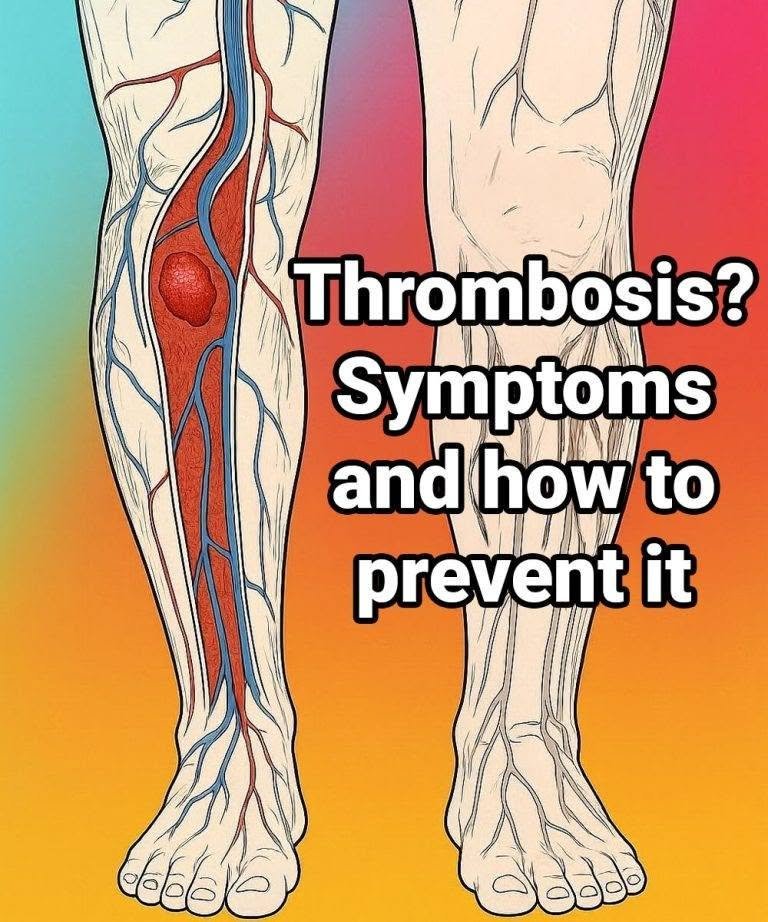
Thrombosis: What It Is, How to Identify Its Symptoms, and Prevent It Naturally
Imagine sitting at your desk during a long workday, or stepping off a crowded airplane after a 10-hour flight, feeling a strange, dull ache and tightness in your calf. You brush it off as simple travel fatigue or a minor muscle cramp, stretching your legs and heading home without a second thought.
For most people, minor aches fade after a good night’s rest. But sometimes, that subtle discomfort is hiding a silent, dangerous medical emergency forming inside your veins.
It is enough to make you feel uneasy about how vulnerable our bodies can be to hidden vascular hazards.
Here is the truth nobody thinks about during a routine day: your circulatory system relies on smooth, uninterrupted blood flow. When that flow stalls, blood can clot improperly inside a blood vessel—a condition known as thrombosis. Left unaddressed, a clot can break loose and travel to your lungs, creating a life-threatening crisis.
By the time you finish reading this comprehensive guide, you will understand what thrombosis is, how to recognize its subtle warning signs, and natural, proactive strategies to protect your vascular health.
The Vascular Reality: What Is Thrombosis?
To understand thrombosis, you have to look at how your circulatory network operates.
Your veins and arteries form a vast highway system carrying blood back and forth between your heart and tissues. Under normal conditions, your blood clots only when necessary to stop bleeding from an injury. However, when blood flow slows down dramatically, or if the lining of a blood vessel becomes damaged, platelets and proteins can clump together abnormally, forming a solid mass (a thrombus) inside the vessel.
Thrombosis generally falls into two primary categories:
-
Deep Vein Thrombosis (DVT): A blood clot forms in a deep vein, most commonly in the lower legs, thighs, or pelvis.
-
Arterial Thrombosis: A clot forms in an artery, which can abruptly cut off oxygen-rich blood to vital organs like the heart or brain, triggering a heart attack or stroke.
Why It Matters: The Modern Sedentary Risk
In contemporary society, prolonged sitting has become an occupational hazard. Whether you are glued to an office desk for eight hours or flying across continents, immobility slows down the natural muscular pump in your legs that pushes blood back up toward your heart.
The Consequences of Ignoring Clot Risks
When a deep vein clot forms and is left unnoticed, it can partially or completely block circulation, leading to:
-
Persistent Swelling and Pain: Chronic fluid backup in the limb.
-
Post-Thrombotic Syndrome: Long-term leg pain, swelling, and skin changes.
-
Pulmonary Embolism (PE): A catastrophic medical emergency where a piece of the clot breaks free, travels through the heart, and lodges in the pulmonary arteries of the lungs.
How to Identify the Symptoms: The Warning Signs
Because thrombosis doesn’t always announce itself loudly, you must know what physical clues to watch for, particularly in your limbs.
1. Unilateral Leg Swelling
-
What it looks like: One leg (often just the calf or ankle) swells up noticeably, while the other leg remains completely normal. (Swelling in both legs simultaneously is usually related to water retention or heart issues, not a single DVT).
2. Localized Pain, Cramping, or Tenderness
-
What it feels like: A deep, persistent cramp or soreness in your calf that feels distinct from a standard workout muscle pull. It often worsens when you stand or walk.
3. Skin Discoloration and Warmth
-
What it looks like: The skin over the painful or swollen area may appear red, purplish, or pale, and it will often feel noticeably warmer to the touch than the surrounding skin.
4. Red Flags for Pulmonary Embolism (Seek Emergency Care Immediately)
If a clot travels to the lungs, it triggers distinct systemic symptoms:
-
Sudden, unexplained shortness of breath or difficulty breathing.
-
Sharp, stabbing chest pain that worsens when you take a deep breath or cough.
-
A sudden rapid heart rate, unexplained dizziness, or coughing up blood.
Step-by-Step Actionable Guide: Natural and Lifestyle Prevention
While severe clotting disorders require medical intervention and blood thinners, you can dramatically lower your baseline risk of stasis thrombosis through proactive daily habits.
Step 1: Break Up Prolonged Sitting
If your job requires hours at a desk, set a timer on your phone to stand up, stretch, and walk around for 3 to 5 minutes every single hour. Do seated ankle pumps and foot rotations to activate your calf muscles, which act as natural venous pumps.
Step 2: Stay Aggressively Hydrated
Dehydration makes your blood thicker and more viscous, elevating the likelihood of sluggish circulation and clot formation. Keep a water bottle at your desk and sip consistently throughout the day, especially during air travel.
Step 3: Support Vascular Integrity Through Nutrition
Incorporate foods rich in natural anti-inflammatory compounds and circulation boosters into your diet. Leafy greens, berries, garlic, ginger, and omega-3 fatty acids (found in wild-caught fish or chia seeds) help support healthy blood flow and reduce systemic inflammation.
Step 4: Wear Graduated Compression Socks
If you are embarking on a long-haul flight or undergoing a long car ride, wear medical-grade graduated compression stockings. They apply gentle, targeted pressure to your lower legs, preventing blood from pooling in your lower extremities.
Real-World Scenarios
To see how this plays out in daily life, let’s examine two common profiles.
Scenario A: The Long-Haul Flyer
-
The Profile: 48 years old, takes a 12-hour international flight, sits completely still watching movies without drinking water or walking the aisle.
-
The Warning Sign: Three days after landing, notices his left calf is swollen, tender, and warm.
-
The Resolution: Recognizes the symptoms of DVT, seeks immediate medical evaluation, and receives timely treatment before the clot can migrate to his lungs.
Scenario B: The Desk-Bound Professional
-
The Profile: 35 years old, works 9 hours a day at a computer setup, experiences occasional leg tightness.
-
The Transformation: Adopts a “stand and stretch” hourly habit, trades sugary sodas for water, adds daily evening walks, and successfully supports healthy lower-limb circulation.
Comparison Table: High-Risk Habits vs. Protective Vascular Habits
Pros & Honest Cons of Natural Prevention Strategies
The Pros
-
Whole-Body Health: The same habits that prevent thrombosis (hydration, walking, clean nutrition) also boost cardiovascular fitness, energy, and metabolic health.
-
Zero Side Effects: Natural movement and hydration carry no adverse pharmaceutical side effects.
The Cons
-
Not a Cure for Existing Clots: Natural prevention is powerful for stopping clots before they form, but it cannot dissolve or treat an active, diagnosed deep vein thrombosis.
-
Requires Daily Discipline: Beating sedentary stagnation requires conscious behavioral changes throughout your workday.
Common Mistakes and How to Fix Them
-
Mistake 1: Ignoring unilateral leg swelling.
-
The Fix: Never assume one-sided swelling is just a simple bruise or gym strain. If a single calf swells and hurts persistently, consult a doctor immediately for an ultrasound check.
-
-
Mistake 2: Crossing your legs for hours at a desk.
-
The Fix: Crossing your legs restricts blood flow in the thighs and popliteal veins. Keep both feet flat on the floor or use an ergonomic footrest.
-
-
Mistake 3: Relying solely on supplements.
-
The Fix: While certain natural compounds support circulation, movement and hydration are non-negotiable foundations that supplements cannot replace.
-
Expert-Level Insights: Virchow’s Triad
Medical professionals understand thrombosis through a classic framework known as Virchow’s Triad, which outlines the three broad categories of factors that contribute to clot formation:
-
Hypercoagulability: An increased tendency of the blood to clot (caused by genetics, smoking, dehydration, or certain medical conditions).
-
Hemodynamic Changes (Stasis): Slowed blood flow caused by immobility, bed rest, varicose veins, or long travel.
-
Endothelial Injury: Damage to the inner lining of the blood vessel wall (caused by trauma, surgery, or inflammation).
Understanding this triad explains why combining movement (to stop stasis) with hydration (to manage blood viscosity) is so effective for prevention.
Frequently Asked Questions
1. Can a blood clot go away on its own without treatment? While small clots can sometimes be naturally resorbed by the body, an untreated deep vein thrombosis or pulmonary embolism is extremely dangerous and unpredictable. Any suspected clot requires immediate medical evaluation.
2. Are younger, healthy people at risk for thrombosis? Yes. While age is a risk factor, thrombosis can strike anyone experiencing prolonged immobility (like long flights or bed rest), dehydration, or who has underlying genetic clotting predispositions (like Factor V Leiden).
3. Does walking really prevent blood clots? Yes! When you walk, your calf muscles contract, acting as a muscular pump that squeezes deep veins and forcefully pushes blood back up toward your heart against gravity, eliminating stasis.
4. What tests do doctors use to diagnose a blood clot? Doctors typically use a duplex ultrasound to visualize blood flow and spot blockages in the veins, alongside blood tests like a D-dimer assay to check for clotting activity in the bloodstream.
5. Are birth control pills or hormone replacement therapies linked to thrombosis? Yes. Estrogen-containing medications can increase blood coagulability, raising the risk of thrombosis, particularly in women who smoke or have other risk factors.
6. How tight should compression socks be? Graduated compression stockings should fit snugly, providing the most pressure at the ankle and gradually decreasing up the calf. If they cause pain or numbness, they are too tight or improperly fitted.
7. Can drinking alcohol cause blood clots? Heavy alcohol consumption can lead to dehydration, which thickens the blood and sluggishly slows circulation, indirectly increasing clot risks during travel or inactivity.
8. When is leg pain a medical emergency? If leg pain is accompanied by sudden swelling, skin redness, warmth, or if you experience sudden shortness of breath and chest pain, treat it as a medical emergency and seek professional care immediately.
Action Checklist
What to Do:
-
Stand up, stretch, and walk around for 5 minutes every hour during long desk work sessions.
-
Keep a water bottle nearby and stay well-hydrated throughout the day.
-
Wear graduated compression stockings during long-distance flights or extended car trips.
-
Incorporate circulation-boosting foods like leafy greens, omega-3s, and garlic into your diet.
-
Perform seated ankle rotations and foot pumps when movement is restricted.
What to Avoid:
-
Avoid sitting with your legs crossed for prolonged periods.
-
Do not ignore one-sided leg swelling, deep calf pain, or unexplained warmth.
-
Avoid prolonged immobility without taking scheduled movement breaks.
-
Do not rely on natural remedies alone if you suspect an active blood clot.
Conclusion
Thrombosis is a serious medical condition, but understanding its subtle warning signs and practicing proactive daily habits—like breaking up sedentary routines, staying hydrated, and keeping your muscles moving—can dramatically protect your circulatory health. Listen to your body, respect the power of movement, and keep your blood flowing smoothly.
Don’t let prolonged sitting put your vascular health at risk. Stay hydrated, take regular movement breaks, and know the warning signs of thrombosis to keep your circulation safe.