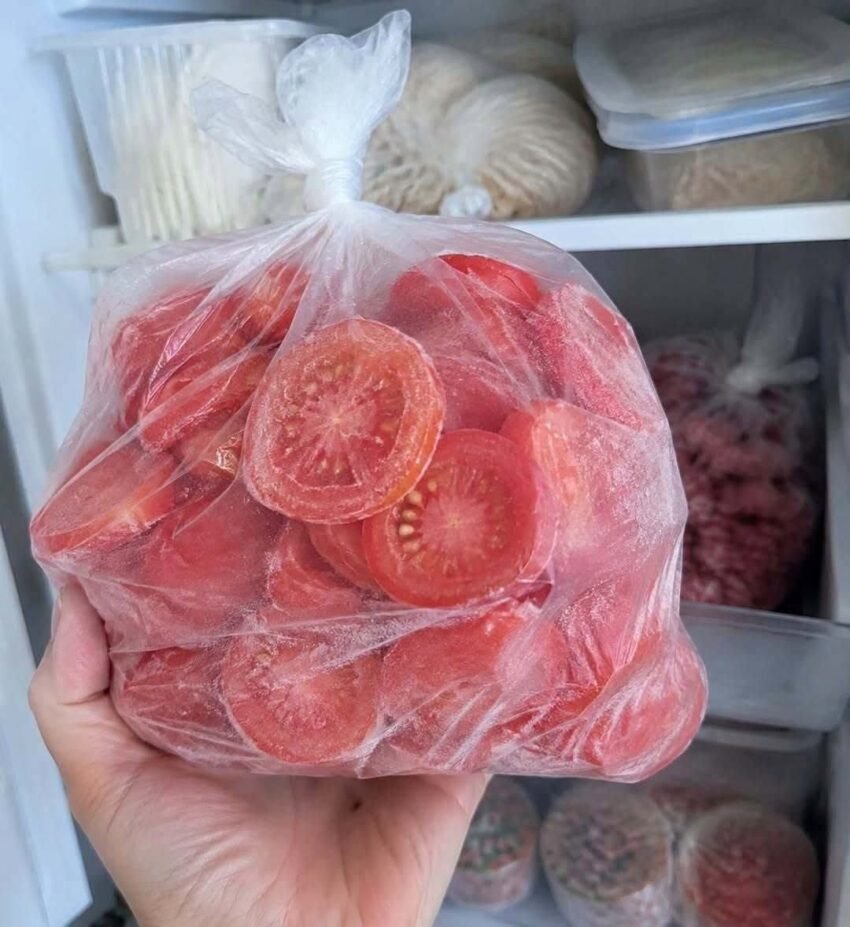
The Main Rule of Freezing Tomatoes That Many People Don’t Know (And How to Keep Them Fresh)
Picture this: It’s the peak of summer, and your garden is overflowing with plump, juicy, sun-ripened tomatoes. Or perhaps you stumbled upon an incredible bulk deal at your local farmers market. You buy way more than you can possibly eat in a week, and instead of letting them rot on the counter, you decide to toss them straight into the freezer so you can enjoy fresh-tasting tomatoes all winter long.
You slide them into a freezer bag, seal it up, and tuck it away.
A few months later, you pull them out to make a cozy winter pasta sauce, only to find a watery, mushy mess that looks more like tomato soup than firm, fresh fruit.
It is enough to make you wonder what went wrong with your preservation efforts.
Here is the secret nobody in the quick-tip kitchen hacks column tells you: you cannot just throw fresh raw tomatoes straight into the freezer and expect them to bounce back with a crisp texture when thawed. Freezing causes water inside the tomato’s cellular walls to expand into sharp ice crystals, rupturing those walls completely. When they thaw, they collapse into mush.
By the time you finish reading this comprehensive guide, you will understand the main rule of freezing tomatoes, how to prep them properly, and how to make them look and taste fresh when you finally cook with them.
The Science of Freezing Tomatoes: Why Texture Changes
To understand why tomatoes behave so uniquely in the freezer, you have to look at their cellular structure.
Tomatoes are roughly 95% water. That high moisture content is what makes them juicy and refreshing, but it is also their Achilles’ heel when exposed to sub-zero temperatures.
-
The Ice Crystal Problem: As water freezes, it expands. Inside a raw tomato, expanding ice crystals pierce and destroy the cell membranes.
-
The Thaw Reality: Once those cell walls are ruptured, they can never regain their structural integrity. When the tomato thaws, all that trapped water rushes out, leaving behind a soft, limp skin and collapsed flesh.
Why It Matters: The Main Rule of Freezing Tomatoes
This brings us to the golden rule of freezing tomatoes that many home cooks miss: Never freeze raw, whole tomatoes expecting to slice them up in a salad later.
The Consequences of Breaking the Rule
When people ignore this rule, they end up disappointed with thawed tomatoes that cannot be sliced, diced, or eaten raw. However, once you understand how to work with this scientific reality, freezing tomatoes becomes an incredible superpower for your kitchen.
The Right Way to Freeze Tomatoes: Step-by-Step
Because frozen tomatoes lose their structural crunch, the secret is to prep them based on how you will use them later (primarily in cooked dishes like soups, stews, chilis, and sauces).
Method 1: The Quick-Slip Freeze (Whole or Halved)
If you want the absolute easiest, zero-cook method for preserving whole tomatoes:
-
Wash and Core: Rinse your ripe tomatoes and remove the stem scars.
-
Flash Freeze: Place whole or halved tomatoes on a baking sheet lined with parchment paper and put them in the freezer for 2–3 hours until solid (this stops them from clumping together).
-
Bag and Store: Transfer the frozen tomatoes into heavy-duty freezer bags, press out excess air, and seal.
-
The Magic Trick Later: When you pull them out months later to make a sauce, run them under warm tap water for 10 seconds. The skin will split and slide right off effortlessly like magic!
Method 2: Roasted and Concentrated (Best Flavor)
If you want to lock in deep, rich summer flavor:
-
Slice and Season: Slice your tomatoes in half, toss them with a little olive oil, salt, and pepper, and lay them on a roasting pan.
-
Slow Roast: Roast them at 350°F (175°C) for about 1 to 2 hours until they are caramelized and reduced.
-
Freeze: Let them cool completely, then pack them into freezer-safe containers or silicone blocks. They will taste intensely fresh and sweet all winter long.
Real-World Scenarios
To see how this plays out in daily life, let’s look at two common home cook profiles.
Scenario A: The Disappointed Freezer
-
The Profile: Buys a massive flat of fresh vine tomatoes, tosses them raw into gallon ziplock bags, and throws them in the deep freezer.
-
The Result: Thaws them out months later for a summer caprese salad, only to find a puddle of water and mushy skins.
-
The Lesson Learned: Learns the main rule—raw frozen tomatoes are for cooking, not for slicing raw. Shifts to freezing them whole for winter marinara sauces instead.
Scenario B: The Smart Meal-Prepper
-
The Profile: Understands the cellular structure of tomatoes, flash-freezes whole garden surplus, and labels them specifically for soups and stews.
-
The Result: Enjoys rich, garden-fresh flavor in January chilis and sauces with zero waste and minimal effort.
Comparison Table: Freezing Methods Compared
| Freezing Approach | Best Use Case | Prep Effort | Thawed Texture Result |
| Raw Whole/Halved | Winter soups, stews, and marinara sauces. | Very Low (wash and freeze). | Soft, mushy (skins slide right off). |
| Oven-Roasted | Instant pasta sauces, pizza toppings, spreads. | Medium (roasting required). | Concentrated, rich, jammy consistency. |
| Blanched & Diced | Chili bases, Mexican salsas, stews. | High (blench, peel, dice, freeze). | Diced pieces ready for direct pot-dropping. |
Pros & Honest Cons of Freezing Tomatoes
The Pros
-
Zero Food Waste: Rescue overripe garden or farmer’s market tomatoes before they spoil.
-
Summer Flavor All Year: Enjoy the vibrant taste of August tomatoes in the dead of winter without buying bland grocery store imports.
-
Ultimate Convenience: Whole frozen tomatoes peel themselves under warm water in seconds.
The Cons
-
Loss of Crunch: You can never use thawed home-frozen tomatoes in fresh salads, sandwiches, or raw garnishes.
-
Freezer Space: Storing bulk bags of tomatoes requires dedicated freezer real estate.
Common Mistakes and How to Fix Them
-
Mistake 1: Trying to use frozen tomatoes in a raw salad.
-
The Fix: Accept that freezing changes the cellular texture. Reserve your frozen stash strictly for cooked dishes where texture melts away into rich flavor.
-
-
Mistake 2: Forgetting to remove trapped air from storage bags.
-
The Fix: Air pockets cause freezer burn and degrade flavor quality. Use vacuum sealers or press all air out of ziplock bags before sealing.
-
-
Mistake 3: Freezing bruised or rotting fruit.
-
The Fix: Only freeze firm, healthy, ripe tomatoes. Bad spots will only taste worse after thawing.
-
Expert-Level Insights: Insider Knowledge
-
The Acid Factor: Tomatoes are naturally acidic, which helps preserve their safety in the freezer for up to 8 to 12 months without spoiling. However, for peak flavor, aim to use them within 6 months.
-
The Mason Jar Warning: If you freeze liquid-heavy tomato purées or sauces in glass mason jars, make sure to leave at least two inches of headspace at the top. Liquids expand when freezing, and a completely full jar will crack or shatter.
Frequently Asked Questions
1. Do I need to blanch tomatoes before freezing them?
Not necessarily! If you use the quick-slip method (freezing them raw and whole), you can skip blanching entirely. The skins will slide right off under warm water after they thaw.
2. How long do frozen tomatoes last in the freezer?
When properly stored in airtight containers or heavy-duty freezer bags, frozen tomatoes retain their best flavor for 6 to 9 months.
3. Can I freeze store-bought greenhouse tomatoes?
Yes, but vine-ripened, garden-fresh tomatoes will always yield a much sweeter, richer flavor profile when thawed and cooked down.
4. Why did my frozen tomatoes turn brown or grey?
Discoloration usually indicates freezer burn caused by inadequate sealing. Always use freezer-specific bags and press out as much air as possible.
5. Do I need to thaw tomatoes before cooking with them?
For soups, stews, and sauces, you don’t even need to thaw them! Just drop whole frozen tomatoes straight into your hot pot, and let the heat do the work.
6. Can I freeze tomato sauce instead of whole tomatoes?
Absolutely. Cooking down your surplus into a finished marinara sauce and freezing it in portions is one of the most efficient ways to store a harvest.
7. Will freezing tomatoes make them taste bitter?
No, freezing itself doesn’t change the natural sugar content, but under-ripe tomatoes will stay tart. Always freeze fully ripe, sweet tomatoes for the best results.
8. Can I use a regular plastic bag to freeze them?
Standard grocery bags are too thin and permeable, leading to rapid freezer burn. Always use thick, designated freezer bags or airtight silicone containers.
Action Checklist
What to Do:
-
Sort through your ripe tomato harvest and wash them thoroughly.
-
Flash-freeze whole tomatoes on a baking sheet, then transfer to heavy freezer bags.
-
Label bags with the date so you can rotate your stock.
-
Use your frozen stash exclusively for cooked dishes, soups, and sauces.
What to Avoid:
-
Never attempt to slice thawed home-frozen tomatoes for raw salads or sandwiches.
-
Avoid leaving air pockets inside your storage bags to prevent freezer burn.
-
Do not freeze bruised, moldy, or under-ripe green tomatoes.
Conclusion
Freezing tomatoes is one of the easiest ways to capture the magic of summer produce and lock it away for winter cooking. By keeping the main rule in mind—accepting that frozen tomatoes are meant for the cooking pot rather than the salad bowl—you can enjoy fresh, vibrant flavor all year round with zero fuss.
Don’t freeze raw tomatoes expecting a crisp texture. Embrace the mush, use them for rich winter sauces, and let the warm-water skin-peeling trick make your kitchen life effortless.