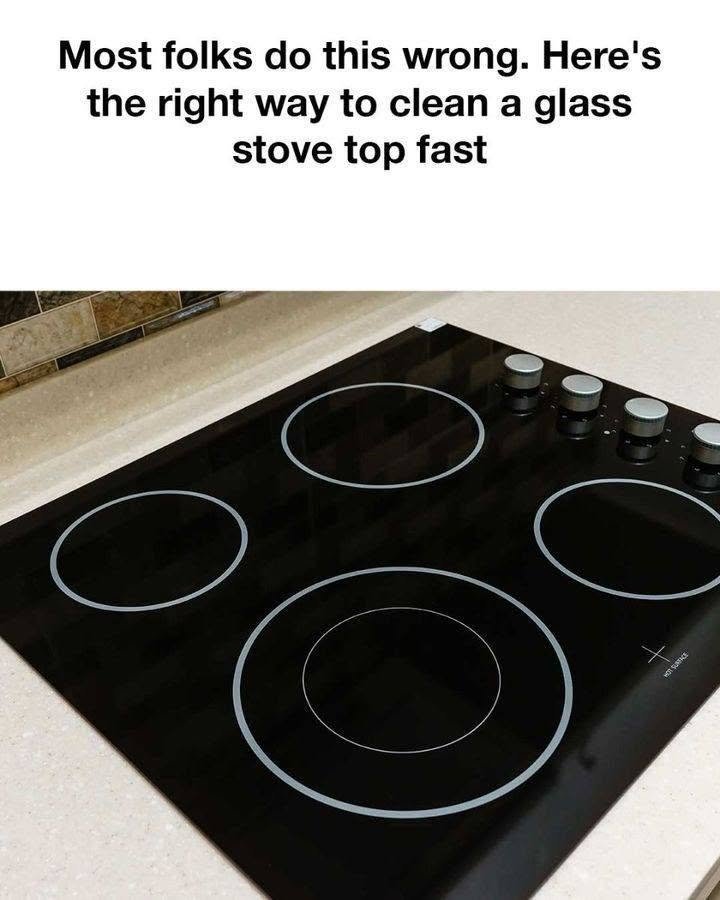
Most Folks Do This Wrong: Here’s the Right Way to Clean a Glass Stove Top Fast
Picture this: You just finished cooking a delicious, hearty weekend dinner. The kitchen smells amazing, your family is happily eating, and you look over at your sleek, glossy glass-top stove.
Instead of reflecting the kitchen lights, it is covered in a constellation of greasy splatters, baked-on tomato sauce rings, and stubborn, iridescent burnt sugar spots from where something boiled over.
You grab a standard kitchen sponge, slap some dish soap on it, and aggressively scrub the surface in circles, pressing down with all your might.
When you rinse and dry it, you step back—only to find that your frantic scrubbing didn’t lift the burnt spots at all; instead, it left a hazy, cloudy film and a web of fine, permanent scratches all over the glass.
It is enough to make you feel like keeping a modern kitchen appliance looking pristine is an impossible full-time job.
Here is the secret nobody in the appliance manual mentions: glass cooktops aren’t made of ordinary glass—they are actually durable ceramic glass, and they require a very specific chemical and physical approach to cleaning. If you use abrasive scouring pads, the wrong cleaners, or scrub while the surface is still hot, you are practically guaranteed to ruin the finish.
By the time you finish reading this comprehensive guide, you will understand the common mistakes people make, the science behind safe lifting, and the ultimate step-by-step method to make your glass stove top shine like brand new in under 10 minutes using items you already have.
The Surface Reality: Why Glass Cooktops Are So Fragile
To understand why traditional cleaning methods fail, you have to look at what a glass-ceramic cooktop actually is.
Unlike stainless steel or cast iron, ceramic glass is engineered to handle extreme thermal expansion, but its surface is surprisingly susceptible to mechanical abrasion.
-
The Trap of Scratches: Many people think glass is impenetrable, but quartz and mineral dust particles trapped in dirty sponges can easily scratch the surface. Once scratched, those microscopic valleys trap grease and burnt carbon forever, making the stove look perpetually dirty.
-
The Thermal Shock Danger: Throwing cold water or liquid cleaners onto a hot glass surface causes rapid thermal contraction, which can literally crack or shatter the entire cooktop.
Why It Matters: The Cost of Doing It Wrong
In contemporary home maintenance, we often default to brute force: grab the heaviest-duty scrubber and a bottle of all-purpose cleaner and scrub until the grime yields.
The Consequences of Incorrect Cleaning
When you clean a glass stove top the wrong way, you risk:
-
Permanent Micro-Scratches: Ruining the mirror-like sheen with dull, cloudy swirl marks that can never be buffed out.
-
Baked-On Carbon Buildup: Leaving microscopic layers of food residue that carbonize further the next time you turn on the burner, turning into indestructible black crusts.
-
Hazy Residue Film: Using greasy or soap-based cleaners that leave behind a sticky film, which instantly bakes into smoke and streaks the next time the burner heats up.
The Right Way to Clean a Glass Stove Top: Step-By-Step
Let’s dive into the fast, foolproof cleaning method used by professional housekeepers to lift heavy grease and baked-on carbon without scratching the glass.
Step 1: Ensure the Surface is Completely Cool
Never attempt to clean a warm or hot cooktop. Wait until the surface is cool enough to touch safely. This prevents thermal shock, keeps cleaning liquids from evaporating into sticky films instantly, and protects your hands.
Step 2: Clear Loose Debris and Apply a Gentle Degreaser
Wipe away loose crumbs with a damp microfiber cloth. Next, skip harsh chemical bleaches and instead create a gentle cleaning paste using baking soda and a few drops of water, or apply a specialized non-abrasive cooktop cream (like Bar Keepers Friend cooktop cleanser). Baking soda is naturally alkaline, which breaks down grease and organic burnt matter without scratching the ceramic surface.
Step 3: Let the Chemistry Work (The 10-Minute Soak)
This is where most people fail—they apply cleaner and scrub immediately. Instead, spread your baking soda paste or specialized cream evenly over the stained areas and let it sit undisturbed for 10 to 15 minutes. This allows the gentle abrasive and alkaline agents to chemically soften and lift the baked-on carbon.
Step 4: Use the “Angle-Blade” Trick for Stubborn Crusts
For rock-hard burnt spills that refuse to budge:
-
Hold a specialty single-edge razor blade scraper at a shallow 30 to 45-degree angle against the glass.
-
Gently push the blade flat across the surface under a light layer of cleaner or water.
-
Because the razor is held at a shallow angle and made of softer metal than the treated ceramic glass, it will slide right underneath burnt sugar and carbon, popping them off cleanly without scratching.
Step 5: Buff to a Mirror Shine with Microfiber
Wipe away the loosened residue and cleaner using a clean, damp microfiber cloth. Finally, take a dry, lint-free microfiber polishing cloth and buff the entire surface in circular motions until it gleams completely streak-free.
Real-World Scenarios
To see how this plays out in daily life, let’s look at two common home scenarios.
Scenario A: The Aggressive Scrubber
-
The Approach: Uses a green Scotch-Brite scouring pad and dish soap on a warm stove, scrubbing furiously to remove a boiled-over pasta sauce stain.
-
The Result: The sauce comes off, but the stove is now covered in dull, cloudy scratches that catch the light and make the appliance look old and worn out.
-
The Lesson: Discovers that brute-force abrasion ruins ceramic glass, and shifts to chemical soaking and razor scraping.
Scenario B: The Smart Methodical Cook
-
The Approach: Waits for the stove to cool, applies a baking soda paste, lets it sit for 15 minutes, uses a razor scraper at a shallow angle for heavy spots, and buffs with microfiber.
-
The Result: The cooktop looks brand new in under 10 minutes with zero scratches and a flawless mirror finish.
Comparison Table: Wrong vs. Right Cleaning Habits
| Cleaning Step | The Wrong Way (Damaging) | The Right Way (Safe & Fast) |
| Temperature | Cleaning while the burner is still warm or hot. | Waiting until the glass is completely cool to the touch. |
| Tools | Using abrasive green scouring pads or steel wool. | Using soft microfiber cloths and a flat razor scraper at a 45-degree angle. |
| Cleaning Agents | Dish soap and heavy grease-based multi-purpose sprays. | Baking soda paste, white vinegar, or specialized non-abrasive cooktop cream. |
Pros & Honest Cons of the Baking Soda & Razor Method
The Pros
-
Flawless Results: Lifts even the most stubborn, baked-on carbon and sugar without leaving a single scratch.
-
Inexpensive & Non-Toxic: Baking soda and water cost pennies and require no harsh, lung-irritating chemical fumes.
-
Protects Investment: Keeps your expensive appliance looking pristine for years.
The Cons
-
Requires Patience: You have to let the cleaner sit for 10 minutes rather than scrubbing instantly.
-
Razor Caution: Using a razor blade scraper requires basic care and mindfulness to avoid finger nicks if handled improperly.
Common Mistakes and How to Fix Them
-
Mistake 1: Using regular dish sponges with built-in green abrasive backs.
-
The Fix: Throw away abrasive green pads for stove duty. Use only soft sponges and microfiber cloths.
-
-
Mistake 2: Leaving water spots to air-dry.
-
The Fix: Tap water contains minerals that leave cloudy white water spots as it evaporates. Always finish your cleaning routine by buffing the glass dry with a clean microfiber towel.
-
-
Mistake 3: Sliding heavy cast iron pans across the glass.
-
The Fix: Always lift pots and pans rather than sliding them across the cooktop to prevent scratching and chipping the edges.
-
Expert-Level Insights: Insider Knowledge
-
The Sugar Hazard: Of all kitchen spills, sugar and syrup are the most dangerous to a glass cooktop. When sugar melts and then bakes onto hot ceramic glass, it chemically bonds with the silica in the glass surface during the heating cycle. If you try to pry it off while hot or cold without soaking, it can actually pull chunks of the glass surface right out with it (a process called pitting). Always dissolve sugar spills with warm water and let them soften completely before removal.
-
The Vinegar Finish Secret: After wiping away your baking soda paste, spray a light mist of white vinegar across the glass and buff it off. The mild acetic acid cuts any residual alkalinity and leaves an unmatched, anti-static mirror shine.
Frequently Asked Questions
1. Can I use Windex or glass cleaner on my glass stove top?
While window cleaners won’t ruin the glass, they often leave a thin, iridescent film that burns into streaks the next time you turn the burner on. Specialized cooktop creams or simple vinegar and water work much better.
2. How do I get rid of rainbow-colored heat stains on my glass stove?
Those rainbow or metallic sheen spots are usually caused by mineral deposits or burnt-on grease film reacting to high heat. Applying a paste of baking soda and hydrogen peroxide, letting it sit for 15 minutes, and buffing with a non-scratch pad will usually make them vanish.
3. Are razor blade scrapers safe for glass cooktops?
Yes! Appliance manufacturers actually recommend single-edge razor scrapers for glass cooktops—provided you hold the blade flat at a shallow 30 to 45-degree angle and keep the surface lubricated with cleaner or water.
4. Why does my stove top look cloudy after I clean it?
Cloudiness is almost always caused by soap residue buildup or hard water mineral deposits left behind by a dirty rinse water towel. Fix it by wiping down with a 50/50 water and white vinegar solution and buffing dry with a clean microfiber cloth.
5. Can I use Magic Erasers on a glass stove top?
Melamine sponges (Magic Erasers) are mildly abrasive. While they can work in a pinch for light grease, excessive use can dull the glossy finish over time. Stick to microfiber and baking soda for regular maintenance.
6. How often should I deep-clean my glass cooktop?
If you wipe up light splatters with a damp microfiber cloth after every meal, you will only need to do a deep baking soda and soak cleaning once every week or two.
7. Can a scratched glass stove top be repaired?
Fine surface hazing can sometimes be minimized with specialized glass polishing compounds (like cerium oxide), but deep gouges and scratches cannot be repaired and usually require replacing the glass top if they compromise structural integrity.
8. Why is my food sticking to certain spots on the burner?
If food is sticking or burning in exact ring patterns, it means microscopic carbon residue is left on the glass. A thorough baking soda soak and razor scrape will strip away that invisible buildup and restore a smooth surface.
Action Checklist
What to Do:
-
Wait for your stove top to cool down completely before cleaning.
-
Apply a baking soda paste or cooktop cream and let it sit for 10 to 15 minutes.
-
Use a single-edge razor blade at a shallow angle for stubborn burnt-on spots.
-
Finish by buffing the surface dry with a clean, lint-free microfiber cloth.
What to Avoid:
-
Never use abrasive green scouring pads, steel wool, or harsh scouring powders.
-
Avoid cleaning a hot or warm stove to prevent thermal shock and rapid drying films.
-
Never slide heavy cast iron or ceramic cookware across the glass surface.
-
Avoid leaving melted sugar to cool and harden without immediate water softening.
Conclusion
Cleaning a glass stove top doesn’t have to be a frustrating battle of elbow grease and scratched surfaces. By respecting the ceramic material, letting chemistry do the heavy lifting with a baking soda soak, using a razor blade safely for tough spots, and finishing with a microfiber buff, you can keep your kitchen centerpiece shining brilliantly every single day.
Stop scrubbing your glass stove top with abrasive pads and harsh force. Let a baking soda paste soak, use a shallow-angle razor for tough carbon, and buff to a flawless mirror shine in minutes.