The Upside-Down Honey Test: Fact vs. Kitchen Myth
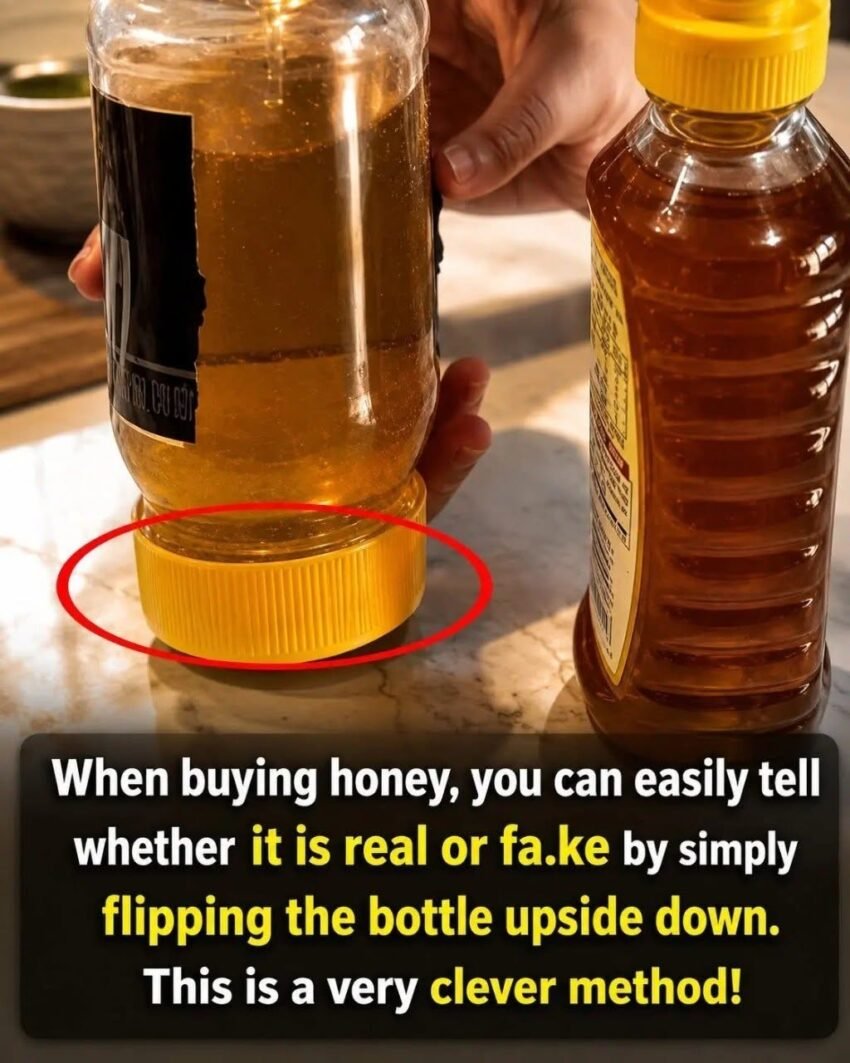
Scroll through social media or watch home remedy videos, and you will find a viral trick claiming you can instantly tell real honey from fake honey simply by flipping the bottle upside down and watching a slow-moving air bubble. It sounds like a brilliant, foolproof shortcut. But does it actually work?
Can you test real honey by flipping the bottle upside down? Explore the truth behind this viral kitchen trick and learn how honey quality is really tested.
The Allure of the Flip Test
The internet loves a quick, low-effort life hack. According to popular folklore, if you invert a bottle of honey and watch the air bubble rise slowly through the liquid, you are holding 100% pure, raw, high-quality honey. If the bubble shoots straight to the top like water, the myth claims, it is adulterated, fake, or heavily watered down with corn syrup.
It is a clever visual trick that appeals to our desire for simple answers in a confusing grocery aisle. But when food scientists and beekeepers look at the physics of honey, they see a different story. Can a simple air bubble really distinguish between authentic bee honey and commercial syrups?
Why the Flip Test Is a Kitchen Myth
The speed at which an air bubble moves through a jar of honey is determined by a scientific property called viscosity (thickness and flow resistance). However, viscosity is not a reliable fingerprint of authenticity for several reasons:
-
Moisture Content Varies Naturally: Pure, raw honey varies widely in thickness depending on the floral source, regional climate, and harvest conditions. Some completely natural honeys have a naturally higher water content and flow much faster than thick, heavy varieties.
-
Commercial Blends Are Engineered: Commercial honey packers frequently heat, filter, and blend honeys to achieve a uniform consistency. A fake or heavily processed honey can easily be manufactured with thickeners or high-fructose corn syrup to mimic the exact high viscosity of raw honey.
-
Temperature Changes Everything: Honey thins out dramatically in a warm kitchen and thickens up intensely in a cold pantry. A “real” honey bottle stored in a warm room will pass a fast air bubble, while a processed honey stored in a cold fridge will trap a slow bubble.
Comparative Analysis: The Flip Test vs. Scientific Honey Testing
Common Pitfalls When Buying Honey
Because visual tricks like the flip test cannot detect modern industrial food fraud, consumers often fall for misleading marketing claims on grocery labels:
-
Pitfall 1: Trusting the Word “Pure” on the Label.
-
The Danger: Commercial packaging terms like “pure honey” or “natural honey” are loosely regulated in many regions and can still apply to ultra-filtered, mass-produced honey blends stripped of beneficial pollen.
-
-
Pitfall 2: Assuming Crystallization Means Bad Honey.
-
The Danger: Many shoppers see a jar of honey turning cloudy, grainy, or solid and assume it has “gone bad” or is fake. In reality, crystallization is a primary sign of raw, unheated honey. Pure honey naturally crystallizes over time because it is a supersaturated sugar solution.
-
Frequently Asked Questions
1. Is there a reliable home test to check for fake honey? While home tests (like the water test or flame test) are frequently shared online, none of them can accurately detect modern liquid sugar adulteration. The only way to guarantee pure honey is to buy directly from trusted local beekeepers or reputable brands that test their batches.
2. Why is commercial honey sometimes liquid for years without crystallizing? Mass-market commercial honey is often heavily filtered (removing tiny pollen particles that act as “seeds” for crystals) and pasteurized at high heat, which delays crystallization.
3. What does raw honey mean? Raw honey is honey as it exists in the beehive—extracted directly from the honeycomb and strained, without undergoing high-heat pasteurization or ultra-filtration.
Action Checklist
What to Do:
-
Buy your honey locally from regional beekeepers whenever possible to ensure purity and support local agriculture.
-
Look for labels that specify floral sources (e.g., clover, wildflower, orange blossom) and embrace honey if it starts to crystallize naturally.
What to Avoid:
-
Using the upside-down bottle trick as a definitive indicator of whether honey is real or fake.
-
Throw away perfectly good, raw honey just because it has crystallized or turned solid in the pantry.
While flipping a honey bottle upside down makes for an entertaining kitchen trick, it tells you more about temperature and moisture than it does about honey authenticity. Skip the viral myths, support trusted local beekeepers, and enjoy your honey knowing the real story behind the jar!