CT Virtual Colonoscopy: What to Expect, Benefits, and Limitations
Curious about a virtual colonoscopy? Discover how this low-radiation scan works, its benefits over traditional methods, and what you need to know before booking.
When doctors recommend a colorectal cancer screening or an evaluation for persistent digestive issues, the thought of a traditional colonoscopy can cause instant hesitation. The idea of a long, flexible scope, intravenous sedation, and a lengthy recovery keeps many people from getting checked on time.
Fortunately, modern medical imaging offers an alternative: CT virtual colonoscopy (also known as CT colonography). Using advanced computed tomography and computer-generated 3D modeling, this technique allows radiologists to look inside the large intestine without ever inserting a physical scope.
Let’s look at how a virtual colonoscopy works, how it compares to traditional options, and what you need to know if you are considering the procedure.
How Does a Virtual Colonoscopy Work?
Despite the futuristic-sounding name, a virtual colonoscopy is a specialized, highly detailed X-ray examination.
-
The Bowel Prep (The Catch): First, a crucial myth needs busting: virtual colonoscopy still requires the exact same thorough bowel preparation as a traditional colonoscopy. Your colon must be completely empty of stool so the computer can generate clear images. This involves a clear liquid diet and strong laxatives the day before.
-
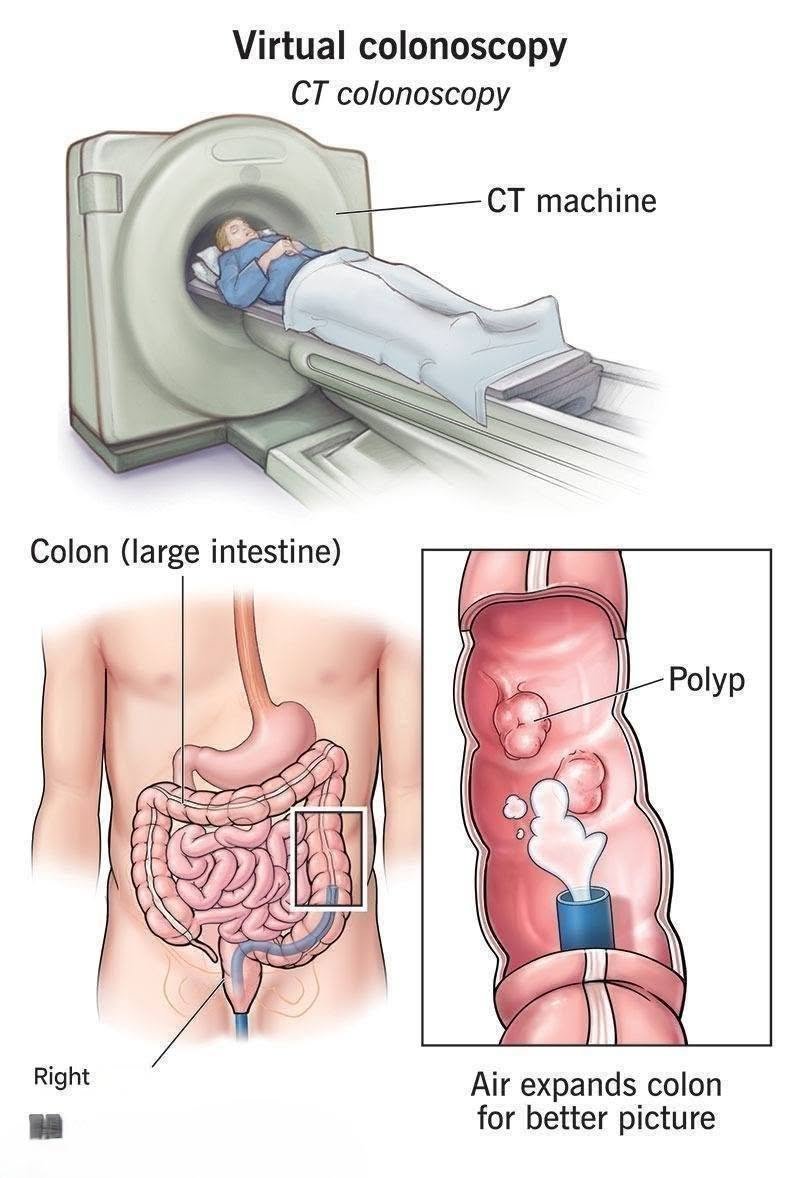
The Air Inflation: During the short 15-minute scan, you lie on a CT table while a tiny, short tube is gently placed in your rectum to pump air or carbon dioxide into your colon. This inflates the bowel so the walls are fully stretched and visible.
-
The Scan: The CT scanner takes multiple low-dose X-rays from different angles. Powerful computer software then stitches these slices together to create pristine 3D virtual fly-through views of your entire colon and rectum.
The Key Benefits of CT Colonography
While traditional colonoscopy remains the gold standard, virtual colonoscopy offers several distinct advantages for specific patients:
+-----------------------------------+-----------------------------------+
| Benefit                           | Why It Matters                    |
+-----------------------------------+-----------------------------------+
| No Sedation Needed                | You are fully awake and can drive home immediately|
| Minimally Invasive                | No physical scope traveling through the entire colon|
| Faster Procedure                  | The actual CT scan takes only 10 to 15 minutes|
| Safe for High-Risk Patients       | Ideal for those who cannot tolerate anesthesia safely|
| Extra-Colonic View                | Can spot incidental issues in surrounding pelvic organs|
+-----------------------------------+-----------------------------------+
The Major Limitations to Keep in Mind
Before opting for a virtual colonoscopy, it is vital to understand its limitations compared to a conventional scope:
-
No Immediate Treatment (The Two-Step Problem): A virtual colonoscopy is strictly a diagnostic tool. If the radiologist spots a polyp or abnormal growth, you cannot remove it during the scan. You will still have to undergo a traditional colonoscopy afterward to biopsy or remove the tissue, meaning two rounds of bowel prep.
-
Lower Sensitivity for Small Polyps: While it is very accurate at spotting large polyps (10mm or larger), it can occasionally miss smaller polyps or flat lesions.
-
Radiation Exposure: The procedure uses low-dose X-rays. While the radiation levels are considered safe for adults, it is not suitable for pregnant women.
Frequently Asked Questions
1. Does a virtual colonoscopy hurt?
Most patients report feeling minimal discomfort, primarily mild cramping or a feeling of fullness from the air used to inflate the colon. Because there is no heavy sedation, you can resume normal activities and eating immediately after.
2. Can I skip the liquid laxative prep if I choose a virtual scan?
No. This is a common misconception. Whether the doctor uses a camera scope or an X-ray scanner, any leftover stool inside the colon will block the view and obscure polyps, making the test useless.
3. When would a doctor specifically recommend a virtual colonoscopy?
Doctors typically recommend it if a patient cannot safely undergo sedation due to severe heart or breathing issues, if a traditional colonoscope cannot pass through a narrowed bowel obstruction, or as an alternative for resistant patients.
Action Checklist
-
What to Do:
-
Discuss your personal medical history and risk factors with your doctor to determine if virtual or traditional colonoscopy is right for you.
-
Follow your provider’s bowel preparation instructions precisely if you schedule the procedure.
-
-
What to Avoid:
-
Don’t assume you can skip the liquid laxative preparation just because the scan is “virtual.”
-
Conclusion
CT virtual colonoscopy offers a fast, low-invasive alternative for examining the large intestine without the need for anesthesia or a physical scope. While it cannot remove polyps on the spot, it provides a valuable option for patients seeking a less intimidating screening path under medical guidance.
A virtual colonoscopy is a fast, non-sedated CT scan that effectively images the colon, though any discovered polyps will still require a follow-up conventional colonoscopy for removal.
Have you or a loved one ever explored alternative screening options like a virtual colonoscopy? Share your thoughts or questions in the comments below!