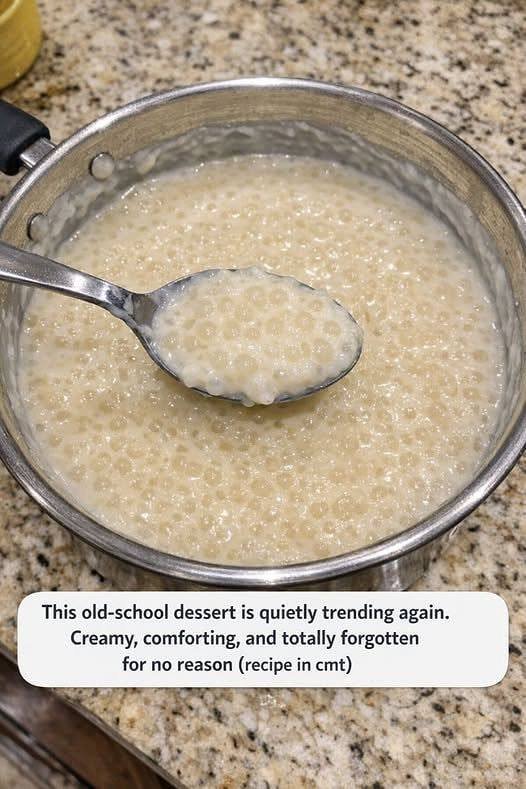
This Classic Dessert Is Making a Quiet Comeback — Creamy, Comforting, and Surprisingly Underrated
This old-fashioned dessert is trending again in 2025. Discover why rice pudding is quietly returning to American kitchens—and how to make it perfectly.
It’s not flashy.
It’s not stacked in layers for Instagram.
And it doesn’t come with a viral hashtag.
But it’s back.
Quietly.
In neighborhood diners. On brunch menus. In home kitchens where comfort still matters.
The dessert? Rice pudding.
Creamy. Mildly sweet. Inexplicably soothing.
For years, it lived in the shadow of brownies, cheesecake, and trendy molten lava cakes. Now, as American food culture shifts back toward simplicity and nostalgia, this humble classic is reappearing—and people are remembering why it never deserved to fade in the first place.
Let’s explore why rice pudding is resurging, what makes it timeless, and how to elevate it beyond cafeteria memories.
Why Rice Pudding Is Reappearing in 2025
Food trends move in cycles.
After a decade dominated by extreme desserts—oversized milkshakes, elaborate cronuts, and hyper-sweet creations—many Americans are leaning toward comfort and familiarity.
Industry watchers cited by publications like Forbes have noted a steady consumer shift toward nostalgic foods, especially those tied to childhood or family traditions.
Rice pudding fits perfectly into that movement.
It’s:
-
Budget-friendly
-
Simple to make
-
Naturally creamy
-
Adaptable to modern tastes
-
Comforting without being heavy
And in uncertain times, comfort wins.
A Brief History of an Overlooked Favorite
Rice pudding isn’t new.
It appears in culinary traditions across Europe, Asia, and the Middle East. In American households, it became especially common during the 19th and early 20th centuries, when frugality and resourcefulness shaped home cooking.
Rice was affordable.
Milk was accessible.
Sugar was modestly used.
The result? A dessert that felt indulgent without excess.
By the mid-1900s, it became a diner staple in cities like New York City and Chicago, often served chilled in simple glass bowls.
Then trend-driven desserts took over.
Until now.
What Makes Rice Pudding So Comforting?
Comfort foods share common characteristics:
-
Creamy textures
-
Mild sweetness
-
Familiar aromas
-
Warm serving temperature
Rice pudding checks every box.
From a sensory perspective, its appeal comes from slow-simmered starch releasing into milk, creating a naturally thick, custard-like texture without complicated techniques.
Behavioral food research frequently discussed in academic settings like Harvard University suggests that soft, warm foods can create a psychological association with safety and stability.
Rice pudding feels safe.
And in a fast-paced culture, safety tastes good.
Why It’s Surprisingly Underrated
Despite its strengths, rice pudding has a perception problem.
Many Americans associate it with:
-
School cafeterias
-
Bland hospital trays
-
Overcooked, gluey textures
But when made correctly, rice pudding is nuanced and elegant.
The difference lies in technique.
How to Make Restaurant-Quality Rice Pudding at Home
Ingredients (Classic Version)
-
¾ cup short-grain rice (Arborio works beautifully)
-
2 cups water
-
2 cups whole milk
-
½ cup heavy cream
-
⅓ cup sugar
-
1 teaspoon vanilla extract
-
Pinch of salt
Optional: cinnamon stick, lemon zest, nutmeg
Step-by-Step Method
1. Cook the Rice Gently
Simmer rice in water until tender and most liquid is absorbed.
2. Add Dairy Slowly
Stir in milk and cream over low heat.
Keep it barely simmering—not boiling.
3. Stir Frequently
This prevents scorching and helps starch thicken naturally.
4. Sweeten and Finish
Add sugar, salt, and vanilla once thickened.
Remove from heat while slightly loose—it thickens as it cools.
5. Serve Warm or Chilled
Both are excellent. Warm feels cozier. Chilled feels nostalgic.
Pro Tips Most People Don’t Know
-
Use short-grain rice for creaminess.
-
Avoid high heat—it causes separation and graininess.
-
Add flavor infusions early (like cinnamon sticks).
-
Don’t over-sweeten. Subtle sweetness makes it versatile.
-
Let it rest 10 minutes before serving. Texture improves.
Modern Upgrades That Elevate It
Rice pudding adapts beautifully to contemporary tastes.
Flavor Twists
-
Salted caramel drizzle
-
Orange zest and cardamom
-
Toasted coconut flakes
-
Fresh berries and honey
-
Espresso swirl
Texture Boosters
-
Toasted almonds
-
Pistachios
-
Dark chocolate shavings
Suddenly, it’s not cafeteria dessert.
It’s café-worthy.
Why It’s Trending Again in the U.S.
Several cultural shifts are driving the comeback:
1. Budget-Conscious Cooking
Rice pudding uses pantry staples.
2. Meal Prep Culture
It stores well for days.
3. Lower Sugar Preference
Compared to frosted desserts, it’s modestly sweet.
4. Comfort-Driven Eating
Post-pandemic food patterns still favor familiarity.
5. Social Media Minimalism
Not everything needs to be flashy. Subtle elegance is gaining ground.
Pros and Cons of Rice Pudding
| Pros | Cons |
|---|---|
| Affordable ingredients | Requires stirring time |
| Comforting texture | Easy to overcook |
| Highly customizable | Not visually dramatic |
| Stores well | Can become too thick if neglected |
Like most classics, it rewards patience.
Common Mistakes to Avoid
-
Cooking at too high heat
-
Skipping salt (it enhances sweetness)
-
Using long-grain rice for creamy texture
-
Over-sweetening
-
Forgetting it thickens after cooling
Small adjustments make a big difference.
Real-Life Scenario
Imagine hosting a casual dinner.
Instead of serving store-bought cookies, you present warm rice pudding in small ceramic bowls, lightly dusted with cinnamon.
It feels intentional.
Thoughtful.
Personal.
People often underestimate how powerful simplicity can be.
Frequently Asked Questions
1. Is rice pudding served hot or cold?
Both. It’s traditionally served either way depending on preference.
2. Can I make it dairy-free?
Yes. Coconut milk or almond milk work well.
3. Why is my pudding gluey?
Likely too much heat or overcooked rice.
4. Can I use leftover rice?
Yes, but texture may be less creamy.
5. How long does it last?
3–4 days refrigerated in an airtight container.
6. Is rice pudding considered healthy?
It’s moderate in sugar and portion-controlled. It’s best enjoyed as a balanced dessert.
7. What rice works best?
Short-grain varieties like Arborio create the creamiest texture.
8. Can I freeze it?
Freezing changes texture; fresh is better.
9. Why does it thicken so much in the fridge?
Rice continues absorbing liquid. Stir in a splash of milk before serving.
2025 Outlook: The Return of the Simple Dessert
American dessert culture is recalibrating.
Consumers are seeking:
-
Comfort over spectacle
-
Ingredient transparency
-
Balanced sweetness
-
Familiar flavors
Rice pudding checks every box.
It doesn’t scream for attention.
It earns it quietly.
Conclusion: Why This Classic Deserves Another Chance
Rice pudding isn’t trendy.
It’s timeless.
Creamy without being heavy.
Sweet without being overwhelming.
Simple without being boring.
Its comeback isn’t loud.
It doesn’t need to be.
Sometimes the most satisfying desserts are the ones that feel like they’ve always been there—waiting patiently to be appreciated again.
Have you had rice pudding recently?
Do you prefer it warm or chilled?
Rediscovering classics can be surprisingly rewarding.
Rice pudding is quietly reclaiming its place in American kitchens. Affordable, adaptable, and deeply comforting, this underrated classic proves that simple desserts often stand the test of time.