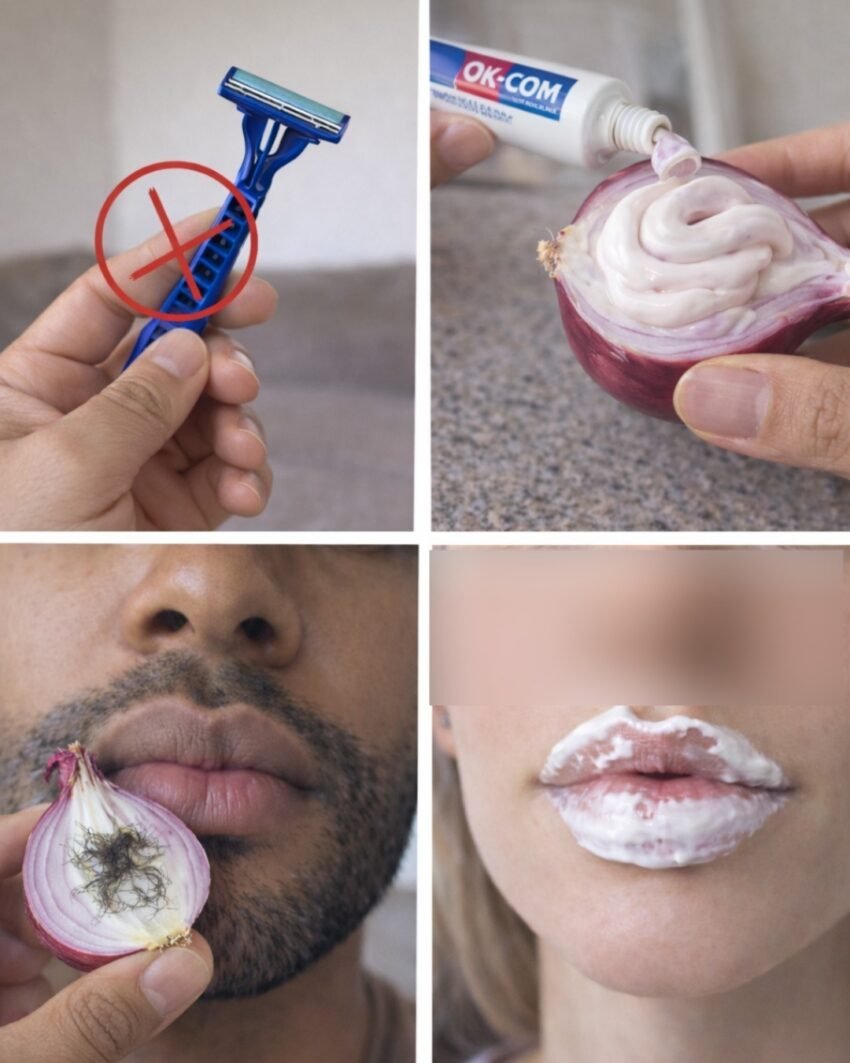
🔥 Stop Shaving! Try This Pain-Free Approach to Removing Facial and Body Hair Naturally (What Actually Works & What’s Just a Myth)
Tired of shaving irritation? Discover pain-free ways to manage facial and body hair naturally, what works, what doesn’t, and safer long-term alternatives.
Shaving feels simple—until it doesn’t.
One day it’s quick and harmless. The next, it’s razor bumps, redness, ingrown hairs, and constant maintenance that never seems to end.
And that’s when the thought usually appears:
👉 “There has to be a better way than this.”
Social media is full of promises—natural hair removal hacks, painless methods, and “permanent solutions” using kitchen ingredients or DIY remedies.
But here’s the reality most people don’t hear clearly:
👉 Some methods are genuinely effective and skin-friendly… while others are myths that can irritate your skin or waste your time.
Let’s break everything down in a grounded, honest way—so you can understand what actually helps reduce hair safely, what feels better than shaving, and what to avoid completely.
🧠 First, Why Shaving Causes So Many Problems
Shaving doesn’t remove hair from the root. It simply cuts it at the surface.
That leads to:
- Rapid regrowth (often within 1–3 days)
- Stubble that feels coarse
- Ingrown hairs
- Skin irritation
- Razor burns
For people with sensitive skin, curly hair, or frequent grooming needs, shaving becomes a cycle—not a solution.
So the real question becomes:
👉 Can you remove or reduce hair without this constant irritation?
Yes—but not all “natural” methods are equal.
🌿 What “Natural Hair Removal” Really Means
The word “natural” is often misunderstood.
In reality, hair removal methods fall into three categories:
1. Temporary removal
Hair is removed above or near the skin surface.
2. Semi-long-term reduction
Hair regrowth becomes thinner or slower over time.
3. Permanent reduction (medical methods only)
Hair follicles are damaged or destroyed.
Most “natural” approaches fall into category 1 or mild category 2.
Let’s explore what actually works.
🌿 1. Sugaring (One of the Oldest Pain-Minimizing Methods)
Sugaring uses a paste made from:
- Sugar
- Water
- Lemon juice
It removes hair from the root, similar to waxing—but is often considered gentler.
Why people prefer it:
- Less skin irritation than waxing
- Water-soluble (easy cleanup)
- Works on short hair
- Can be used on legs, arms, and some facial areas
What it feels like:
Still a pulling sensation—but often less harsh than traditional waxing.
What to know:
- Hair grows back in 3–6 weeks
- Technique matters a lot
- Can still cause discomfort if done incorrectly
🌿 2. Threading (Best for Facial Hair Control)
Threading uses a twisted cotton thread to remove hair from the root.
Commonly used for:
- Upper lip
- Eyebrows
- Chin area
Benefits:
- Very precise
- No chemicals
- No heat
- Minimal skin contact
Downsides:
- Can feel uncomfortable
- Not suitable for large body areas
- Requires skill or professional help
👉 Threading is not “permanent,” but it’s one of the cleanest facial hair methods.
🌿 3. Turmeric-Based Skin Masks (Slow, Not Instant)
Turmeric has long been used in traditional skincare routines.
Some people use it in masks with:
- Milk or yogurt
- Gram flour
- Honey
Claimed benefits:
- May weaken hair over time
- Improves skin brightness
- Reduces inflammation
What science suggests:
There is limited evidence that turmeric slows hair growth, but it may help:
- Reduce irritation after hair removal
- Improve skin texture
- Support mild hair softening over time
Important reality:
👉 It does NOT remove hair instantly or permanently.
Think of it as a supportive skincare method—not a primary hair removal solution.
🌿 4. Depilatory Creams (Pain-Free but Not “Natural”)
These creams dissolve hair at the surface using chemical proteins.
Benefits:
- Completely painless
- Fast results
- Smooth finish
Downsides:
- Strong chemical smell
- Possible skin irritation
- Not suitable for very sensitive skin
While often marketed as “gentle,” they are not truly natural.
Still, they are widely used because they avoid razor cuts and ingrown hairs.
🌿 5. Laser Hair Reduction (Long-Term Option, Not Natural)
Laser targets hair follicles using light energy to reduce growth.
Benefits:
- Long-term hair reduction
- Less regrowth over time
- Works well for coarse hair
Downsides:
- Requires multiple sessions
- Can be costly
- Not completely pain-free (mild discomfort)
👉 This is the closest option to long-term reduction—but it is a medical/cosmetic procedure, not a natural remedy.
⚠️ Myths About “Natural Permanent Hair Removal”
Let’s clear up some common internet claims.
❌ Lemon juice removes facial hair permanently
No evidence supports this.
❌ Baking soda removes hair from the root
No scientific basis—and may irritate skin.
❌ Turmeric alone stops hair growth permanently
It may soothe skin but does not destroy follicles.
❌ Papaya enzymes permanently stop hair growth
Limited and inconsistent evidence in humans.
👉 These may sound appealing, but none replace proven hair removal methods.
🏠 Real-Life Scenario
A 27-year-old woman struggled with constant razor irritation on her legs and upper lip.
She tried multiple “natural hacks” from online sources with little improvement.
Eventually, she switched to:
- Sugaring for body hair
- Threading for facial hair
- Occasional depilatory cream use
Within a few weeks, she noticed:
- Less irritation
- Slower regrowth appearance
- Reduced shaving frequency
The key change wasn’t “one miracle method”—it was choosing appropriate techniques for different areas.
📊 Comparison: Popular Hair Removal Methods
| Method | Pain Level | Duration | Skin Impact |
|---|---|---|---|
| Shaving | Low | 1–3 days | Irritation common |
| Sugaring | Moderate | 3–6 weeks | Gentler on skin |
| Threading | Moderate | 2–4 weeks | Precise, minimal chemicals |
| Depilatory creams | None | 3–7 days | Possible irritation |
| Laser reduction | Mild–moderate | Long-term | Requires sessions |
👍 Pros of Moving Away from Shaving
- Less irritation and razor burn
- Smoother skin for longer
- Reduced ingrown hairs
- Less daily maintenance
- Better skin texture over time
👎 What People Don’t Expect
- No truly instant “natural permanent” method exists
- Some methods require patience or consistency
- Skin type affects results significantly
- One method may not suit all body areas
🧠 Expert Insight Most People Miss
Hair growth is controlled by:
- Genetics
- Hormones
- Age
- Skin type
That means:
👉 No universal method works equally for everyone.
The most effective approach is combination-based grooming, not one single solution.
🔥 2026 Hair Removal Trends
Modern grooming trends are shifting toward:
- Skin-friendly methods over aggressive shaving
- Combination routines (threading + sugaring + occasional laser)
- Minimal irritation skincare routines
- Personalized hair management instead of “full removal”
The focus is moving from “elimination” to “comfortable maintenance.”
🔮 Future Outlook
Advancements in dermatology are focusing on:
- Gentler long-term hair reduction technologies
- Improved laser precision
- Skin-sensitive formulations for depilatory products
- Hormonal-based hair growth research
Complete painless permanent removal is still evolving—not fully solved.
❓ Frequently Asked Questions
1. Is there a truly natural permanent hair removal method?
No scientifically proven natural method permanently removes hair.
2. What is the least painful option?
Depilatory creams and some laser technologies are generally least painful.
3. Does turmeric remove facial hair?
No—it may support skin health but does not remove hair.
4. Is sugaring better than waxing?
For many people, yes—it is often gentler on the skin.
5. Can threading cause skin damage?
Not if done properly, but over-threading can irritate skin.
6. Why does hair grow back after removal?
Because most methods do not destroy the follicle.
7. Is laser hair removal permanent?
It significantly reduces growth but may not remove all hair permanently.
8. What is the safest method for sensitive skin?
Sugaring or professional threading are often safest options.
🧾 Action Checklist
✅ What To Do
- Choose method based on body area
- Patch test new products
- Moisturize after hair removal
- Use gentle, skin-safe techniques
- Be consistent rather than extreme
❌ What To Avoid
- DIY chemical “permanent removal” hacks
- Over-shaving irritated skin
- Applying harsh mixtures to face
- Expecting instant permanent results
- Ignoring skin sensitivity
🏁 Conclusion
Shaving isn’t the only option—but “natural permanent hair removal” is mostly a myth.
What does work is a smarter approach:
Understanding your skin, choosing gentler methods, and combining techniques that reduce irritation while improving long-term comfort.
There is no truly painless natural permanent hair removal method, but gentler alternatives like sugaring, threading, and laser reduction can significantly reduce irritation and long-term maintenance.
If this helped clarify the confusion, share it with someone tired of shaving—or explore more practical skincare and grooming habits that actually work in real life.