🌿 15 Powerful Natural Remedies for Insects, Bugs, and Pests (That Actually Work in 2026)
Discover safe, natural ways to eliminate insects, bugs, and pests without harsh chemicals. Proven remedies, tips, and prevention strategies that work.
You clean your home. You seal your food. You do everything right.
And still… the ants come marching in.
Or the mosquitoes show up out of nowhere. Or worse—something starts buzzing in the walls at night.
Here’s the frustrating part: most people either go straight to chemical sprays or give up after trying “natural remedies” that don’t actually work.
But the truth is more nuanced.
Natural pest control can be incredibly effective—if you understand why certain remedies work and how to use them correctly.
This guide goes beyond basic tips. You’ll learn what actually repels pests, how to apply it strategically, and how to protect your home long-term—without filling it with toxic chemicals.
Why Natural Pest Control Matters More Than Ever
Chemical pesticides haven’t disappeared—but many homeowners are rethinking them.
Here’s why:
Health Concerns
Many conventional sprays contain compounds that can irritate skin, lungs, or worse—especially for kids and pets.
Resistance Is Growing
Just like bacteria, pests can adapt. Over time, some chemicals become less effective.
Environmental Impact
Runoff from pesticides affects soil, water, and beneficial insects like bees.
Indoor Air Quality
Spraying chemicals inside your home doesn’t just target bugs—it lingers in your living space.
Natural solutions, when used correctly, avoid these downsides while still getting results.
The Science Behind Natural Pest Control
This is where most blogs fall short.
Natural remedies aren’t magic—they work through specific mechanisms:
- Smell disruption: Strong scents confuse pests (e.g., peppermint, vinegar)
- Surface irritation: Powders damage exoskeletons (e.g., diatomaceous earth)
- Barrier creation: Oils and herbs create invisible boundaries
- Biological interference: Some compounds disrupt pest reproduction
Understanding this helps you choose the right remedy instead of guessing.
15 Natural Remedies That Actually Work
Let’s break down the most effective solutions—and how to use them properly.
1. Peppermint Oil Spray (Best for Ants, Spiders, and Mice)
Mix:
- 10–15 drops peppermint oil
- 1 cup water
- A few drops of dish soap
Spray along entry points, windows, and baseboards.
Why it works: Strong menthol scent overwhelms pests’ sensory systems.
2. Vinegar Solution (Best for Ant Trails)
Mix equal parts white vinegar and water.
Spray directly on:
- Ant trails
- Kitchen surfaces
- Entry points
Key insight: Vinegar erases scent trails ants rely on to navigate.
3. Diatomaceous Earth (Best for Crawling Insects)
Sprinkle food-grade diatomaceous earth in:
- Cracks
- Corners
- Under appliances
Important: Keep it dry.
Why it works: Microscopic particles damage insect exoskeletons, causing dehydration.
4. Lemon and Citrus Peels (Best for Roaches and Fleas)
Place peels in problem areas or rub lemon juice on surfaces.
Bonus: Leaves your home smelling fresh.
5. Garlic Spray (Best for Outdoor Pests)
Blend garlic with water and strain.
Spray around:
- Garden edges
- Entryways
Effect: Repels insects without harming plants.
6. Essential Oil Blend (All-Purpose Repellent)
Combine:
- Lavender
- Tea tree
- Eucalyptus
Add to water and spray.
Works on: Mosquitoes, flies, moths.
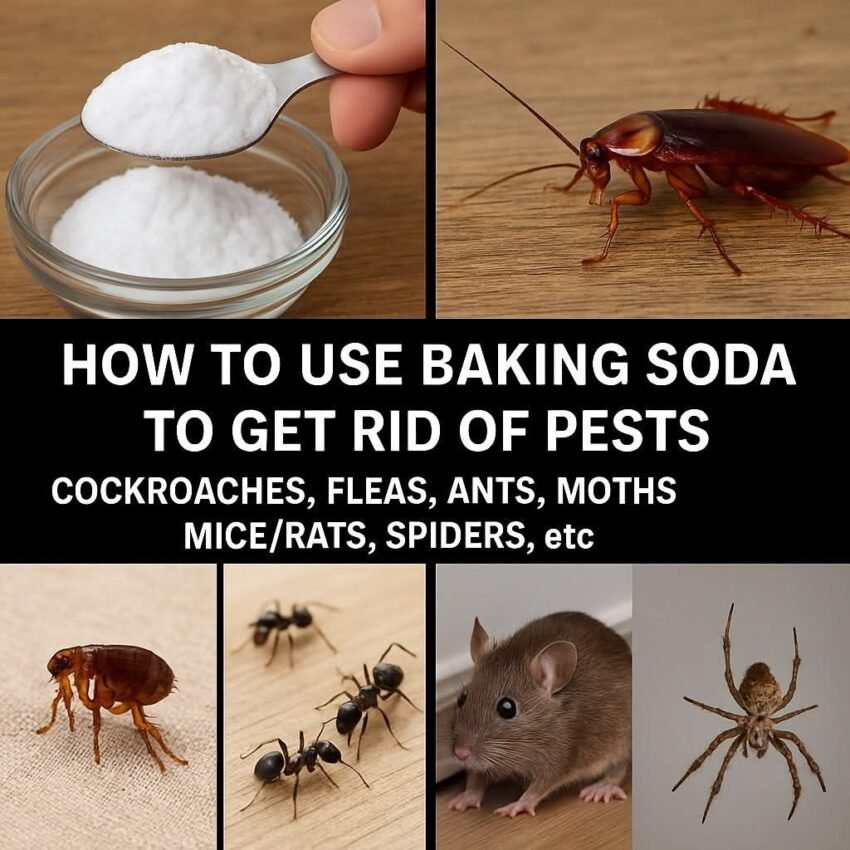
7. Baking Soda + Sugar Trap (Best for Roaches)
Mix equal parts and place in shallow containers.
Why it works: Sugar attracts; baking soda disrupts digestion.
8. Neem Oil (Best for Garden Pests)
Dilute and spray on plants.
Targets:
- Aphids
- Mites
- Beetles
9. Bay Leaves (Best for Pantry Pests)
Place in:
- Flour containers
- Rice bins
- Cabinets
Simple but effective.
10. Soap Spray (Best for Soft-Bodied Insects)
Mix dish soap with water and spray directly.
Kills on contact without toxic residue.
11. Cinnamon Powder (Ant Barrier)
Sprinkle along entry points.
Creates a natural deterrent line.
12. Coffee Grounds (Outdoor Pest Repellent)
Scatter around:
- Garden beds
- Entryways
Also improves soil quality.
13. Apple Cider Vinegar Trap (Fruit Flies)
Fill a bowl with vinegar + a drop of dish soap.
Attracts and traps flies instantly.
14. Clove Oil (Bed Bugs and Ants)
Dilute and spray lightly.
Strong and effective—but use sparingly.
15. Basil and Mint Plants (Preventative Control)
Place near:
- Doors
- Windows
- Kitchen areas
Living repellents that work continuously.
Step-by-Step Natural Pest Control Plan
Here’s how to actually implement these remedies for real results:
Step 1: Identify the Pest
Different pests require different approaches—don’t guess.
Step 2: Locate Entry Points
Check:
- Windows
- Doors
- Cracks
- Pipes
Step 3: Clean the Area
Remove food sources and clutter.
Step 4: Apply Targeted Remedy
Use the correct solution for the pest.
Step 5: Create Barriers
Use powders, oils, or plants to prevent re-entry.
Step 6: Repeat Consistently
Natural methods require consistency—not one-time use.
Real-World Scenario
A homeowner in Texas struggled with ants every summer.
Instead of spraying chemicals, they:
- Used vinegar to erase trails
- Applied peppermint oil at entry points
- Sealed cracks
Within one week, activity dropped by over 80%.
Within two weeks—gone.
Consistency made the difference.
Comparison: Natural vs Chemical Pest Control
| Factor | Natural Remedies | Chemical Solutions |
|---|---|---|
| Safety | High | Moderate to low |
| Cost | Low | Medium to high |
| Effectiveness | High (with proper use) | High (fast-acting) |
| Environmental Impact | Minimal | Significant |
| Long-term Results | Strong prevention | Often temporary |
Pros and Cons
Pros
- Safe for families and pets
- Eco-friendly
- Cost-effective
- Multi-purpose solutions
Cons
- Requires consistency
- Slower initial results
- Some trial and error
Common Mistakes (And Fixes)
Mistake 1: Using the Wrong Remedy
Fix: Identify the pest first.
Mistake 2: Applying Once and Stopping
Fix: Repeat regularly.
Mistake 3: Ignoring Entry Points
Fix: Seal and block access.
Mistake 4: Overdiluting Solutions
Fix: Follow proper ratios.
Expert-Level Tips Most People Miss
- Combine methods for stronger results
- Rotate remedies to prevent adaptation
- Focus on prevention, not just elimination
- Use scent-based repellents near entry points—not random areas
2026 Trends in Natural Pest Control
- Increased use of essential oil blends
- Smart pest monitoring devices
- Organic-certified pest solutions gaining popularity
- Growing awareness of indoor air quality
Future Outlook
Natural pest control isn’t a trend—it’s becoming the standard.
As awareness grows, expect:
- More effective plant-based solutions
- Better integration with smart home systems
- Increased regulation of chemical pesticides
Frequently Asked Questions
1. Do natural remedies really work?
Yes—when used correctly and consistently.
2. Are they safe for pets?
Most are, but always research specific ingredients.
3. How long do results take?
Some work instantly; others take a few days.
4. Can I combine remedies?
Yes—this often improves effectiveness.
5. What’s the best all-purpose solution?
Essential oil sprays are highly versatile.
6. Do natural methods kill pests or just repel them?
Both—depends on the method used.
7. Are they cheaper than chemicals?
Generally, yes.
8. Can I use them outdoors?
Absolutely—many are ideal for gardens.
9. Do they prevent infestations?
Yes, especially when used regularly.
10. When should I call a professional?
If infestation becomes severe or uncontrollable.
Action Checklist
✅ Do This
- Identify pests accurately
- Use targeted natural remedies
- Apply consistently
- Seal entry points
- Keep spaces clean
❌ Avoid This
- Randomly trying solutions
- Expecting instant results every time
- Ignoring prevention
- Overusing or misusing ingredients
Conclusion
Natural pest control isn’t about shortcuts—it’s about smarter strategies.
When you understand how pests behave and apply the right remedies consistently, you don’t just eliminate them—you prevent them from coming back.
No harsh chemicals. No unnecessary risks.
Just effective, proven solutions that work with your environment—not against it.
The most powerful pest control isn’t toxic—it’s targeted, consistent, and natural.
If you found this helpful, share it with someone battling pests—and tell us: which remedy worked best for you?