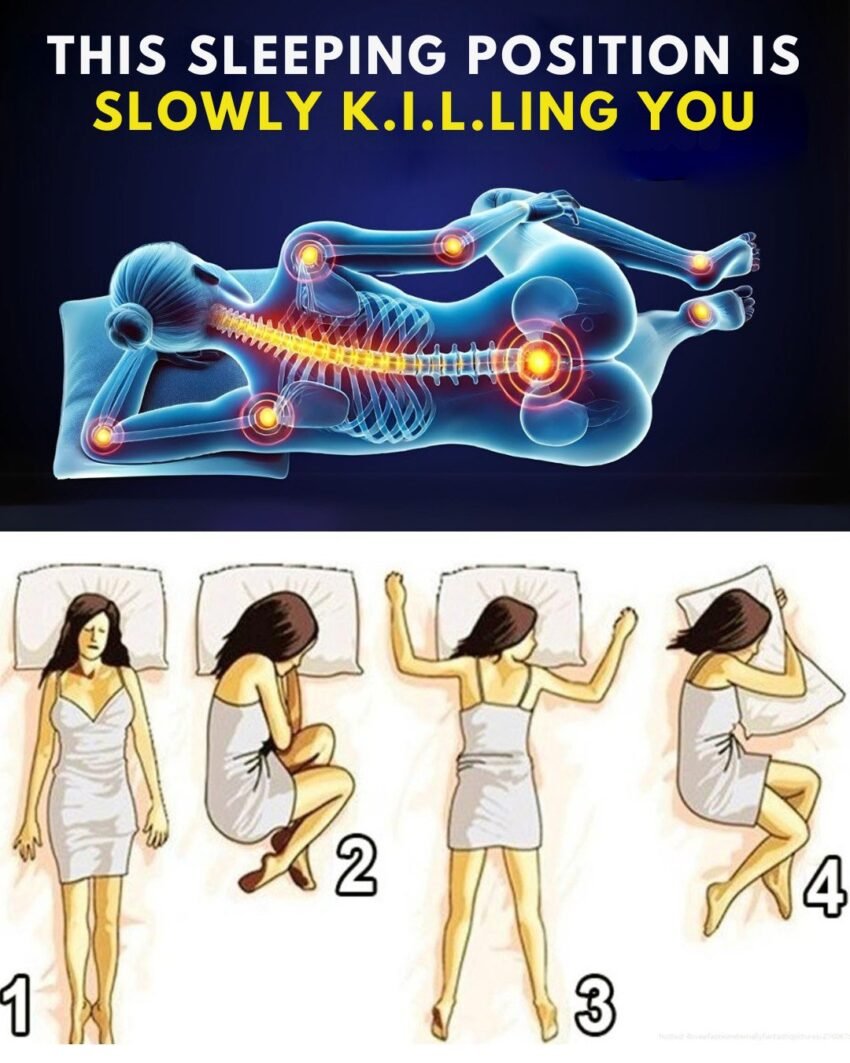
The Most Dangerous Sleeping Position You Didn’t Know You Had (And How It Quietly Affects Your Body Every Night)
Your sleeping position may be affecting your spine, breathing, and energy levels. Discover the most risky sleep posture and how to fix it naturally.
You Probably Don’t Think About Your Sleep Position—But Your Body Does
Most people fall asleep the same way every night without thinking about it.
You’re tired. You lie down. Your body chooses what feels comfortable.
But here’s something most people never consider:
The position you sleep in for 6–8 hours every night may be quietly influencing your spine, breathing quality, digestion, and even how rested you feel in the morning.
And the surprising part?
The “most dangerous” sleeping position isn’t rare.
In fact, many people do it every single night without realizing the long-term impact it can have.
So What’s the Most Risky Sleeping Position?
Let’s be clear first:
There is no sleeping position that is instantly dangerous for healthy individuals.
But there is one position that consistently shows more negative effects when practiced long-term—especially without proper support:
Stomach Sleeping (Prone Position)
This is when you sleep flat on your stomach, often with your head turned to one side.
It might feel comforting at first.
But biomechanically, it creates several issues that build up over time.
Why Stomach Sleeping Can Be Problematic
1. Neck Strain and Misalignment
When you sleep on your stomach, your head is forced to rotate to one side for hours.
This can lead to:
- Neck stiffness in the morning
- Shoulder tension
- Reduced cervical spine alignment
- Headaches upon waking
Over time, repeated strain may contribute to chronic discomfort.
2. Pressure on the Spine
Your spine is designed to rest in a neutral position.
Stomach sleeping often flattens the natural curve of the lower back.
This may result in:
- Lower back pain
- Tight hip flexors
- General stiffness
It’s not immediate damage—but cumulative stress.
3. Restricted Breathing
When lying face-down, the chest has less freedom to expand fully.
Some people may experience:
- Shallow breathing
- Slight discomfort in deep inhalation
- Interrupted sleep cycles
This is especially relevant for people who already snore or have mild breathing issues during sleep.
4. Nerve and Muscle Compression
Prolonged pressure on one side of the body can compress nerves and soft tissues.
This may cause:
- Tingling sensations
- Numbness in arms
- Uneven muscle tension
Even if it’s subtle, your body notices.
Why People Still Sleep This Way
If it has drawbacks, why do so many people sleep on their stomachs?
The answer is simple:
It feels emotionally grounding
Stomach sleeping can create a sense of:
- Security
- Pressure comfort
- Reduced anxiety for some individuals
Your nervous system associates pressure with calmness.
That’s why changing the habit can feel difficult—it’s not just physical, it’s psychological.
Other Common Sleep Positions (And How They Compare)
🛌 Back Sleeping (Supine Position)
Pros:
- Supports spinal alignment
- Reduces pressure points
- Good for posture
Cons:
- May worsen snoring
- Not ideal for sleep apnea
🛌 Side Sleeping
Pros:
- Reduces acid reflux
- Supports breathing
- Often recommended by sleep experts
Cons:
- Can cause shoulder pressure
- May create facial compression on one side
🛌 Fetal Position (Curled Side Sleeping)
Pros:
- Comfortable for many people
- May reduce snoring
- Helps some with anxiety
Cons:
- Can restrict deep breathing if too tight
- May strain hips or back if overly curled
What Sleep Experts Actually Recommend
Organizations such as the American Academy of Sleep Medicine and sleep researchers generally emphasize:
- Neutral spine alignment
- Comfortable breathing posture
- Minimal joint strain
- Consistent sleep quality over strict positioning rules
In simple terms:
The “best” sleeping position is the one that keeps your spine neutral and your breathing easy throughout the night.
How to Know If Your Sleeping Position Is Affecting You
You might not notice during sleep—but your mornings often tell the story.
Common signs include:
- Waking up with neck pain
- Lower back stiffness
- Frequent tossing and turning
- Headaches in the morning
- Feeling tired even after full sleep
If these sound familiar, your sleep posture may be part of the equation.
How to Fix Stomach Sleeping (Without Forcing It)
Changing sleep habits doesn’t happen overnight.
Instead of forcing yourself into discomfort, try gradual adjustments:
1. Use a Side-Sleeping Pillow Barrier
Place a pillow behind your back so your body naturally avoids rolling forward.
2. Adjust Your Head Support
A thinner pillow can reduce neck strain if you tend to turn while sleeping.
3. Train Your Body Gradually
Start the night on your side, even if you don’t stay there all night at first.
4. Reduce Stress Before Bed
Stress often triggers restless sleep and unconscious position changes.
5. Support Hip and Shoulder Comfort
A pillow between the knees can reduce spinal pressure when side sleeping.
A Real-Life Example
Consider Daniel, a 41-year-old office worker.
He consistently woke up with:
- Neck stiffness
- Lower back soreness
- Afternoon fatigue
He assumed it was stress.
But after observing his sleep, he realized he always ended up sleeping on his stomach.
He made a small change:
- Started side sleeping with pillow support
- Reduced stomach sleeping gradually
- Improved mattress support
Within weeks, his morning discomfort decreased noticeably.
Not instantly.
But steadily.
Common Myths About Sleep Positions
❌ “Stomach sleeping is always dangerous”
Not true. It’s not inherently dangerous—but it can cause discomfort over time.
❌ “Back sleeping is perfect for everyone”
Not always. Some people snore more or feel uncomfortable on their back.
❌ “You can permanently control your position”
Sleep posture often shifts naturally during the night. The goal is improvement, not perfection.
The Bigger Truth About Sleep Health
Sleep position matters—but it’s only one piece of the puzzle.
More important factors include:
- Sleep duration
- Sleep consistency
- Stress levels
- Mattress and pillow quality
- Daily movement
Even the best sleeping position can’t fully compensate for poor sleep habits.
Frequently Asked Questions
Is sleeping on your stomach really bad?
It can cause neck and spine strain over time, but it’s not immediately harmful for everyone.
What is the healthiest sleeping position?
Side sleeping with a neutral spine is often recommended for most people.
Can sleep position cause back pain?
Yes. Poor alignment during sleep can contribute to stiffness and discomfort.
How do I stop sleeping on my stomach?
Use pillows for support, start on your side, and adjust gradually rather than forcing change.
Does sleeping position affect breathing?
Yes. Certain positions may restrict airflow or worsen snoring in some individuals.
Quick Action Checklist
Do This
✅ Sleep with a neutral spine
✅ Try side sleeping with support
✅ Use a comfortable pillow height
✅ Adjust mattress firmness if needed
✅ Observe morning discomfort patterns
✅ Improve sleep hygiene
Avoid This
❌ Consistently sleeping face-down
❌ Using overly high or flat pillows
❌ Ignoring chronic morning pain
❌ Forcing uncomfortable positions immediately
❌ Neglecting overall sleep quality
Final Thoughts
There is no perfect sleeping position that works for everyone.
But there are habits that consistently support better rest, fewer aches, and improved recovery.
Stomach sleeping isn’t “dangerous” in a dramatic sense—but it can quietly contribute to discomfort that builds over time.
Awareness is the first step.
Adjustment is the next.
Your sleeping position won’t define your health overnight, but long-term posture habits—especially stomach sleeping—can influence neck, spine, and breathing comfort. Small changes can lead to noticeably better sleep quality over time.