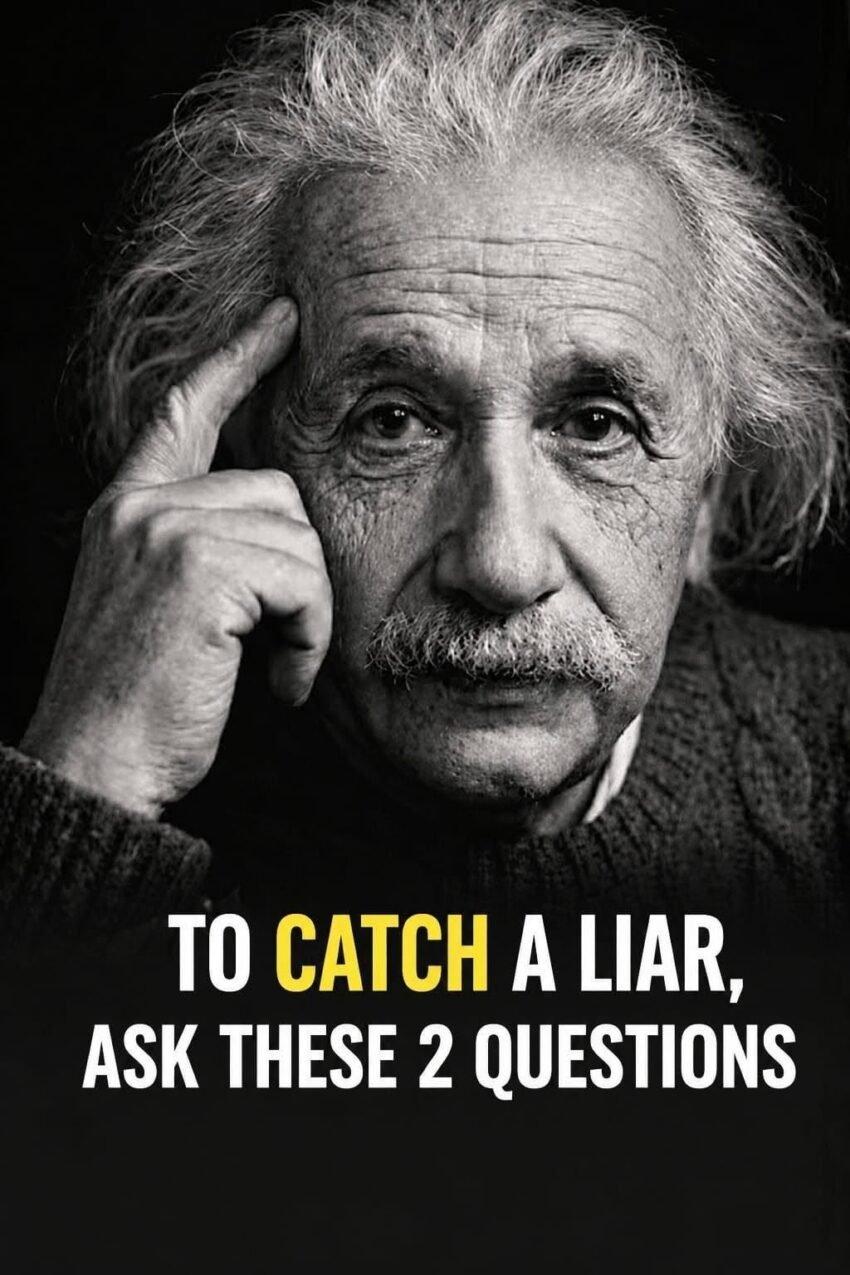
To Unmask a Liar, You Only Need to Ask Two Simple Questions — The Psychology Behind Detecting Dishonesty
Learn two psychology-backed questions that can help reveal inconsistencies, encourage honesty, and improve your ability to understand people.
To Unmask a Liar, You Only Need to Ask Two Simple Questions
Most people think they can spot a lie by watching for obvious signs.
A person avoiding eye contact.
Someone acting nervous.
A shaky voice.
But human behavior is far more complicated than that.
A nervous person is not always lying. A confident person is not always telling the truth. Body language alone is unreliable because stress, personality, culture, and circumstances all influence how people behave.
So how can you become better at recognizing when something does not add up?
Psychologists and investigators often rely less on guessing emotions and more on asking questions that encourage detailed, consistent answers.
Two simple questions can sometimes reveal more than hours of confrontation:
“Can you tell me exactly what happened?”
and
“Can you tell me that story again, but in a different order?”
The power is not in a magical phrase that catches every liar. The power is in how these questions require a person to organize information, remember details, and maintain consistency.
Why These Questions Work
A dishonest story often requires more mental effort than telling the truth.
When someone describes a real event, they usually recall memories naturally.
When someone invents or changes details, they may need to:
- Remember what they already said
- Avoid contradictions
- Control their emotions
- Create believable details
Asking for more information increases the amount of mental work involved.
This does not prove someone is lying—but it can reveal inconsistencies worth exploring.
Question One: “Can You Tell Me Exactly What Happened?”
This question seems simple, but it encourages a person to provide a complete timeline.
A truthful person often remembers a mixture of:
- Important details
- Small details
- Emotions
- Unexpected events
A fabricated story may sound:
- Too carefully prepared
- Too vague
- Missing natural details
For example:
Person A says:
“I went out, handled some things, and came home.”
That may be completely true.
But if details matter, a follow-up might be:
“What happened from the moment you left until you came back?”
The goal is not to accuse. The goal is to understand.
Question Two: “Can You Tell Me the Story Again in a Different Order?”
This technique is often used in investigative interviewing.
Why?
Because rehearsed stories are usually easier to repeat in the same sequence.
Changing the order requires deeper memory processing.
For example:
Original question:
“What happened after lunch?”
Follow-up:
“What happened right before you arrived there?”
A person recalling a real experience may adjust naturally.
Someone creating a story may struggle to maintain consistency.
Again, this is not a guaranteed lie detector. It is a way to gather better information.
The Biggest Mistake: Accusing Too Quickly
Many people believe confrontation reveals the truth.
They say:
“I know you’re lying.”
“You’re hiding something.”
“You’re not telling me everything.”
The problem?
Accusations often make honest people defensive and give dishonest people a reason to become more careful.
A calmer approach usually provides more useful information.
Instead of:
“Why are you lying?”
Try:
“I’m trying to understand what happened. Can you walk me through it again?”
Pay Attention to Changes, Not Single Signs
A single behavior means very little.
For example:
Avoiding Eye Contact
Could mean:
- Anxiety
- Shyness
- Cultural differences
- Discomfort with conflict
It does not automatically mean deception.
Taking Longer to Answer
Could mean:
- Thinking carefully
- Trying to remember
- Feeling pressured
Becoming Defensive
Could mean:
- Feeling accused
- Feeling misunderstood
- Hiding something
Context matters.
The Psychology of Honest Communication
The most effective conversations create conditions where people are more likely to tell the truth.
This includes:
Staying Calm
People share more when they do not feel immediately attacked.
Asking Open Questions
Questions beginning with:
- “How?”
- “What?”
- “Can you explain?”
usually produce more information than questions that only allow yes/no answers.
Listening Carefully
Many people focus so much on catching a lie that they stop listening.
Important details often appear naturally during conversation.
A Real-Life Example
Imagine a partner says:
“I was late because traffic was terrible.”
Instead of immediately assuming dishonesty, ask:
“Can you walk me through what happened after you left work?”
Then later:
“Can you tell me the timeline backward from when you got home?”
You are not declaring guilt.
You are creating space for the full story.
If the explanation remains consistent, that information matters too.
Things That Can Make Someone Appear Dishonest When They Aren’t
Before judging someone, consider:
- Stress
- Fear of conflict
- Poor memory
- Trauma responses
- Anxiety
- Feeling intimidated
- Communication style differences
People do not all respond to pressure the same way.
What Professional Interviewers Actually Look For
Trained investigators generally do not rely on one “tell.”
They look for patterns involving:
- Inconsistent statements
- Changes over time
- Contradictory evidence
- Unusual details
- Behavior compared with a person’s normal baseline
The strongest conclusions usually come from multiple pieces of information, not one clue.
Common Mistakes When Trying to Detect Lies
Mistake 1: Believing Every Body Language Myth
There is no universal “nose touch equals lying” rule.
Mistake 2: Asking Questions Like an Interrogator
Aggressive questioning often reduces honesty.
Mistake 3: Ignoring Evidence That Contradicts Your Assumption
Good judgment requires being open to being wrong.
Frequently Asked Questions
Can these two questions prove someone is lying?
No. They can help reveal inconsistencies, but they cannot guarantee deception.
Do liars always avoid eye contact?
No. Some dishonest people maintain eye contact, and honest people may avoid it when nervous.
What is the best way to find out if someone is lying?
Look at the full situation, ask open questions, and compare answers with available facts.
Why do repeated questions reveal inconsistencies?
Changing the way a story is recalled can expose differences in memory or storytelling.
Are there signs that someone is definitely lying?
No single behavior proves dishonesty.
Should you confront someone you think is lying?
It depends on the situation. Calm questions are usually more productive than accusations.
Can people lie because they are afraid?
Yes. Fear, embarrassment, and self-protection can influence what people say.
How can I improve my ability to understand people?
Practice active listening, ask better questions, and avoid making quick judgments.
Action Checklist: Better Conversations, Better Understanding
✔️ Do
- Ask open-ended questions.
- Request details calmly.
- Listen for consistency.
- Compare words with actions.
- Consider the context.
❌ Avoid
- Assuming nervousness equals lying.
- Using aggressive accusations.
- Relying on one body language clue.
- Ignoring evidence.
Conclusion
The ability to understand whether someone is being truthful does not come from a secret trick or a single gesture.
It comes from patience, careful listening, and asking questions that encourage real explanations.
The two questions:
“Can you tell me exactly what happened?”
and
“Can you tell me the story again in a different order?”
can be powerful tools for uncovering details—but the goal should not be catching people.
The goal should be understanding what is true.
You do not need to act like a detective to have better conversations. Ask thoughtful questions, listen carefully, and let consistency—not assumptions—guide your judgment.
Share this with someone who wants to communicate better, and explore more psychology-based insights into human behavior.