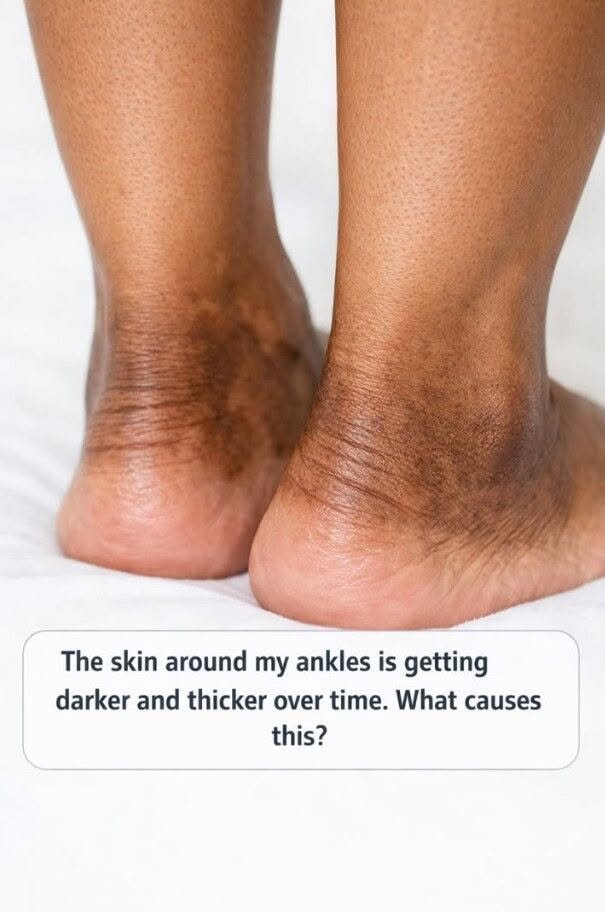
Why Is the Skin Around Your Ankles Getting Darker and Thicker? Common Causes and What It Could Mean
Dark, thick skin around the ankles can come from circulation problems, skin irritation, swelling, or other conditions. Learn the causes and when to seek care.
The Skin Around My Ankles Is Getting Darker and Thicker Over Time. What Causes This?
You may first notice it as a small change:
The skin around your ankles looks a little darker than before.
Then, over months or years, it may become:
- Thicker
- Rougher
- Dry or scaly
- Slightly hardened
- Different in texture from the surrounding skin
This type of skin change is fairly common, especially around the lower legs and ankles. But it is also a clue that something may be affecting the skin or the circulation beneath it.
The cause can range from simple irritation and dryness to conditions involving veins, inflammation, or long-term swelling.
Understanding why it happens is the first step toward protecting your skin.
1. Poor Vein Circulation (Chronic Venous Insufficiency)
One of the most common reasons for darkening around the ankles is a problem with the veins returning blood back toward the heart.
Your leg veins have tiny valves that help blood move upward. When these valves become weak, blood can collect in the lower legs.
This is called chronic venous insufficiency.
Over time, increased pressure in the veins can cause:
- Brownish skin discoloration
- Thickened skin
- Swelling around the ankles
- Itching
- Aching or heaviness in the legs
The discoloration often appears near the ankles because gravity makes fluid buildup more noticeable there.
2. Skin Changes From Long-Term Swelling
Swelling around the ankles—whether from standing, circulation issues, injury, or other causes—can gradually affect the skin.
Persistent swelling may lead to:
- Tight skin
- Thickened texture
- Dark patches
- Increased sensitivity
People who spend many hours standing, such as healthcare workers, retail employees, or service workers, may notice more ankle swelling by the end of the day.
3. Inflammation and Repeated Skin Irritation
The skin can become darker after repeated irritation or inflammation.
This process is called post-inflammatory hyperpigmentation.
Possible triggers include:
- Eczema
- Allergic reactions
- Scratching
- Rashes
- Minor injuries
- Friction from shoes or socks
When the skin heals, it may leave behind darker areas.
Repeated irritation can also make the skin thicker because the body responds by building up protective layers.
4. Eczema Around the Ankles
A type of eczema called stasis dermatitis is commonly linked with vein circulation problems.
It may cause:
- Red or brown patches
- Dry, flaky skin
- Itching
- Thickened skin
- Cracking
Without proper care, ongoing inflammation can cause the skin to become tougher and darker.
5. Fungal Infections
Certain fungal infections can affect the feet and ankles.
Signs may include:
- Scaling
- Itching
- Cracked skin
- Changes in color
- Spread toward nearby areas
Fungal problems are more likely when the skin stays warm and moist.
6. Acanthosis Nigricans (Less Common Around Ankles)
Acanthosis nigricans causes darker, thicker, velvety skin.
It most commonly appears on:
- Neck
- Armpits
- Groin
But in some situations, similar dark thickened patches may appear in other areas.
This condition can be associated with insulin resistance, which is why persistent unusual darkening should be discussed with a healthcare professional.
7. Aging and Natural Skin Changes
As skin ages, it can naturally become:
- Thinner in some areas
- Drier
- More uneven in color
Sun exposure and years of minor irritation can also contribute to pigment changes.
However, new or rapidly worsening thickening and darkening deserves attention.
What the Color and Texture May Suggest
| Appearance | Possible Causes |
|---|---|
| Brown discoloration near ankles | Vein-related changes, inflammation |
| Thick, itchy, dry skin | Eczema or irritation |
| Redness with warmth and swelling | Inflammation or infection |
| Scaly patches | Fungal infection or dermatitis |
| Dark, velvety thick skin | Possible metabolic changes |
A healthcare professional can make a diagnosis by examining the skin and considering your medical history.
Risk Factors That Make These Changes More Likely
You may be more likely to develop ankle skin changes if you have:
- Varicose veins
- Long periods of standing or sitting
- Previous leg injuries
- Obesity
- Diabetes
- High blood pressure
- Limited physical activity
- A history of leg swelling
What You Can Do to Support Healthier Skin
1. Keep the Skin Moisturized
Dry skin can worsen thickening and irritation.
Helpful options include:
- Fragrance-free moisturizers
- Creams containing ingredients like ceramides or urea (when appropriate)
Apply after bathing when the skin is slightly damp.
2. Support Healthy Leg Circulation
Helpful habits include:
- Walking regularly
- Moving your ankles when sitting for long periods
- Avoiding standing still for many hours
- Elevating your legs when resting if swelling occurs
3. Protect Your Skin
Avoid:
- Scratching irritated areas
- Harsh soaps
- Tight footwear that causes rubbing
Small injuries can take longer to heal when circulation is reduced.
4. Manage Underlying Health Conditions
Conditions like diabetes and high blood pressure can affect circulation and skin health.
Keeping them well managed helps protect your legs over time.
When Should You See a Doctor?
Make an appointment if you notice:
- Skin changes that keep worsening
- Increasing swelling
- Open sores or ulcers
- Pain or warmth
- Sudden color changes
- Bleeding or leaking fluid
- One leg becoming much more swollen than the other
A persistent ankle skin change is worth checking, especially if it has been developing gradually.
Common Mistakes People Make
Mistake 1: Trying to Remove the Dark Color Only
Using bleaching creams or harsh exfoliants may treat the appearance but not the cause.
If circulation or inflammation is involved, the underlying issue needs attention.
Mistake 2: Ignoring Swelling
Repeated ankle swelling is not just a cosmetic issue.
It can contribute to long-term skin changes.
Mistake 3: Assuming It Is Just Aging
Age can play a role, but new changes should not automatically be dismissed.
Frequently Asked Questions
Why are my ankles turning brown?
Brown ankle discoloration is often linked to changes in blood flow through the veins, especially chronic venous insufficiency.
Can dark ankle skin go back to normal?
It depends on the cause. Some discoloration improves when the underlying problem is treated, while some pigment changes may persist.
Does diabetes cause dark skin around ankles?
Diabetes can affect circulation and healing, which may contribute to skin changes. Unusual or persistent changes should be evaluated.
Why is my ankle skin thick and itchy?
Thick, itchy skin may result from eczema, irritation, swelling-related skin changes, or other conditions.
Are dark ankles a sign of poor circulation?
They can be. Vein circulation problems are one common cause, especially when combined with swelling or heaviness.
Should I use a skin-lightening cream?
It is better to identify the cause first. Treating the underlying issue is usually more important than changing skin color.
Can exercise help improve ankle skin changes?
Exercise can support circulation, especially walking, but it may not reverse all existing skin changes.
When are ankle skin changes urgent?
Seek medical care promptly if there is sudden swelling, severe pain, warmth, redness spreading, or a wound that is not healing.
Action Checklist
✔️ Do
- Notice whether the skin change is spreading.
- Check for swelling, itching, or pain.
- Moisturize regularly.
- Stay active.
- Manage blood pressure and blood sugar.
- Get persistent changes checked.
❌ Avoid
- Scrubbing the skin aggressively.
- Using harsh whitening products.
- Ignoring leg swelling.
- Waiting if sores or wounds appear.
Conclusion
Dark, thick skin around the ankles is often a sign that the skin has been dealing with repeated stress—whether from circulation problems, swelling, irritation, or inflammation.
It is not always dangerous, but it is your body’s way of showing that something has changed.
The earlier you identify the cause, the better chance you have of protecting your skin and preventing complications.
If the skin around your ankles is gradually becoming darker and thicker, do not focus only on the appearance. Look for the reason behind it—especially circulation, swelling, or inflammation—and seek medical advice if the changes continue or worsen.