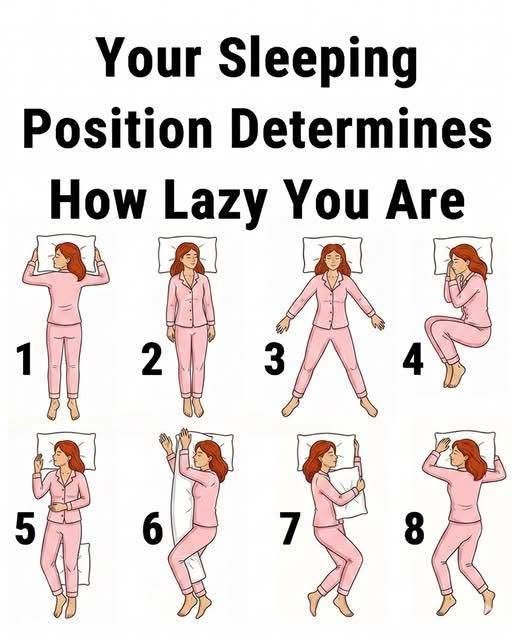
Discover What Your Sleep Position Reveals About Your True Personality
Your favorite sleep position may reveal clues about your habits, comfort preferences, and personality traits. Discover what your sleeping style could mean.
Discover What Your Sleep Position Reveals About Your True Personality
The way you fall asleep may seem like a small, unconscious habit.
You close your eyes, settle into a comfortable position, and drift away.
But have you ever wondered why you always sleep the same way?
Maybe you curl up on your side with your knees tucked in. Perhaps you sleep flat on your back with your arms relaxed. Or maybe you wake up every morning with a pillow hugged tightly against your chest.
For decades, people have been fascinated by the idea that sleep positions reveal something about who we are.
Some personality experts and sleep researchers have explored possible connections between sleeping habits, emotional comfort, and daily behaviors.
But there is an important distinction:
Your sleep position does not determine your personality.
It is not a personality test or a way to judge yourself or others.
However, your preferred sleeping posture may reflect things like:
- Your comfort preferences
- Your physical needs
- Your stress levels
- Your sleeping environment
- Your body’s natural habits
Let’s explore what common sleep positions are often associated with—and what science actually says.
Why Do We Have a Favorite Sleep Position?
Most people develop a preferred sleep posture over time.
Your sleeping position may be influenced by:
- Body shape
- Joint comfort
- Mattress and pillow support
- Breathing patterns
- Temperature preferences
- Previous injuries
- Personal habits
Many people do not consciously choose their sleeping position.
It becomes an automatic routine that signals to the brain:
“This feels safe and comfortable.”
1. The Fetal Position: The Comfort Seeker
The fetal position is one of the most common sleeping positions.
It involves:
- Sleeping on your side
- Knees drawn toward the chest
- Body slightly curled
What It May Suggest
People who prefer this position are often described as:
- Comfort-oriented
- Thoughtful
- Protective of their personal space
- Adaptable
Many people naturally curl up because it creates a feeling of security and warmth.
Sleep Considerations
The fetal position can be comfortable, but curling too tightly may sometimes restrict deep breathing or create stiffness.
A slightly relaxed curl may be better for your spine.
2. Sleeping on Your Side: The Balanced Sleeper
Side sleeping is extremely common.
It may be preferred because it feels natural and supports comfortable breathing.
Personality Associations
Side sleepers are sometimes described as:
- Easygoing
- Social
- Flexible
- Practical
Again, this is not a proven personality measurement—it is simply an interesting observation people have made about common habits.
Health Benefits
Side sleeping may help some people:
- Reduce snoring
- Support easier breathing
- Improve comfort during pregnancy
Many people find sleeping on the left side comfortable, although the best position depends on individual needs.
3. The Log Position: Calm and Straightforward
The “log” position usually means:
- Sleeping on your side
- Arms and legs mostly straight
Common Personality Interpretation
People who sleep this way are sometimes described as:
- Relaxed
- Trusting
- Calm
- Natural problem-solvers
The connection between this position and personality is not scientifically established, but many people enjoy reading about these patterns because they relate to everyday behavior.
4. The Back Sleeper: The Independent Resting Style
Back sleepers lie flat with their arms usually at their sides.
Possible Personality Associations
This position is sometimes linked with:
- Confidence
- Independence
- A preference for order
Some sleep experts note that people who sleep on their backs may prefer a feeling of openness and freedom of movement.
Sleep Considerations
Back sleeping can support neutral spinal alignment for some people.
However, it may worsen snoring or sleep apnea symptoms in some individuals.
5. The Starfish Position: The Open and Relaxed Sleeper
The starfish position involves:
- Sleeping on the back
- Arms spread around the pillow area
What People Often Associate With It
This position is sometimes described as belonging to people who are:
- Helpful
- Good listeners
- Comfortable giving others attention
Whether this reflects personality or simply comfort is unclear.
6. The Stomach Sleeper: The Free-Spirit Position
Stomach sleeping means lying face down.
Some people find it comfortable because it creates a feeling of stability.
Personality Associations
Popular sleep personality descriptions often connect stomach sleepers with:
- Independence
- Strong opinions
- Direct communication
Sleep Considerations
Stomach sleeping may put pressure on:
- The neck
- Lower back
- Shoulders
because the head must usually turn to one side.
What Your Sleep Position May Reveal About Your Daily Life
While your sleeping position does not define your personality, it may offer clues about your comfort patterns.
For example:
Someone who constantly changes positions may be:
- Responding to physical discomfort
- Adjusting to temperature
- Experiencing stress
Someone who stays in one position may simply have found what works best for their body.
The interesting part is not the position itself—it is understanding your relationship with sleep.
Sleep Position and Your Health: What Matters More Than Personality
Your sleep position can influence:
- Breathing
- Neck comfort
- Back support
- Joint pressure
- Sleep quality
The “best” sleeping position is usually the one that allows you to wake up feeling rested and comfortable.
How to Improve Your Sleep Position
1. Support Your Spine
Your head, neck, and spine should stay in a comfortable alignment.
A pillow that is too high or too low can create strain.
2. Use Pillows Strategically
Depending on your position:
Side sleepers:
A pillow between the knees may reduce hip and back pressure.
Back sleepers:
A pillow under the knees may improve lower back comfort.
Stomach sleepers:
A thinner pillow may reduce neck strain.
3. Pay Attention to Morning Symptoms
Your body often gives useful feedback.
Notice if you wake up with:
- Neck stiffness
- Shoulder pain
- Back discomfort
- Numbness
Small adjustments can improve comfort.
Common Myths About Sleep Positions
Myth 1: Your Sleep Position Reveals Your Entire Personality
A sleep posture cannot fully describe who you are.
Personality develops through many factors:
- Experiences
- Relationships
- Values
- Environment
Myth 2: One Sleep Position Is Perfect for Everyone
People have different bodies and needs.
What works for one person may not work for another.
Myth 3: Changing Positions Means Something Is Wrong
People naturally move during sleep.
Movement is a normal part of healthy sleep.
Sleep Position Comparison Chart
| Sleep Position | Common Comfort Reason | Possible Considerations |
|---|---|---|
| Fetal | Feeling secure and cozy | Avoid curling too tightly |
| Side | Natural comfort and breathing support | May need pillow support |
| Back | Open posture and spinal alignment | May increase snoring |
| Stomach | Feeling stable | May strain neck |
| Starfish | Freedom of movement | May affect bed space |
Mini Scenario: What Your Position Really Tells You
Sarah always slept curled on her side.
She read that this meant she was shy and sensitive.
But after paying attention, she realized the real reason was simpler:
Her side position reduced pressure on her lower back and helped her sleep comfortably.
The lesson?
Sometimes our bodies choose positions because they feel good—not because they reveal hidden personality secrets.
Frequently Asked Questions
Can my sleeping position reveal my personality?
Sleep positions may be linked to comfort preferences, but they cannot accurately determine personality.
What is the healthiest sleeping position?
The healthiest position depends on your body, medical conditions, and comfort. Many people find side or back sleeping supportive.
Is sleeping on your stomach bad?
Stomach sleeping can increase neck strain for some people, but if you sleep comfortably without pain, it may be fine.
Why do I always sleep in the same position?
Your body may prefer a position that feels comfortable and familiar.
Does sleeping on your left side have benefits?
Some people find left-side sleeping comfortable, and it may have specific benefits in certain situations, such as pregnancy.
Why do I change positions while sleeping?
Movement during sleep is normal and helps prevent discomfort.
Can stress change my sleep position?
Stress may influence sleep quality and habits, although there is no simple position-to-stress connection.
Should I force myself to change my sleep position?
Only if your current position causes discomfort or affects your sleep quality.
Sleep Position Self-Check
✔️ Do
- Choose a position that feels comfortable.
- Support your neck and spine.
- Notice patterns in your sleep quality.
- Adjust pillows if you experience pain.
❌ Avoid
- Believing sleep position defines your personality.
- Ignoring persistent pain.
- Using uncomfortable positions because they are “supposed” to be healthier.
Conclusion
The way you sleep can be fascinating.
Your favorite position may reflect your comfort preferences, your body’s needs, and your personal habits.
But the most important message is simple:
A good night’s sleep is not about finding a magical position that reveals who you are.
It is about creating conditions where your body and mind can truly rest.
Your sleep position may offer interesting clues about your habits and comfort style, but it does not define your personality. The best sleep position is the one that helps you wake up feeling refreshed, supported, and ready for the day.