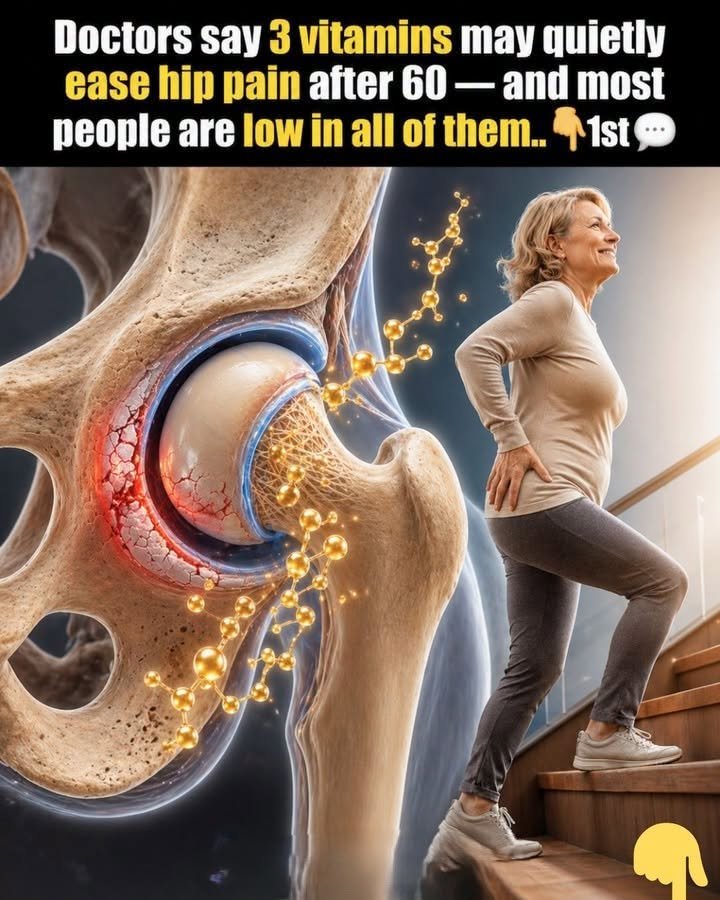
Top 3 Vitamins for Hip Arthritis: What Science Says About Supporting Joint Health and Reducing Discomfort
Discover three important vitamins linked to bone and joint health, how they support hip function, and what you can do to manage arthritis symptoms.
Top 3 Vitamins for Hip Arthritis: Support Your Joints and Protect Your Mobility
Aching hips can quietly change the way you live.
Maybe you avoid long walks because your hip starts hurting. Maybe getting out of a chair takes more effort than it used to. Or perhaps you notice stiffness first thing in the morning that slowly improves as you move.
For millions of people, hip discomfort is connected to osteoarthritis, a condition where the protective cartilage inside the joint gradually wears down.
Many people search for a simple solution and wonder:
“Is there a vitamin that can rebuild my hip joint or make arthritis disappear?”
The honest answer is more realistic:
No vitamin can reverse hip arthritis or replace medical treatment.
However, certain vitamins play important roles in bone strength, muscle function, inflammation regulation, and overall joint health. If your body is low in specific nutrients, correcting those deficiencies may support better movement and comfort.
Let’s explore the top vitamins researchers and healthcare professionals commonly discuss when it comes to hip arthritis.
Understanding Hip Arthritis: What Is Happening Inside the Joint?
The hip is one of the body’s largest weight-bearing joints.
It connects the thigh bone (femur) to the pelvis and allows movements like:
- Walking
- Standing
- Climbing stairs
- Bending
- Rotating your leg
Inside a healthy hip joint, smooth cartilage cushions the bones and allows them to move easily.
With osteoarthritis:
- Cartilage gradually breaks down
- The joint may become stiff
- Bones may rub together more easily
- Movement can become painful
Factors that may contribute include:
- Aging
- Previous injuries
- Genetics
- Excess joint stress
- Muscle weakness
- Certain health conditions
Nutrition is only one piece of the bigger picture.
Vitamin #1: Vitamin D — The Bone and Muscle Supporter
Vitamin D is one of the most discussed nutrients when it comes to bone health.
Your body needs vitamin D to help absorb calcium, which is essential for maintaining strong bones.
A deficiency can contribute to:
- Weak bones
- Muscle weakness
- Increased risk of falls
- General aches and discomfort
Since the hip carries much of your body weight, maintaining strong bones and muscles around the joint is especially important.
Where Can You Get Vitamin D?
Sources include:
Sunlight
Your skin can produce vitamin D when exposed to sunlight.
However, factors such as:
- Age
- Skin tone
- Location
- Season
- Sunscreen use
can affect production.
Foods
Vitamin D is found in:
- Fatty fish such as salmon and sardines
- Fortified milk
- Fortified cereals
- Egg yolks
Supplements
Some people may need supplements if blood tests show low levels.
It is best to discuss dosage with a healthcare professional because excessive vitamin D intake can cause problems.
Vitamin #2: Vitamin C — The Collagen Builder
When many people think about vitamin C, they think about immunity.
But vitamin C also plays another important role:
It helps the body produce collagen.
Collagen is a major structural protein found in:
- Cartilage
- Tendons
- Ligaments
- Skin
Healthy connective tissue helps support joint function.
Foods Rich in Vitamin C
Good sources include:
- Oranges
- Kiwi
- Strawberries
- Bell peppers
- Broccoli
- Brussels sprouts
A balanced diet usually provides enough vitamin C for most people.
Can Vitamin C Cure Hip Arthritis?
No.
Vitamin C does not rebuild worn-out cartilage or eliminate arthritis.
However, getting adequate vitamin C supports normal tissue maintenance and overall health.
Vitamin #3: Vitamin K — The Bone Health Nutrient
Vitamin K is involved in several processes related to bone metabolism.
It helps activate certain proteins involved in maintaining healthy bones.
Research has explored connections between vitamin K levels and bone health, although more research is needed to fully understand its role in arthritis specifically.
Foods High in Vitamin K
Many leafy green vegetables contain vitamin K:
- Kale
- Spinach
- Collard greens
- Broccoli
- Lettuce
Bonus Nutrients That Support Hip Health
While vitamins get a lot of attention, other nutrients matter too.
Calcium
Calcium helps maintain bone structure.
Sources include:
- Dairy products
- Fortified plant milks
- Tofu made with calcium
- Some leafy greens
Omega-3 Fatty Acids
Omega-3 fats have been studied for their role in inflammation pathways.
Sources include:
- Salmon
- Sardines
- Walnuts
- Flaxseeds
Protein
Muscles support your joints.
Adequate protein helps maintain muscle strength, which can reduce stress on the hips.
The Biggest Mistake: Expecting Vitamins Alone to Fix Hip Pain
A common misunderstanding is:
“I’ll take a supplement, and my arthritis will disappear.”
Unfortunately, joint health is more complex.
The most effective approach usually combines:
- Proper nutrition
- Regular movement
- Muscle strengthening
- Healthy weight management
- Medical guidance when needed
Exercises That May Support Hip Arthritis
Movement is often one of the most important tools for maintaining joint function.
Low-impact options include:
Walking
A simple daily walk can help maintain mobility.
Swimming
Water reduces pressure on joints while allowing movement.
Strength Training
Building muscles around the hips can provide better joint support.
Examples:
- Gentle squats
- Leg raises
- Resistance exercises
Always adjust activity based on your abilities and pain level.
Foods That May Support Joint Health
A joint-friendly eating pattern often includes:
Fruits and vegetables
Provide antioxidants and important vitamins.
Fish and healthy fats
Provide omega-3 fatty acids.
Whole grains
Support overall metabolic health.
Lean proteins
Help maintain muscles.
Foods That May Work Against Joint Health
While no single food “causes” arthritis, diets high in certain foods may contribute to inflammation and weight gain.
Limit:
- Excess sugary foods
- Highly processed foods
- Frequent fried foods
- Too many refined carbohydrates
Vitamin Sources Comparison Table
| Nutrient | Main Role | Food Sources |
|---|---|---|
| Vitamin D | Supports bones and muscles | Fish, fortified foods, sunlight |
| Vitamin C | Helps collagen production | Citrus, berries, peppers |
| Vitamin K | Supports bone metabolism | Leafy greens, broccoli |
| Calcium | Maintains bone structure | Dairy, fortified foods |
| Omega-3s | Supports healthy inflammation response | Fish, flaxseed, walnuts |
Common Mistakes People Make About Arthritis Vitamins
Mistake 1: Taking High Doses Without Testing
More is not always better.
Excess amounts of certain vitamins can cause health problems.
Mistake 2: Ignoring Exercise
Many people focus only on supplements while avoiding movement.
Strong muscles are important partners for healthy joints.
Mistake 3: Expecting Instant Results
Nutrients support long-term health.
They usually do not create overnight changes.
Mistake 4: Delaying Medical Evaluation
Severe hip pain may have causes beyond arthritis.
A healthcare professional can help identify the reason.
When Hip Pain Should Be Checked
Talk with a healthcare provider if you have:
- Severe or worsening pain
- Difficulty walking
- Pain after an injury
- Night pain that interrupts sleep
- Sudden loss of movement
- Swelling or redness around the joint
Mini Scenario: A Better Approach to Hip Health
Linda, age 64, started avoiding walks because of hip stiffness.
She began taking supplements without changing anything else, hoping for quick relief.
After discussing her symptoms with her doctor, she learned she had low vitamin D levels.
She combined appropriate supplementation with:
- Gentle strength exercises
- Better nutrition
- Regular walking
Over time, she improved her mobility.
The lesson was not that one vitamin fixed everything—it was that addressing the whole picture mattered.
Frequently Asked Questions
Can vitamins completely cure hip arthritis?
No. Vitamins cannot reverse arthritis, but correcting nutrient deficiencies may support bone and joint health.
What is the best vitamin for hip pain?
Vitamin D is commonly discussed because of its role in bone and muscle health, especially if someone is deficient.
Does vitamin C rebuild cartilage?
Vitamin C supports collagen production, but it does not rebuild damaged cartilage.
Can vitamin D deficiency cause joint pain?
Low vitamin D levels may be associated with muscle weakness and general aches.
Should I take supplements for arthritis?
Only if needed. A healthcare professional can help determine whether supplements are appropriate.
What foods are good for hip arthritis?
A balanced diet rich in vegetables, fruits, protein, healthy fats, and nutrient-rich foods supports overall joint health.
Is walking good for hip arthritis?
For many people, gentle walking can help maintain mobility and strengthen supporting muscles.
When is hip pain a warning sign?
Severe, sudden, or worsening pain should be evaluated by a healthcare professional.
Hip Arthritis Nutrition Checklist
✔️ Do
- Get enough vitamin D, C, and K through food or appropriate supplements.
- Eat a balanced, nutrient-rich diet.
- Maintain muscle strength around your hips.
- Stay active with comfortable exercises.
- Discuss persistent pain with a healthcare professional.
❌ Avoid
- Relying only on vitamins.
- Taking very high supplement doses.
- Ignoring worsening symptoms.
- Stopping activity completely because of mild discomfort.
Conclusion
Hip arthritis can affect your independence, comfort, and daily routine—but supporting your joints involves more than searching for a single “miracle” nutrient.
Vitamin D, vitamin C, and vitamin K all play important roles in maintaining healthy bones and tissues. When combined with movement, strength training, and healthy lifestyle choices, they can become part of a smarter approach to joint care.
The right vitamins can support your hips, especially if you are missing key nutrients—but the strongest protection comes from combining good nutrition, regular movement, and proper medical care when needed.
Your joints carry you through life. Taking care of them today can help protect your mobility for years to come.