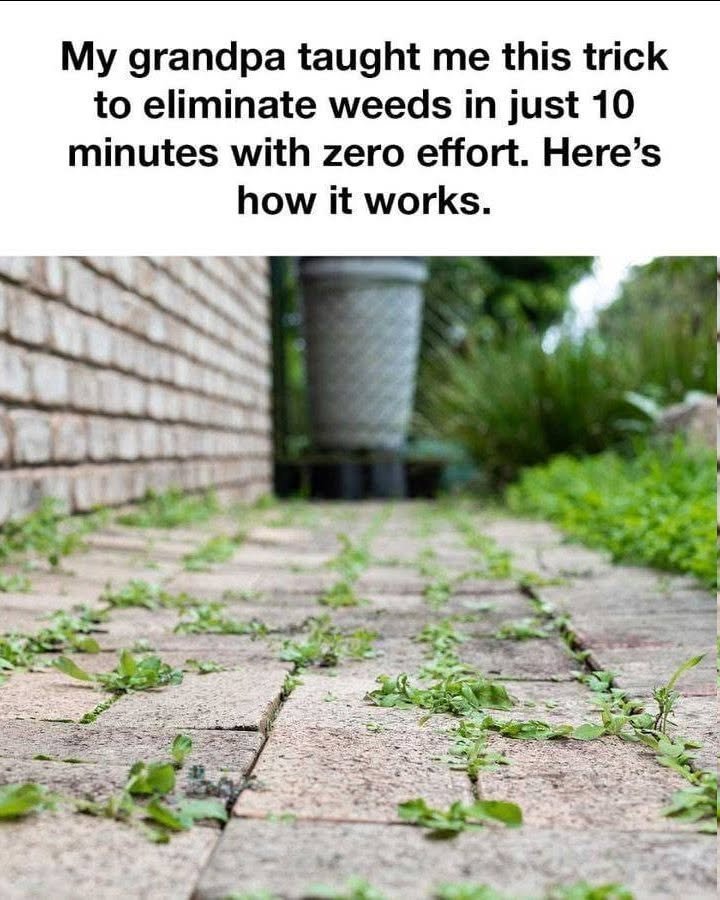
My Grandpa Taught Me This Simple Trick to Kill Driveway Weeds Without Hours of Work — Here’s How It Works
Discover an old-fashioned driveway weed removal method using simple household ingredients and learn safer ways to keep weeds away longer.
My Grandpa Taught Me This Simple Trick to Kill Driveway Weeds Without Hours of Work — Here’s How It Works
Every spring, the same problem appears.
Tiny green weeds start pushing their way through driveway cracks, between paving stones, and along the edges where concrete meets soil.
At first, they look harmless.
Then a few weeks pass.
Suddenly, those small sprouts become stubborn plants with deep roots, making your driveway look neglected and creating one more outdoor chore on your weekend list.
My grandfather had a simple philosophy when it came to home maintenance:
“Don’t fight nature with more work than necessary. Use the right method at the right time.”
Instead of spending hours pulling weeds one by one, he relied on a simple approach that many homeowners still use today: a homemade weed-control spray made with common household ingredients.
But there is an important detail most people miss:
A quick weed killer may remove what you see above ground, but preventing weeds from returning requires understanding why they grow in the first place.
Why Do Weeds Keep Growing Through Driveways?
Many people wonder:
“How can anything grow through concrete?”
The answer is surprisingly simple.
Driveways are not completely sealed environments.
Tiny cracks and gaps collect:
- Dirt
- Dust
- Leaves
- Organic material
Over time, this creates a small pocket where weed seeds can settle.
Add:
- Sunlight
- Rainwater
- Warm temperatures
and suddenly a weed has everything it needs to survive.
The driveway is not creating weeds—it is accidentally creating a tiny garden bed.
The Old-Fashioned Weed Solution: Vinegar-Based Spray
One popular homemade method uses vinegar because its acidity can damage plant leaves and dry out many small weeds.
What You Need
- White vinegar
- Dish soap
- Spray bottle
Some people also add salt, but caution is needed.
Salt can harm nearby plants and may build up in soil, making it difficult for anything to grow in that area later.
For driveway cracks where you do not want plants growing, this may be less of a concern, but it should be used carefully.
How to Make the Homemade Weed Spray
Step 1: Choose the Right Day
Timing matters.
The best conditions are:
- Sunny weather
- Dry forecast
- Little wind
Why?
The solution needs time to stay on the weed leaves.
Rain shortly afterward can reduce effectiveness.
Step 2: Mix Your Spray
A common simple mixture:
- White vinegar
- A small amount of dish soap
The soap helps the liquid spread across the leaf surface.
Always follow safety precautions:
- Avoid contact with eyes
- Keep away from children and pets until dry
- Avoid spraying desirable plants
Step 3: Spray Directly on Weeds
Apply the mixture to the leaves.
The goal is to cover the weed—not soak the entire driveway.
Small weeds usually respond better than large, established plants.
Why This Method Works
Plants rely on healthy leaves to produce energy.
When a strong acidic solution damages the leaf surface, the plant may struggle to continue growing.
However, homemade solutions often work best on:
- Young weeds
- Small cracks
- Surface growth
They may not completely eliminate deep roots from mature weeds.
The Secret Step Most People Skip: Remove the Roots
Killing the visible green part is only half the battle.
Some weeds can grow back if the root system remains alive.
After the weed dries:
- Pull out the remaining plant.
- Remove loose soil from cracks.
- Sweep the area clean.
This reduces the chance of quick regrowth.
How to Stop Driveway Weeds From Coming Back
1. Seal Driveway Cracks
Cracks are weed invitations.
Repairing small cracks can prevent:
- Water collection
- Soil buildup
- Seed growth
2. Sweep Regularly
Leaves and dirt become growing material.
A simple sweep every few weeks can make a difference.
3. Use Boiling Water Carefully
Boiling water can damage some weeds by destroying plant tissue.
It works best for:
- Small weeds
- Isolated areas
- Cracks away from desirable plants
Use caution because hot water can burn skin and damage nearby vegetation.
4. Consider Mulch or Ground Covers Around Edges
For areas around driveways—not the driveway itself—healthy ground cover can reduce open space where weeds establish.
Homemade Weed Control vs Store-Bought Products
| Method | Advantages | Things to Consider |
|---|---|---|
| Vinegar-based spray | Simple ingredients, affordable | Works best on small weeds |
| Boiling water | No chemical products | Requires caution |
| Pulling by hand | Removes roots | Takes more effort |
| Commercial herbicides | Often stronger | Follow label directions carefully |
Common Mistakes People Make When Killing Weeds
Mistake 1: Spraying Before Rain
Rain can wash away the solution before it works.
Better approach: Choose a dry day.
Mistake 2: Using Too Much Salt
Salt can damage soil and nearby plants.
Use caution, especially near lawns, gardens, and trees.
Mistake 3: Spraying Everything Green
A weed spray does not know the difference between a weed and a favorite plant.
Apply carefully.
Mistake 4: Ignoring Prevention
If cracks remain filled with dirt and seeds, weeds will likely return.
Long-term control requires reducing their growing conditions.
A Simple Driveway Weed Routine
Monthly:
✔ Sweep driveway cracks
✔ Remove new sprouts early
✔ Check for small cracks
Seasonally:
✔ Repair damaged areas
✔ Clean edges
✔ Address recurring weed spots
Small maintenance prevents bigger problems.
Mini Scenario: The 10-Minute Weekend Fix
Tom noticed weeds appearing between his driveway stones every summer.
At first, he spent hours pulling them out.
His neighbor suggested a simpler routine:
- Spray small weeds on a sunny day
- Remove dead plants afterward
- Sweep cracks regularly
The next season, he spent far less time dealing with the problem.
The difference was not a secret ingredient—it was consistency.
Frequently Asked Questions
Does vinegar really kill driveway weeds?
Vinegar can damage many weeds, especially young plants, but results vary depending on the weed type and growing conditions.
How quickly does homemade weed spray work?
Some weeds may show damage within a day or two, while larger weeds may take longer.
Will vinegar kill grass too?
Yes. Vinegar does not know the difference between weeds and grass, so avoid spraying areas where you want plants to grow.
Is salt a good weed killer?
Salt can kill plants, but it may damage soil and nearby vegetation. Use it carefully.
What is the easiest way to remove weeds from cracks?
For small areas, combining weed treatment with pulling and crack maintenance often works best.
Why do weeds keep coming back?
Seeds, roots, dirt buildup, and moisture trapped in cracks allow weeds to return.
Can I prevent driveway weeds permanently?
No method guarantees permanent prevention, but sealing cracks and regular maintenance can greatly reduce growth.
Is homemade weed killer safer than commercial products?
“Natural” does not always mean harmless. Homemade solutions should still be used carefully.
Driveway Weed Control Checklist
✔️ Do
- Treat weeds when they are young.
- Choose dry, sunny weather.
- Remove dead weeds and roots.
- Repair driveway cracks.
- Keep surfaces clean.
❌ Avoid
- Spraying on windy days.
- Using weed killers near plants you want to keep.
- Overusing salt.
- Ignoring small cracks.
Conclusion
Sometimes the best home solutions are the simplest ones.
A basic vinegar-based spray, careful application, and regular driveway maintenance can help reduce those stubborn weeds that keep appearing between cracks.
But the real trick is not just killing weeds—it is making your driveway a place where weeds have fewer chances to grow.
The easiest weed problem to solve is the one you prevent early. Treat small weeds quickly, maintain driveway cracks, and use simple methods consistently for a cleaner outdoor space.