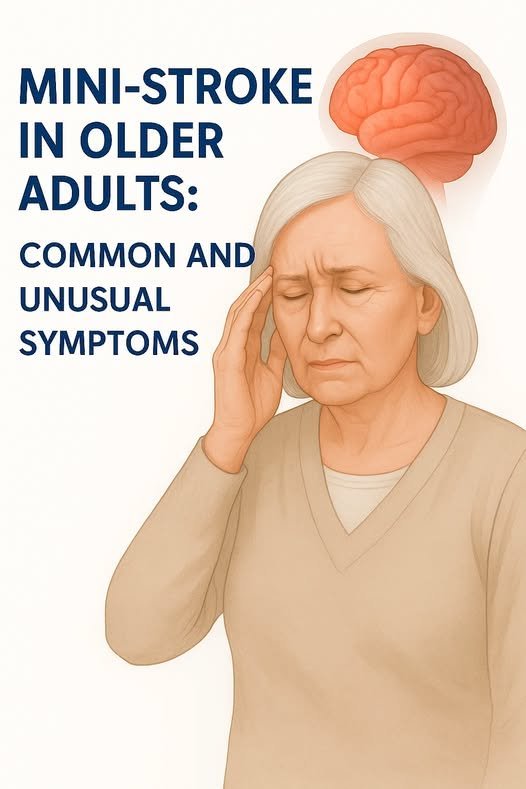
5 Critical Health Signals: Recognizing a Mini-Stroke in Seniors Before It Becomes a Major Emergency
Learn the five warning signs of a mini-stroke in seniors, why quick action matters, and how recognizing symptoms early may help prevent serious complications.
A person suddenly struggles to speak clearly.
Their smile looks uneven.
Their hand feels weak for a few minutes — then everything seems normal again.
Many families make the same dangerous assumption:
“It passed, so it must not have been serious.”
But a temporary episode like this can be a warning sign of something much bigger.
A mini-stroke, medically known as a transient ischemic attack (TIA), occurs when blood flow to part of the brain is briefly interrupted. The symptoms may disappear within minutes or hours, but the event itself should never be ignored.
For older adults, recognizing these warning signals quickly can make a critical difference. A TIA may be a warning that a more severe stroke could happen in the future.
This guide explains the key signs of a mini-stroke in seniors, what families should watch for, what actions to take, and common mistakes that can delay care.
Important: This article is for general education and does not replace medical advice. If someone experiences possible stroke symptoms, seek emergency medical help immediately.
What Is a Mini-Stroke?
A mini-stroke happens when a temporary blockage reduces blood supply to part of the brain.
Unlike a major stroke, the blockage often clears on its own, and symptoms may disappear.
However, the temporary nature of symptoms does not mean the situation is harmless.
A TIA can be the body’s warning signal that blood vessels, circulation, or other health factors need urgent attention.
Doctors often consider a TIA a medical emergency because it can indicate an increased risk of a future stroke.
Why Seniors Have a Higher Risk
Age is one factor that can increase stroke risk, but it is not the only one.
Older adults may have a higher chance of stroke-related problems because of conditions that become more common with age, including:
- High blood pressure
- Heart rhythm problems such as atrial fibrillation
- Diabetes
- High cholesterol
- Smoking history
- Blood vessel disease
- Previous stroke or TIA
Many of these conditions can be managed with proper medical care, lifestyle changes, and regular checkups.
The key is awareness.
A stroke often does not begin with dramatic pain. Instead, it may appear as a sudden change in how someone moves, speaks, sees, or thinks.
The FAST Method: A Simple Way to Remember Stroke Warning Signs
Healthcare professionals often use the acronym FAST to help people recognize stroke symptoms.
F — Face Drooping
Ask the person to smile.
Look for:
- One side of the face appearing lower
- Uneven facial movement
- Numbness or weakness on one side
A change in facial symmetry can be an important warning sign.
A — Arm Weakness
Ask the person to raise both arms.
Watch for:
- One arm drifting downward
- Sudden weakness
- Numbness on one side of the body
Some people describe the feeling as heaviness, tingling, or loss of control.
S — Speech Difficulty
Ask the person to repeat a simple sentence.
Possible signs include:
- Slurred speech
- Trouble finding words
- Confusion about what to say
- Difficulty understanding others
Speech changes can appear suddenly and should be taken seriously.
T — Time to Call for Emergency Help
If any stroke warning signs appear, time matters.
Even if symptoms disappear, medical evaluation is important.
Do not wait to see whether it happens again.
5 Critical Health Signals of a Mini-Stroke in Seniors
1. Sudden Weakness or Numbness on One Side of the Body
One of the most common warning signs is sudden weakness or numbness affecting:
- Face
- Arm
- Leg
- One side of the body
A senior may suddenly drop an object, struggle to walk, or feel that one side is not responding normally.
The symptom may disappear quickly, which is why some people dismiss it.
That can be a mistake.
A temporary loss of strength or sensation can still indicate that the brain experienced a disruption in blood flow.
Example Scenario
A 76-year-old man reaches for his coffee cup and notices his right hand feels unusually weak. After ten minutes, his hand feels normal again.
Because the symptom disappeared, he assumes it was nothing.
However, a sudden episode like this should be evaluated by a healthcare professional.
2. Sudden Trouble Speaking or Understanding Words
Communication problems are another major warning sign.
A person may:
- Speak unclearly
- Use incorrect words
- Struggle to form sentences
- Have difficulty understanding conversation
Family members are often the first to notice this change.
A person may know what they want to say but cannot express it properly.
This can be frightening and confusing.
Do not assume it is simply tiredness, aging, or distraction when the change is sudden.
3. Sudden Vision Problems
A mini-stroke can affect vision.
Possible symptoms include:
- Blurred vision
- Loss of vision in one eye
- Double vision
- Difficulty focusing
Vision changes may happen without pain, making them easier to ignore.
A senior who suddenly says:
“I cannot see clearly from one side”
should receive medical attention.
4. Sudden Dizziness, Loss of Balance, or Difficulty Walking
Balance problems can sometimes indicate a neurological issue.
Warning signs may include:
- Feeling unusually dizzy
- Trouble standing
- Unsteady walking
- Loss of coordination
- Sudden confusion about movement
Older adults may already worry about falling, but a sudden change in balance should not automatically be blamed on age.
5. Sudden Confusion or Severe Trouble Thinking Clearly
A mini-stroke may affect mental clarity.
A person might:
- Become confused
- Forget familiar information
- Struggle to follow instructions
- Appear unusually disoriented
Sudden confusion is especially important because it may also signal other medical emergencies.
Changes in mental function should always be taken seriously.
What Should You Do If You Suspect a Mini-Stroke?
If a senior shows possible TIA or stroke symptoms:
Call Emergency Services
Do not wait to see if symptoms disappear.
Note the Time
Try to remember:
- When symptoms started
- How long they lasted
- What symptoms appeared
This information can help medical professionals.
Do Not Drive If Emergency Help Is Needed
Emergency responders can begin care and provide guidance while transporting the person.
Do Not Give Food or Medication Without Advice
A person with stroke symptoms may have swallowing difficulties or other risks.
Why People Often Miss Mini-Stroke Symptoms
Many people delay seeking help because:
“The Symptoms Went Away”
This is the most common reason.
Temporary symptoms can feel less urgent, but they may be a warning.
“It Was Probably Just Aging”
Normal aging does not usually cause sudden weakness, speech problems, or sudden confusion.
“I Did Not Want to Overreact”
When it comes to possible stroke symptoms, caution is safer than waiting.
Risk Factors Seniors and Families Should Know
Understanding risk factors can help with prevention.
High Blood Pressure
Uncontrolled blood pressure can damage blood vessels and increase stroke risk.
Heart Conditions
Certain heart rhythm problems can increase the chance of blood clots.
Diabetes
High blood sugar levels can affect blood vessels over time.
Smoking
Smoking damages circulation and increases cardiovascular risk.
High Cholesterol
Cholesterol buildup can contribute to narrowed arteries.
How Seniors Can Reduce Stroke Risk
While not every stroke can be prevented, many risk factors can be improved.
Helpful habits include:
Regular Medical Checkups
Routine visits help monitor blood pressure, cholesterol, and other health conditions.
Taking Prescribed Medications Correctly
Skipping medications can increase health risks.
Staying Physically Active
Movement appropriate for a person’s health level can support heart and brain health.
Eating a Balanced Diet
A diet rich in vegetables, fruits, whole grains, and healthy proteins can support overall health.
Avoiding Tobacco
Stopping smoking can improve cardiovascular health at any age.
Mini-Stroke vs. Major Stroke: What Is the Difference?
| Feature | Mini-Stroke (TIA) | Major Stroke |
|---|---|---|
| Blood flow interruption | Temporary | Longer-lasting |
| Symptoms | May disappear | Often continue |
| Brain damage | May not cause permanent damage | Can cause lasting damage |
| Emergency response | Still required | Immediate emergency care required |
A TIA should not be viewed as a “small problem.”
It can be an important warning.
Common Mistakes Families Make
Mistake 1: Waiting for Symptoms to Return
A second episode may be more serious.
Better approach: Seek medical guidance after the first suspected event.
Mistake 2: Assuming It Is Normal Aging
Sudden neurological changes are not simply part of getting older.
Better approach: Treat sudden changes as medical concerns.
Mistake 3: Trying Home Remedies First
Stroke symptoms require professional evaluation.
Better approach: Contact emergency services.
Mistake 4: Forgetting to Record Details
Families may forget important timing information.
Better approach: Write down what happened and when.
Frequently Asked Questions
What is the first sign of a mini-stroke in seniors?
Common early signs include sudden weakness, speech difficulty, facial drooping, confusion, vision problems, or loss of balance.
Can a mini-stroke go away on its own?
Yes, symptoms may disappear, but the event still requires medical attention because it may indicate future stroke risk.
How long does a mini-stroke last?
Symptoms can last minutes to hours. Even brief symptoms should be taken seriously.
Are mini-strokes painful?
Many TIAs do not cause pain. They often appear as sudden changes in movement, speech, vision, or thinking.
Can someone have a mini-stroke and not know it?
Yes. Some people experience mild or brief symptoms and do not recognize what happened.
Is a mini-stroke dangerous?
Yes. Although symptoms may resolve, a TIA can be a warning sign of a possible future stroke.
What age is most at risk for mini-strokes?
Risk increases with age, but other factors such as blood pressure, heart health, and lifestyle also play major roles.
Can lifestyle changes reduce stroke risk?
Healthy habits, managing medical conditions, and following medical advice can help reduce risk.
Senior Stroke Awareness Checklist
Watch For:
☐ Sudden face drooping
☐ Sudden arm or leg weakness
☐ Speech difficulties
☐ Vision changes
☐ Confusion
☐ Dizziness or balance problems
Take Action:
☐ Treat symptoms as urgent
☐ Call emergency services when needed
☐ Record symptom timing
☐ Follow medical advice
☐ Manage health conditions regularly
Final Thoughts
A mini-stroke can be easy to underestimate because symptoms may disappear quickly.
But a temporary warning from the brain should never be ignored.
Recognizing the signs early gives seniors and their families the best chance to respond quickly and seek appropriate care.
The most important lesson is simple:
A symptom that disappears is still a symptom that happened.
Sudden changes in speech, movement, vision, balance, or thinking in seniors should always be taken seriously. Quick action can make a critical difference.