Why Does Meat Stick to the Pan Even When You Add Oil? The Science Behind It (And How to Stop It)
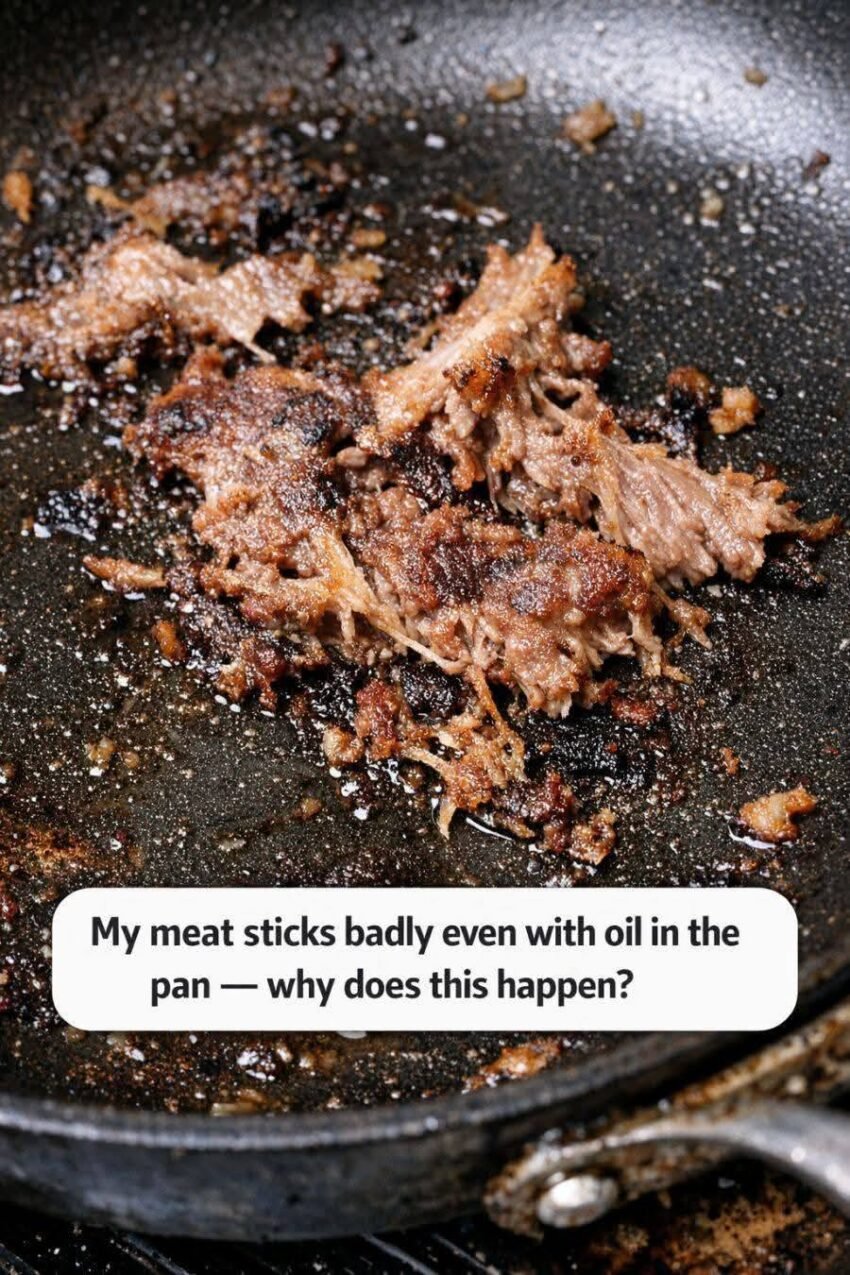
You add oil to the pan, place your meat down carefully, and expect a beautiful sear. Instead, the meat grabs onto the surface like glue.
When you try to flip it, the crust tears away, leaving behind burnt pieces stuck to the pan.
This is one of the most common cooking frustrations—and it usually isn’t because you used too little oil.
The real reason is a combination of temperature, moisture, protein chemistry, and pan condition. Once you understand what is happening, you can prevent it almost every time.
The Main Reason Meat Sticks: Proteins Bond to the Pan
Raw meat contains proteins and moisture.
When meat touches a hot cooking surface, the proteins begin changing structure through a process called denaturation. During this process, proteins can form strong connections with tiny imperfections in the pan’s surface.
In simple terms:
Wet meat + hot pan + early movement = sticking.
The meat often sticks most at the beginning because the proteins have not yet formed a browned crust.
Once the surface develops a proper sear, the meat naturally releases more easily.
1. Your Pan May Not Be Hot Enough
One of the biggest mistakes is putting meat into a cold or lukewarm pan.
When the pan is not hot enough:
- The meat releases water slowly.
- It starts steaming instead of searing.
- Proteins attach to the surface.
- A grey, soft layer forms instead of a crisp crust.
A properly heated pan helps create a quick sear that reduces sticking.
Simple test:
Add a few drops of water to the pan.
- If they sit and slowly evaporate, the pan may be too cool.
- If they form small moving beads, the pan is likely hot enough.
2. Your Meat Is Too Wet
Moisture is one of the biggest enemies of browning.
When meat comes straight from packaging, it often has surface liquid.
That water must evaporate before browning can happen.
Instead of searing, the meat may:
- Release steam
- Lower the pan temperature
- Stick more easily
Fix:
Before cooking:
- Remove meat from packaging.
- Pat it dry with paper towels.
- Season afterward.
A dry surface creates better contact with the pan and improves browning.
3. You Are Moving the Meat Too Soon
Many people try to flip meat as soon as they put it in the pan.
This often makes sticking worse.
At first, the proteins are attached to the pan. As cooking continues, a browned crust forms, and the meat begins to release naturally.
A good rule:
If the meat resists when you try to lift it, it probably is not ready yet.
Give it another minute and try again.
4. Too Much or Too Little Oil Can Cause Problems
Oil helps create a barrier between food and the pan, but it is not a guarantee against sticking.
Too little oil:
Parts of the meat may directly contact the dry surface.
Too much oil:
The meat may move unevenly and prevent proper browning.
The goal is a thin, even layer of oil across the cooking surface.
5. Your Pan Type Matters
Different pans behave differently.
Stainless Steel
Stainless steel pans often cause the most sticking complaints.
But they are excellent for creating a deep brown crust if used correctly.
The trick:
- Preheat the pan.
- Add oil.
- Add dry meat.
- Wait for the crust to form.
Nonstick Pans
Nonstick pans reduce sticking because they have a coated surface.
However:
- They may not create the same strong sear as stainless steel.
- Very high heat can damage some coatings.
Cast Iron
A well-seasoned cast iron pan can become naturally nonstick.
Problems occur when:
- The seasoning is damaged.
- The pan is not heated properly.
- The surface is too dry.
6. The Pan Surface May Be the Problem
Even good cooking technique cannot completely overcome a damaged pan.
Possible causes:
- Scratched nonstick coating
- Poor seasoning on cast iron
- Heavy residue buildup
- Uneven heating
A clean, well-maintained cooking surface makes a major difference.
The Best Method to Prevent Meat From Sticking
Follow this simple process:
Step 1: Dry the Meat
Use paper towels to remove surface moisture.
Step 2: Let It Warm Slightly
Extremely cold meat can cool the pan quickly.
Allowing it to sit briefly before cooking can help.
Step 3: Preheat the Pan
Heat the pan before adding oil or meat.
Step 4: Add Oil at the Right Time
Once the pan is hot, add a thin layer of oil.
Step 5: Place Meat Down and Leave It Alone
Avoid constantly checking or moving it.
Let the crust develop.
Step 6: Flip When It Releases
The meat will often tell you when it is ready.
Common Mistakes That Make Meat Stick
Mistake 1: Adding Meat to a Cold Pan
Problem: Slow heating causes sticking.
Fix: Preheat first.
Mistake 2: Using Wet Meat
Problem: Steam prevents browning.
Fix: Pat dry.
Mistake 3: Flipping Too Quickly
Problem: The crust has not formed.
Fix: Wait until it releases.
Mistake 4: Crowding the Pan
Too much meat lowers the temperature.
The result:
- More moisture
- Less browning
- More sticking
Cook in batches if necessary.
Why Restaurants Get Better Searing Results
Professional kitchens usually focus on a few basic principles:
- Very hot cooking surfaces
- Dry ingredients
- Properly maintained pans
- Enough space between pieces of food
- Patience before flipping
The secret is usually technique, not expensive equipment.
Quick Troubleshooting Guide
| Problem | Likely Cause | Solution |
|---|---|---|
| Meat sticks immediately | Pan too cold | Heat pan longer |
| Meat releases water | Meat too wet | Pat dry first |
| Crust tears when flipping | Flipped too soon | Wait longer |
| Burnt outside, raw inside | Heat too high | Reduce temperature |
| Everything sticks | Pan condition issue | Clean, season, or replace |
Final Takeaway
Meat sticking to the pan is rarely caused by a lack of oil. The bigger factors are moisture, heat control, timing, and the condition of your pan.
The next time your meat seems glued to the surface, don’t immediately add more oil or force it loose. Let the heat do the work. Once the proteins brown properly, the meat often releases on its own.
A hot pan, dry meat, and patience are the three secrets to preventing sticking and getting a perfect sear.