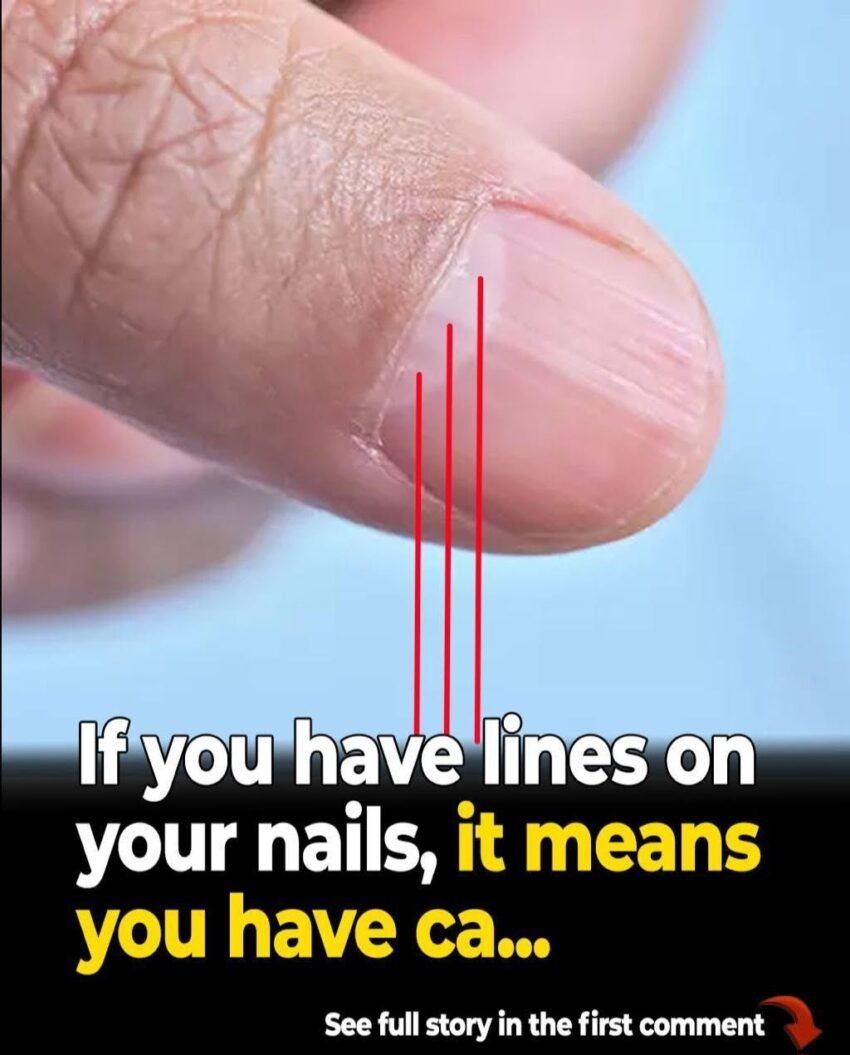
Doctor Uncovers a Telltale Sign in Your Fingernails That May Predict Your Life Expectancy: What Your Nails Can Really Tell You About Your Health
Discover the surprising fingernail signs doctors look for that may reveal important clues about your overall health and longevity, plus when it’s time to see a healthcare professional.
Doctor Uncovers a Telltale Sign in Your Fingernails That May Predict Your Life Expectancy: What Science Actually Says
Take a quick look at your fingernails.
Most people notice them only when they need trimming or a fresh coat of polish. But doctors often see something different. Your nails can offer subtle clues about your circulation, nutrition, lung function, heart health, and even chronic diseases that may otherwise go unnoticed.
One particular change—known as clubbing—has attracted significant medical attention because it can sometimes signal serious underlying health conditions. While it doesn’t predict exactly how long someone will live, it may point to illnesses that affect life expectancy if left untreated.
The important distinction is this: your fingernails don’t predict your future—they can reflect what’s happening inside your body today.
In this guide, you’ll learn what clubbing is, why doctors pay attention to it, what other nail changes may reveal about your health, and when it’s worth scheduling a medical evaluation.
Why Doctors Examine Fingernails During Physical Exams
Medical professionals have included nail examinations in routine physical assessments for generations.
That isn’t because nails are fragile or cosmetic. They’re one of the few parts of the body where tiny changes in blood flow, oxygen delivery, and tissue growth become visible.
Healthy nails depend on:
- Good circulation
- Adequate oxygen levels
- Proper nutrition
- Balanced hormone function
- Healthy skin cells
- Normal immune activity
When one of these systems is disrupted, the nails sometimes change before more obvious symptoms appear.
Think of your nails as an early dashboard warning light rather than a crystal ball.
The Telltale Sign: Clubbing
The nail change most commonly linked with serious disease is called digital clubbing.
Instead of growing relatively flat, the fingertips gradually enlarge and the nails begin curving downward over the tips of the fingers.
Doctors often notice:
- Rounded fingertips
- Nails that appear more curved
- Softening of the nail bed
- Loss of the normal angle between the nail and skin
- Fingers that look swollen at the ends
This change usually develops slowly over months or years.
Why Clubbing Matters
Clubbing itself isn’t dangerous.
The concern is what may be causing it.
Researchers have found clubbing associated with several conditions, including:
Lung Diseases
Many cases involve chronic lung disorders, including:
- Lung cancer
- Pulmonary fibrosis
- Bronchiectasis
- Chronic lung infections
Reduced oxygen delivery appears to play a role in some patients.
Heart Conditions
Certain congenital heart defects and cardiovascular disorders can also lead to clubbing.
When the heart cannot circulate oxygen-rich blood efficiently, tissue changes may occur in the fingertips.
Digestive Disorders
Less commonly, clubbing may be associated with:
- Inflammatory bowel disease
- Liver disease
- Celiac disease
Rare Genetic Conditions
Some people inherit clubbing without having an underlying disease.
In these cases, it may simply run in families.
Does Clubbing Predict Life Expectancy?
This question often appears in headlines—but the reality is more nuanced.
No fingernail sign can accurately predict how long an individual will live.
However, clubbing may be associated with illnesses that influence long-term health outcomes.
For example:
| Nail Finding | Possible Meaning | Should You See a Doctor? |
|---|---|---|
| Clubbing | Possible lung, heart, or digestive disease | Yes |
| Spoon nails | Iron deficiency | Usually |
| White nails | Liver or kidney disease | Yes |
| Yellow nails | Lung disease or fungal infection | Often |
| Dark streak | Possible melanoma | Immediately |
The nail change itself isn’t the predictor.
The underlying condition is.
Other Nail Changes Worth Paying Attention To
Spoon Nails
Also called koilonychia, spoon-shaped nails curve upward instead of downward.
Possible causes include:
- Iron deficiency
- Poor nutrition
- Certain autoimmune conditions
Many people improve after treating the underlying deficiency.
White Nails
Mostly white nails with a darker band near the tip can occasionally be linked with:
- Liver disease
- Kidney disease
- Diabetes
This finding deserves medical evaluation, especially if it develops suddenly.
Yellow Nails
Yellow nails aren’t always a fungal infection.
Sometimes they occur alongside:
- Chronic lung disease
- Lymphedema
- Sinus disorders
Dark Vertical Streaks
A new dark streak—particularly on one nail—should never be ignored.
Although many streaks are harmless, some can represent subungual melanoma, a rare form of skin cancer.
Early diagnosis greatly improves treatment outcomes.
Pitting
Tiny dents scattered across the nail surface may appear with:
- Psoriasis
- Eczema
- Alopecia areata
Dermatologists often use nail findings to support diagnosis.
How Doctors Evaluate Clubbing
If your physician notices clubbing, they won’t diagnose a disease based on your nails alone.
Instead, they may ask:
- Have you developed a chronic cough?
- Are you short of breath?
- Have you lost weight unintentionally?
- Do you smoke or have you smoked in the past?
- Is there a family history of lung or heart disease?
Depending on your symptoms, further evaluation may include:
- Chest imaging
- Blood tests
- Lung function testing
- Heart imaging
- Oxygen measurements
The goal is to identify—or rule out—an underlying cause.
A Simple At-Home Check
Doctors sometimes perform the Schamroth window test.
Here’s how:
- Place the same fingers from opposite hands nail-to-nail.
- Look for a small diamond-shaped space between the nail beds.
- If the gap is absent, clubbing may be present.
This isn’t a diagnosis, but it can be a reason to seek medical advice if you notice other concerning symptoms.
Everyday Habits That Support Healthy Nails
Healthy nails reflect healthy habits.
Focus on:
- Eating enough protein
- Getting adequate iron, zinc, and vitamin B12
- Staying hydrated
- Wearing gloves when using cleaning chemicals
- Avoiding smoking
- Managing chronic illnesses
- Keeping diabetes under good control
- Protecting nails from repeated trauma
These habits benefit your entire body—not just your nails.
A Real-World Scenario
Imagine a 58-year-old man who notices his fingertips seem rounder than they used to be. He assumes it’s simply part of ageing.
During a routine physical, his primary care doctor spots clubbing and recommends a chest X-ray. Further testing reveals an early-stage lung condition that hadn’t yet caused significant symptoms.
Because it was detected early, treatment begins sooner than it otherwise might have.
This example illustrates why physical examinations still matter. Small visible changes can sometimes lead to earlier diagnosis and better outcomes.
Common Mistakes People Make
Assuming every nail change is harmless
While many nail changes result from ageing or minor injuries, some deserve prompt medical evaluation.
Self-diagnosing online
Photos can be misleading. A healthcare professional considers your symptoms, medical history, and examination together.
Ignoring gradual changes
Slow changes are easy to overlook because they happen over months or years.
Waiting until symptoms become severe
Many chronic illnesses are easier to manage when identified early.
Pros and Cons of Paying Attention to Nail Changes
Pros
- May encourage earlier medical evaluation
- Can reveal nutritional deficiencies
- Helps detect some chronic diseases sooner
- Promotes greater awareness of overall health
Cons
- Nail changes are rarely specific to one disease
- Many changes have harmless causes
- Online information can increase unnecessary anxiety
- Diagnosis always requires medical assessment
What Recent Research Suggests
Medical research continues to explore how visible physical signs relate to overall health.
Rather than viewing a single feature—such as a nail change—as a predictor of lifespan, researchers increasingly combine multiple factors, including lifestyle, medical history, laboratory tests, imaging, and physical examination findings to assess health risks more accurately.
Advances in artificial intelligence are also being studied to help analyse medical images, including skin and nail photographs, but these tools are still intended to support—not replace—clinical judgement.
When You Should See a Healthcare Professional
Arrange a medical appointment if you notice:
- New clubbing
- A dark streak on one nail
- Rapid nail changes
- Nails separating from the nail bed
- Persistent pain or swelling
- Nail changes accompanied by weight loss, fatigue, chronic cough, chest pain, or shortness of breath
Prompt evaluation doesn’t necessarily mean something serious is wrong—but it helps ensure important conditions aren’t missed.
Frequently Asked Questions
1. Can fingernails really predict life expectancy?
No. Fingernails cannot predict exactly how long someone will live. Certain nail changes may reflect underlying health conditions that influence long-term health if left untreated.
2. What causes clubbing?
Clubbing is associated with several medical conditions affecting the lungs, heart, digestive system, or, in some cases, inherited traits.
3. Is clubbing painful?
Usually not. Most people notice changes in appearance rather than pain.
4. Can clubbing be reversed?
Sometimes. If the underlying cause is successfully treated, clubbing may improve, although it is not always reversible.
5. Should smokers pay special attention to nail changes?
Yes. Smokers who notice clubbing, persistent cough, or breathing changes should seek medical evaluation promptly.
6. Are ridges in nails normal?
Vertical ridges often become more noticeable with age and are usually harmless. Sudden or dramatic changes should be assessed by a healthcare professional.
7. Are white spots caused by calcium deficiency?
Usually not. Small white spots commonly result from minor nail injuries rather than calcium deficiency.
8. When is a dark nail streak an emergency?
A new, widening, or irregular dark streak—especially on a single nail—should be evaluated promptly because it can occasionally represent melanoma.
9. Can vitamin deficiencies affect nails?
Yes. Deficiencies in iron, vitamin B12, folate, zinc, and protein can contribute to nail changes.
10. How often should I check my nails?
A quick monthly look is generally sufficient. Pay attention to persistent changes rather than temporary cosmetic differences.
Healthy Nail Checklist
Do
✔ Check your nails regularly for new changes
✔ Eat a balanced diet rich in protein, iron, and vitamins
✔ Stay physically active
✔ Manage chronic medical conditions
✔ Wear gloves when handling harsh chemicals
✔ See a healthcare professional if significant nail changes develop
Avoid
✘ Ignoring persistent nail changes
✘ Assuming online photos provide a diagnosis
✘ Smoking
✘ Picking or biting your nails
✘ Delaying medical care when nail changes occur alongside other symptoms
Final Thoughts
Your fingernails won’t tell you exactly how many years you have left—but they can provide meaningful clues about your overall health.
The most important takeaway isn’t to become anxious over every ridge or discoloration. Instead, use your nails as one small piece of the bigger picture. If you notice a persistent or unusual change, especially one accompanied by other symptoms, it’s worth discussing with your healthcare professional.
Early recognition of underlying health conditions often leads to earlier treatment, better management, and improved quality of life. Paying attention to your nails is less about predicting the future and more about taking informed action in the present.
Your fingernails are not a life expectancy test, but certain persistent changes—especially clubbing—can signal health conditions that deserve prompt medical evaluation. Paying attention today could make a meaningful difference tomorrow.
If you found this article helpful, share it with family and friends, leave a comment with your questions or experiences, and explore our other evidence-based health guides to stay informed about the small signs your body may be giving you.