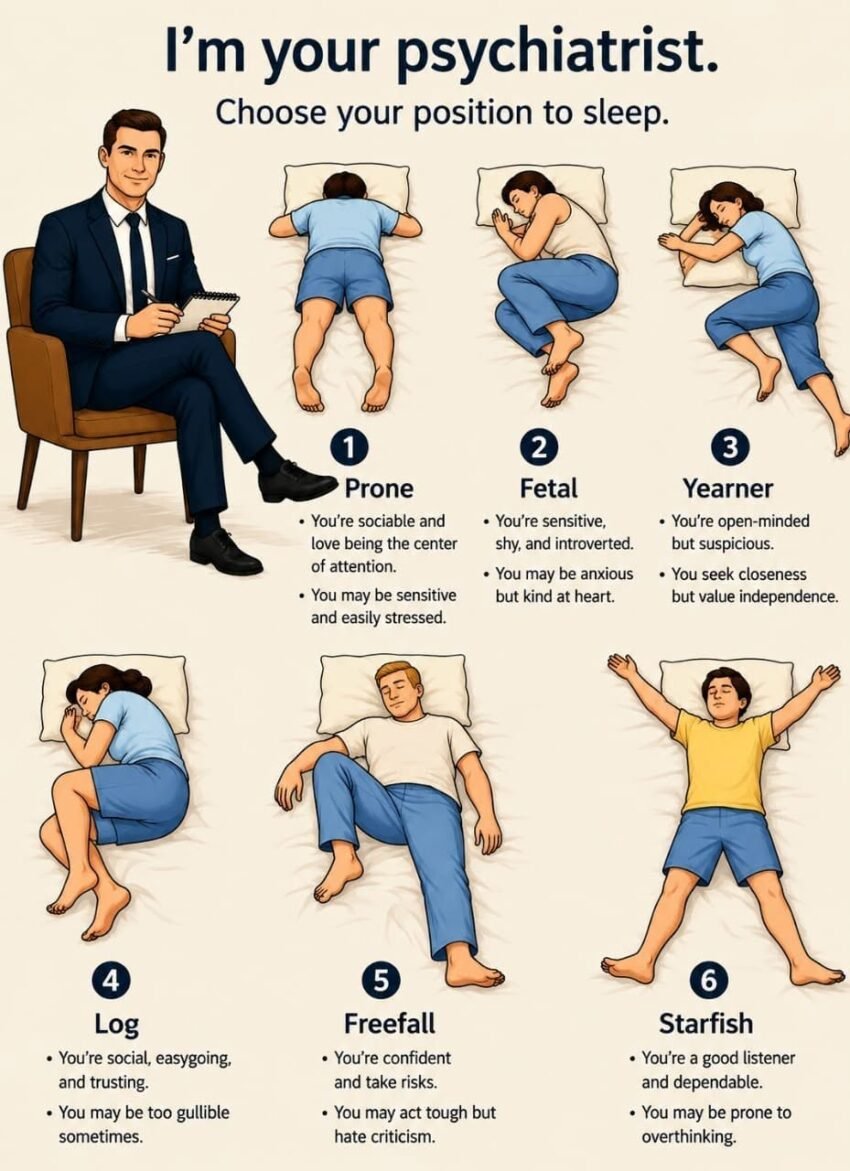
What Your Sleeping Position Reveals About Your Personality: 6 Common Positions Analyzed
Discover what your sleeping position may say about your personality, habits, and comfort preferences. Explore six common sleep positions and their meanings.
Introduction
You spend roughly a third of your life sleeping—but have you ever wondered what your sleeping position says about you?
The way you curl up, stretch out, or position your arms at night has fascinated researchers and sleep experts for years. Some people believe sleeping positions reveal hidden personality traits, while others see them as simple reflections of comfort, habits, body shape, stress levels, and physical needs.
The truth is a little more complicated.
Your sleeping position does not provide a guaranteed personality test. A person who sleeps on their side is not automatically shy, and someone who sleeps spread out is not necessarily confident. However, sleep habits can sometimes reflect patterns related to comfort, emotional state, and daily routines.
Here are six common sleeping positions and what they are often associated with.
1. The Fetal Position: The Curled-Up Sleeper
The fetal position is one of the most common sleeping styles.
It involves:
- Sleeping on your side
- Bringing your knees toward your chest
- Curling the body inward
- Sometimes hugging a pillow or blanket
Personality Associations
People who prefer this position are often described as:
- Thoughtful
- Sensitive
- Protective of their personal space
- Emotionally aware
Some sleep personality theories suggest fetal sleepers may appear strong on the outside while being more sensitive internally.
However, there may be practical reasons for this position too. Curling up can feel comforting because it creates a sense of warmth and security.
Possible Sleep Benefits
Side sleeping, including a modified fetal position, may help some people:
- Reduce snoring
- Improve breathing during sleep
- Relieve pressure on the lower back
2. The Log Position: The Straight Side Sleeper
The log position involves sleeping on your side with:
- Legs extended
- Arms resting straight beside the body
- A relatively straight posture
Personality Associations
This position is often linked with people who are described as:
- Calm
- Social
- Easygoing
- Comfortable trusting others
Some interpretations suggest log sleepers tend to be relaxed and adaptable.
Of course, sleeping this way may simply mean the position feels natural and comfortable.
Possible Sleep Benefits
Side sleeping may be helpful for some people because it can:
- Reduce airway obstruction
- Support spinal alignment
- Improve comfort for certain sleepers
3. The Yearner Position: The Sleeper Who Reaches Forward
The yearner position looks similar to side sleeping, but with the arms stretched forward.
A person may appear as though they are reaching toward something.
Personality Associations
According to traditional sleep-position interpretations, yearners are often described as:
- Open-minded
- Curious
- Careful decision-makers
- Willing to consider new experiences
Some theories suggest these sleepers may take time before trusting people or making major choices.
Again, these are personality observations—not scientific diagnoses.
Comfort Factors
The arm position may simply provide:
- A comfortable shoulder position
- Better support while hugging a pillow
- A relaxed posture
4. The Soldier Position: Sleeping Straight on the Back
The soldier position involves:
- Lying flat on the back
- Arms resting at the sides
- Body remaining straight
Personality Associations
Traditional interpretations often connect this position with people who are:
- Disciplined
- Quietly confident
- Responsible
- Structured
Some believe soldier sleepers prefer order and routine.
Sleep Considerations
Sleeping on the back may support:
- Neutral spinal alignment
- Even weight distribution
However, some people who sleep on their backs experience more snoring or breathing problems.
5. The Starfish Position: The Sprawled-Out Sleeper
The starfish position involves:
- Sleeping on the back
- Arms stretched upward or around the pillow
- Legs relaxed and spread out
Personality Associations
This position is often linked with people who are considered:
- Friendly
- Helpful
- Good listeners
- Comfortable giving attention to others
Some interpretations suggest starfish sleepers enjoy connection and cooperation.
Practical Reality
The starfish position may simply mean someone prefers:
- More space while sleeping
- Freedom of movement
- Less pressure on certain joints
6. The Freefall Position: Sleeping Face Down
The freefall position involves:
- Lying on the stomach
- Turning the head to one side
- Arms around or near the pillow
Personality Associations
Traditional sleep psychology often associates this position with people who are:
- Energetic
- Direct
- Outgoing
- Less comfortable with uncertainty
Some theories suggest freefall sleepers may like feeling in control.
Sleep Considerations
Stomach sleeping can sometimes create pressure on:
- The neck
- The spine
- The shoulders
Using proper pillow support may reduce discomfort.
Sleep Position Comparison Table
| Sleeping Position | Common Personality Interpretation | Possible Comfort Reason |
|---|---|---|
| Fetal | Sensitive, thoughtful, protective | Feeling secure and warm |
| Log | Relaxed, social, trusting | Natural side comfort |
| Yearner | Curious, careful, open-minded | Pillow support and arm comfort |
| Soldier | Disciplined, organised | Stable back position |
| Starfish | Friendly, supportive | Freedom and space |
| Freefall | Energetic, confident | Preference for stomach sleeping |
What Science Actually Says About Sleep Positions and Personality
The idea that sleep positions reveal personality became popular through books and media, but scientific evidence connecting a specific sleeping position to personality traits is limited.
Researchers know much more about how sleep position affects:
- Breathing
- Comfort
- Pain levels
- Sleep quality
- Certain medical conditions
Personality is influenced by many factors, including:
- Genetics
- Environment
- Life experiences
- Relationships
- Culture
A sleeping position is only one small behaviour—not a complete picture of who someone is.
Can Your Sleeping Position Change Over Time?
Yes.
People often change positions because of:
- Age
- Pregnancy
- Injuries
- Weight changes
- Stress
- Mattress quality
- Health conditions
Someone who always slept on their stomach may become a side sleeper because of back discomfort. A person may also move more during periods of stress.
How to Choose a Better Sleeping Position
Instead of choosing a position based on personality meanings, focus on comfort and health.
Helpful tips:
For Side Sleepers
- Place a pillow between your knees for support.
- Keep your neck aligned with your spine.
For Back Sleepers
- Use a pillow that supports the natural curve of your neck.
- Consider placing support under your knees.
For Stomach Sleepers
- Use a thinner pillow to reduce neck strain.
- Try gradually adjusting if you experience discomfort.
Frequently Asked Questions
1. Can your sleeping position really reveal your personality?
Not scientifically in a guaranteed way. Sleep positions may reflect comfort preferences, but they cannot accurately define personality.
2. What is the healthiest sleeping position?
For many people, side sleeping may offer benefits, especially for reducing snoring. However, the best position depends on individual health needs.
3. Does sleeping on your back mean you are confident?
That is a popular belief, but there is no strong scientific proof that back sleeping determines confidence.
4. Why do people sleep in the fetal position?
Many people find it comfortable and secure. It may also help maintain warmth and support the body.
5. Can stress change your sleeping position?
Yes. Stress, discomfort, and changes in routine can influence how people sleep.
6. Is stomach sleeping bad?
Not necessarily, but it can place strain on the neck and spine for some people.
7. Do couples who sleep differently have different personalities?
Not necessarily. Sleep preferences often come down to comfort, habits, and physical needs.
8. Should I change my sleeping position?
Only if your current position causes discomfort, pain, breathing issues, or poor sleep quality.
Sleep Position Takeaway Checklist
Pay attention to:
✔ Whether you wake up rested
✔ Any pain or stiffness
✔ Snoring or breathing problems
✔ Mattress and pillow support
✔ Changes in sleep habits
Remember:
✘ Your sleeping position does not define your personality
✘ Personality cannot be diagnosed from sleep habits
✘ Comfort and health matter more than sleep “types”
Final Thoughts
Your sleeping position may be an interesting reflection of your habits and comfort preferences, but it is not a secret code that reveals your entire personality.
Whether you curl up like a fetal sleeper, stretch out like a starfish, or lie still like a soldier, the most important thing is whether you are getting healthy, restorative sleep.
Your sleeping position may tell a small story about how you rest, but your personality is shaped by far more than the way you lie in bed.
If you enjoyed this article, share it with friends and compare your sleep positions—you might discover some surprising differences.