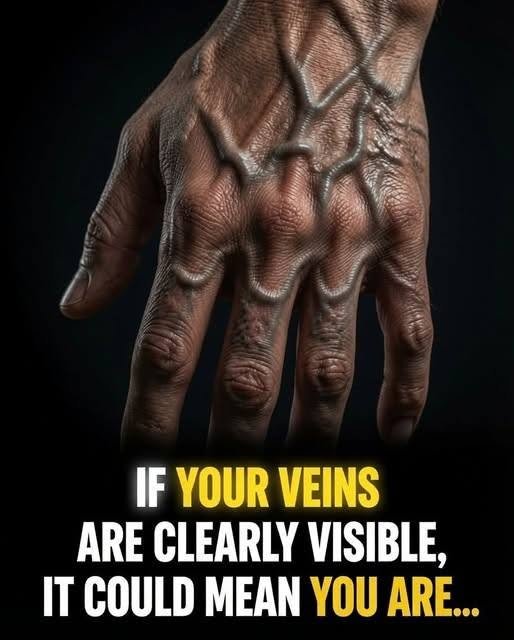
If Your Veins Are Clearly Visible, It Could Mean You Are: 7 Reasons Your Veins May Stand Out
Visible veins are often harmless, but they can reveal clues about body composition, activity levels, hydration, and overall health. Learn what they may mean.
Introduction
Have you ever looked down at your hands, arms, or legs and noticed that your veins seem much more visible than before?
For some people, prominent veins are a sign of fitness and low body fat. For others, they may simply be a normal feature caused by genetics, age, skin tone, or everyday changes in the body.
Visible veins often attract attention because they create the impression of strength, health, or athletic ability. But the reality is more interesting: your veins becoming more noticeable can happen for many different reasons.
In most cases, visible veins are completely normal. However, sudden changes—especially when combined with pain, swelling, or skin changes—may deserve medical attention.
Here are seven common reasons your veins may be more visible.
1. You May Have Lower Body Fat
One of the most common reasons veins become more noticeable is reduced fat beneath the skin.
A layer of fat normally sits between your skin and veins. When that layer becomes thinner, veins can appear closer to the surface.
This is often seen in people who:
- Exercise regularly
- Follow a structured fitness routine
- Have naturally lean body types
- Reduce body fat through lifestyle changes
Athletes and fitness enthusiasts often have visible veins because their bodies contain less subcutaneous fat and more muscle definition.
However, visible veins alone do not determine whether someone is healthy or fit.
2. You May Be Building Muscle
Resistance training can make veins more prominent.
When muscles grow, they can push veins closer to the skin’s surface. Exercise also increases blood flow during and after workouts, creating a temporary effect sometimes called a “pump.”
Common exercises linked with increased vascular appearance include:
- Weight training
- Bodybuilding
- High-intensity workouts
- Strength exercises
This is why many people notice more visible veins after exercising.
3. You May Be Naturally Predisposed to Visible Veins
Genetics play a major role in how visible your veins are.
Some people naturally have:
- Thinner skin
- Less fat beneath the skin
- Veins positioned closer to the surface
- Larger or more noticeable veins
Two people with similar fitness levels can have completely different levels of vein visibility simply because of inherited traits.
4. You Could Be Getting Older
As people age, changes in the skin and connective tissues can make veins more noticeable.
Over time:
- Skin may become thinner
- Collagen levels may decrease
- The protective layer over veins may reduce
This can cause veins on the hands, arms, and legs to become more prominent.
Visible veins with ageing are usually a normal part of getting older.
5. You May Be Dehydrated
Hydration can affect how your veins appear.
When the body has less water available, skin may appear less full, making veins look more noticeable.
Other possible signs of dehydration include:
- Dark urine
- Dry mouth
- Fatigue
- Dizziness
- Increased thirst
Drinking enough fluids supports normal circulation and overall health.
6. Your Body Temperature May Be Higher
Have you noticed your veins stand out more after exercise, a hot shower, or spending time in warm weather?
Heat causes blood vessels to expand as the body tries to release heat.
This process, called vasodilation, can temporarily make veins appear larger and more visible.
Common situations where this happens include:
- Hot weather
- Exercise
- Sauna use
- Warm baths
The effect usually decreases when your body temperature returns to normal.
7. You May Have Increased Blood Flow From Activity
Physical activity increases circulation.
During exercise, your heart pumps more blood to working muscles, which can temporarily enlarge blood vessels.
This is why someone may notice:
- More visible arm veins after lifting weights
- Stronger vascular definition after cardio
- Temporary changes after intense activity
This is usually a normal response from the body.
When Visible Veins Could Require Medical Attention
Most visible veins are harmless.
However, contact a healthcare professional if you notice sudden changes along with:
- Pain
- Swelling
- Warmth or redness
- Hard, rope-like veins
- Skin colour changes
- One-sided swelling in an arm or leg
These symptoms may require evaluation to rule out circulation problems or other conditions.
Visible Veins vs Varicose Veins: What’s the Difference?
| Visible Veins | Varicose Veins |
|---|---|
| Usually flat and normal-looking | Often enlarged and twisted |
| Common on hands and arms | Common on legs |
| Often related to genetics or fitness | Can involve vein valve problems |
| Usually harmless | May cause discomfort or complications |
Common Myths About Visible Veins
Myth 1: Visible veins always mean you are extremely fit
Not necessarily.
Fitness can make veins more noticeable, but genetics, age, and skin structure also play major roles.
Myth 2: Visible veins mean you have high blood pressure
Visible veins do not automatically indicate high blood pressure.
Blood pressure is measured using specialised equipment, not by looking at veins.
Myth 3: Everyone with visible veins has low body fat
Not true.
Some people naturally have prominent veins regardless of body composition.
Myth 4: You should try to make your veins more visible
Extreme dieting or dehydration to increase vascular appearance can be unhealthy.
A balanced approach is better than chasing a specific look.
How to Support Healthy Circulation
Healthy blood vessels are supported by overall lifestyle habits.
Helpful steps include:
✔ Regular physical activity
✔ Drinking enough fluids
✔ Eating a balanced diet
✔ Avoiding smoking
✔ Maintaining a healthy weight
✔ Managing blood pressure and cholesterol
Frequently Asked Questions
1. Are visible veins a sign of good health?
They can be associated with fitness and lower body fat, but visible veins alone do not measure overall health.
2. Why are my veins suddenly more visible?
Possible reasons include weight changes, exercise, dehydration, heat, ageing, or natural variation. Sudden changes with symptoms should be checked.
3. Do visible veins mean I have low body fat?
Not always. Genetics and skin structure also affect vein visibility.
4. Are veins becoming more visible with age normal?
Yes. Thinner skin and changes in connective tissue can make veins stand out more.
5. Can exercise make veins permanently visible?
Regular training may increase muscle size and reduce body fat, which can make veins more noticeable over time.
6. Should I worry about bulging veins?
Not necessarily. Many bulging veins are harmless, especially after exercise. Painful or unusual changes should be evaluated.
7. Can drinking water reduce visible veins?
Hydration may affect how noticeable veins appear, but it will not permanently change natural vein structure.
8. Are hand veins more visible because of ageing?
Often, yes. Age-related skin changes can make hand veins appear more prominent.
Visible Vein Health Checklist
Healthy habits:
✔ Exercise regularly
✔ Stay hydrated
✔ Eat nutrient-rich foods
✔ Protect skin health
✔ Monitor unusual changes
Seek medical advice if:
✘ Veins become painful
✘ Swelling appears suddenly
✘ Skin changes occur
✘ One limb becomes noticeably different from the other
Final Thoughts
Visible veins can tell a small story about your body—but they do not reveal everything about your health.
For some people, prominent veins reflect fitness, muscle development, or naturally thin skin. For others, they are simply part of ageing or genetics.
The most important thing is not how visible your veins are, but whether your body is functioning well.
Clearly visible veins are usually a normal variation linked to factors like genetics, body composition, exercise, and ageing. Pay attention to sudden changes or symptoms, but don’t assume visible veins automatically mean something is wrong.
If you found this article interesting, share it with others and explore more health topics to better understand the signals your body may be giving you.