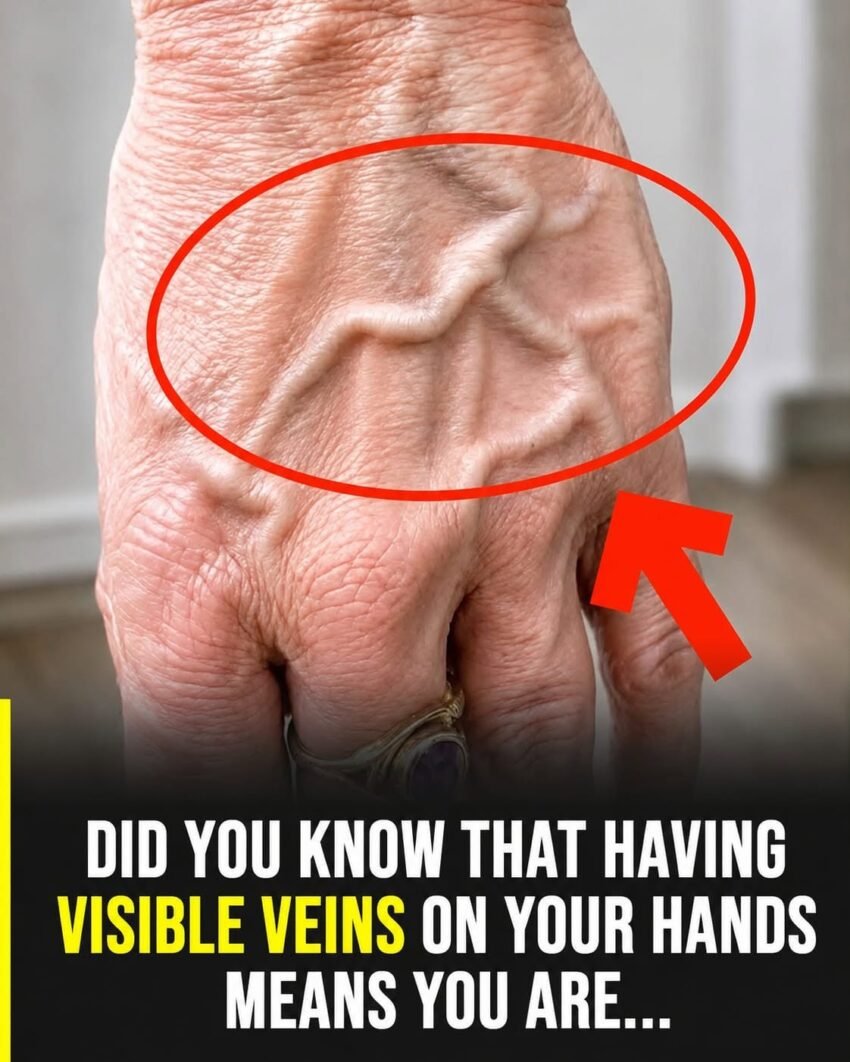
Did You Know That Having Visible Veins Means You Are…? The Truth Behind Prominent Veins
Wondering why your veins are so visible? Discover the most common causes of prominent veins, when they’re normal, and when they may require medical attention.
Have you ever looked down at your hands, arms, or legs and noticed blue or green veins standing out beneath your skin? It’s a common sight—and one that often sparks curiosity.
Some people believe visible veins mean you’re healthier. Others think they signal poor circulation or a hidden medical problem. The truth is more nuanced.
In most cases, having visible veins simply means your veins are closer to the surface of your skin or that certain factors make them more noticeable. While prominent veins are often completely normal, they can sometimes point to an underlying condition that deserves medical attention.
Let’s separate fact from fiction and explore what visible veins can really tell you about your health.
What Are Visible Veins?
Veins are blood vessels that carry oxygen-poor blood back to the heart. Everyone has them, but they’re easier to see in some people than in others.
Visible veins commonly appear on the:
- Hands
- Arms
- Feet
- Legs
- Chest
- Temples
For many people, they’re simply a normal part of their anatomy.
Common Reasons Your Veins Are More Visible
1. You Have Low Body Fat
One of the most common reasons for visible veins is having less fat beneath the skin. With less tissue covering them, veins become easier to see.
This is especially common among athletes and physically active individuals.
2. You Have Fair or Thin Skin
People with lighter or thinner skin often notice veins more clearly because there is less pigment or tissue hiding the blood vessels.
3. You Exercise Regularly
Strength training and intense exercise temporarily increase blood flow and muscle size, making veins appear larger and more noticeable.
Over time, regular training may make vascularity more permanent.
4. You’re Getting Older
As we age, the skin naturally becomes thinner and loses some of its elasticity. This can make veins appear more prominent, especially on the hands and arms.
5. Warm Weather
Heat causes blood vessels to expand, allowing more blood to flow near the skin’s surface. That’s why your veins may appear more noticeable on hot days or after a warm shower.
6. Genetics
Some people simply inherit more visible veins. If your parents have prominent veins, there’s a good chance you will too.
When Visible Veins Are Usually Normal
Visible veins are often harmless if they:
- Aren’t painful
- Don’t suddenly appear without explanation
- Aren’t swollen or bulging
- Don’t cause skin changes
- Don’t interfere with daily activities
For many healthy adults, visible veins are simply a normal physical characteristic.
When Visible Veins Could Be a Warning Sign
Although most visible veins aren’t dangerous, seek medical evaluation if you notice:
- Pain or tenderness
- Significant swelling
- Redness or warmth
- Skin ulcers near the veins
- Sudden changes in appearance
- Large, twisted, bulging veins
- One leg becoming swollen much more than the other
These symptoms may indicate conditions such as varicose veins, inflammation of a vein, or—more rarely—a blood clot. Prompt medical assessment is important if these warning signs occur.
Myths About Visible Veins
Myth: Visible veins mean you’re extremely healthy.
Fact: They can be associated with low body fat or fitness, but visible veins alone don’t measure overall health.
Myth: Everyone with visible veins has poor circulation.
Fact: In many cases, circulation is completely normal.
Myth: Visible veins always need treatment.
Fact: Most people require no treatment unless the veins are causing symptoms or are linked to an underlying condition.
Can You Reduce the Appearance of Visible Veins?
If prominent veins are a cosmetic concern, options may include:
- Maintaining a healthy weight
- Protecting your skin from excessive sun exposure
- Wearing compression stockings if recommended for leg vein issues
- Discussing medical treatments with a healthcare professional if varicose veins are present
Cosmetic or medical procedures should always be performed after proper evaluation by a qualified clinician.
Frequently Asked Questions
Are visible veins a sign of dehydration?
Temporary dehydration can sometimes make veins appear more noticeable, but it’s not the most common cause.
Why are my hand veins becoming more visible?
Aging, thinner skin, reduced body fat, exercise, or genetics are frequent reasons.
Are visible veins dangerous?
Usually not. They are often a normal variation. However, painful, swollen, or suddenly changing veins should be evaluated by a healthcare professional.
Can exercise make veins stand out?
Yes. Increased blood flow and muscle expansion during and after exercise can make veins appear more prominent.
Should I worry about new bulging veins?
If they are painful, swollen, associated with skin changes, or appear suddenly without a clear reason, it’s best to seek medical advice.
Action Checklist
Do
✔ Stay physically active.
✔ Maintain a healthy weight.
✔ Stay hydrated.
✔ Monitor any sudden changes in your veins.
✔ Seek medical advice if you develop pain, swelling, redness, or other concerning symptoms.
Don’t
✘ Assume visible veins always indicate a disease.
✘ Ignore painful or rapidly changing veins.
✘ Self-diagnose serious circulation problems without professional evaluation.
Conclusion
Visible veins are far more common than many people realize. In most cases, they simply reflect your genetics, body composition, skin type, age, or activity level—not a hidden illness.
The key is to pay attention to changes. If your veins become painful, swollen, or are accompanied by other symptoms, don’t ignore them. A timely medical evaluation can determine whether they are a harmless feature or a sign of an underlying condition.
Having visible veins usually means they’re closer to the surface of your skin or made more noticeable by factors like body fat, exercise, age, or genetics. While they’re often completely normal, new or symptomatic vein changes deserve medical attention.