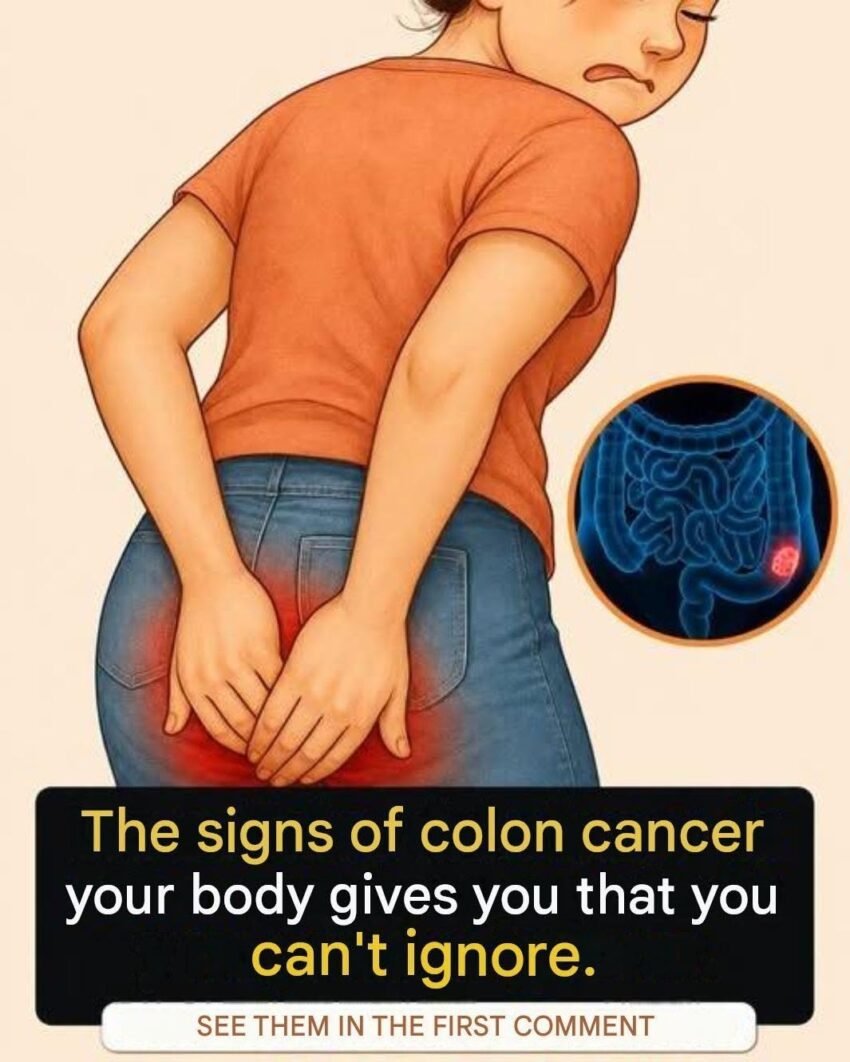
You May Have Colon Cancer If You Notice These 10 Warning Signs Your Body Shouldn’t Ignore
Learn the warning signs of colon cancer, including bowel changes, bleeding, weight loss, and fatigue. Discover when symptoms require medical attention.
Your body often gives subtle clues when something is changing.
A small difference in your bathroom habits. A feeling that something is “off.” Unexplained tiredness that does not go away. These signs are easy to dismiss, especially when they develop slowly.
But some changes deserve a closer look.
Colon cancer, also called colorectal cancer, can develop in the large intestine and may not cause obvious symptoms in its early stages. When symptoms do appear, they can sometimes look like common digestive issues.
That is why knowing the warning signs matters.
A symptom does not automatically mean you have colon cancer. Many conditions, including hemorrhoids, infections, dietary changes, and irritable bowel syndrome, can cause similar problems.
However, persistent or unusual changes should be discussed with a healthcare professional.
Here are warning signs that may require attention.
1. Blood in Your Stool
One of the most important warning signs of colon cancer is blood in the stool.
The blood may appear as:
- Bright red blood
- Dark or tar-like stool
- Blood that is not easily visible
Some people assume bleeding is always caused by hemorrhoids, but rectal bleeding should not automatically be ignored.
Even if the cause is something less serious, finding the reason is important.
2. A Change in Your Bowel Habits
Everyone experiences occasional changes in digestion.
But colon cancer may sometimes cause a persistent change in your normal bowel pattern.
Watch for:
- Diarrhea that does not improve
- Constipation that is unusual for you
- More frequent bowel movements
- A feeling that your bowel is not completely empty
- Alternating constipation and diarrhea
The key concern is a change that continues rather than a temporary digestive upset.
3. Narrow or Pencil-Thin Stools
A change in stool shape can sometimes occur when something affects the passage through the colon.
Some people notice stools becoming:
- Narrower than usual
- Different in shape
- Consistently thinner over time
This symptom can happen for many reasons, but a persistent change is worth discussing with a healthcare provider.
4. Unexplained Weight Loss
Losing weight without trying is a symptom that should always be taken seriously.
Possible warning signs include:
- Clothes becoming loose without a lifestyle change
- Reduced appetite
- Losing weight over several weeks or months
Unexplained weight loss can occur with many health conditions, not just cancer.
Still, it should not be ignored.
5. Ongoing Abdominal Pain or Cramping
Occasional stomach discomfort is common.
However, persistent abdominal symptoms may deserve attention.
Possible signs include:
- Frequent cramps
- Bloating that does not improve
- Gas pain that feels different from normal
- Abdominal discomfort that keeps returning
Pay attention when symptoms are new, worsening, or affecting daily life.
6. Constant Fatigue or Weakness
Many people underestimate fatigue.
Colon cancer can sometimes cause slow blood loss in the digestive tract, which may lead to anemia and reduced energy.
You may notice:
- Feeling exhausted despite adequate sleep
- Weakness during normal activities
- Reduced stamina
Fatigue has many causes, but unexplained and ongoing tiredness should be evaluated.
7. Iron Deficiency Anemia
Iron deficiency anemia can sometimes be an early clue, especially when there is no obvious explanation.
Possible symptoms include:
- Extreme tiredness
- Pale skin
- Shortness of breath
- Dizziness
- Feeling weak
A healthcare provider can use blood tests to determine whether anemia is present and investigate the cause.
8. Feeling Like Your Bowel Does Not Empty Completely
A persistent feeling that you still need to go after using the bathroom can be frustrating.
This sensation may occur when changes inside the colon affect normal bowel function.
If this feeling continues, it should be discussed with a healthcare professional.
9. Loss of Appetite or Changes in Eating Patterns
Some people with colon cancer experience changes such as:
- Reduced interest in food
- Feeling full quickly
- Avoiding certain foods because they cause discomfort
Appetite changes can happen for many reasons, but persistent changes deserve attention.
10. Unusual Changes That Feel Different From Your Normal
Sometimes the earliest warning sign is simply noticing that your body is behaving differently.
You may think:
“My digestion has never been like this before.”
“I feel more tired than usual.”
“Something has changed.”
That awareness matters.
You know your normal patterns better than anyone else. Changes that persist are worth investigating.
Why Colon Cancer Can Be Missed Early
Colon cancer symptoms often overlap with common digestive problems.
A person may think:
- “It’s probably something I ate.”
- “It will go away.”
- “It’s just stress.”
Sometimes that is true.
But when symptoms continue, repeat, or become more noticeable, they deserve a closer look.
Early detection can provide more options for treatment and care.
Colon Cancer Risk Factors to Know
Risk factors may include:
- Increasing age
- Family history of colorectal cancer
- Certain inherited conditions
- A history of colon polyps
- Inflammatory bowel diseases
- Smoking
- Heavy alcohol use
- Low physical activity
Having risk factors does not mean you will develop colon cancer. People without obvious risk factors can also develop it.
The Importance of Colon Cancer Screening
Screening can detect colon cancer earlier and may also find certain polyps before they become cancerous.
Screening recommendations vary based on age, personal risk, and medical history.
Common screening methods may include stool-based tests and colonoscopy.
Talk with a healthcare provider about what screening schedule is appropriate for you.
Common Mistakes People Make
Mistake 1: Assuming blood in stool is always hemorrhoids
Hemorrhoids are common, but they are not the only possible cause of rectal bleeding.
Better approach: Get unexplained bleeding checked.
Mistake 2: Waiting for severe symptoms
Many people delay care because symptoms are mild.
Better approach: Pay attention to changes that last.
Mistake 3: Thinking colon cancer only affects older adults
Risk increases with age, but younger adults can also develop colorectal cancer.
Better approach: Discuss unusual symptoms regardless of age.
Mistake 4: Ignoring changes in bowel habits
Digestive changes are easy to overlook.
Better approach: Notice what is normal for you and report lasting differences.
Frequently Asked Questions
What is the first sign of colon cancer?
There is no single first sign. Possible warning signs include changes in bowel habits, blood in stool, unexplained weight loss, and persistent abdominal symptoms.
Can colon cancer happen without symptoms?
Yes. Some people have no noticeable symptoms, which is why recommended screening is important.
Does blood in stool always mean colon cancer?
No. Many conditions can cause bleeding, including hemorrhoids and infections. However, unexplained bleeding should be evaluated.
Is colon cancer painful in the early stages?
Not always. Early colon cancer may cause subtle changes rather than severe pain.
Can younger people get colon cancer?
Yes. Although risk increases with age, colorectal cancer can occur in younger adults.
Are changes in bowel habits always serious?
No. Temporary changes are common. Persistent or unusual changes should be discussed with a healthcare professional.
How can colon cancer risk be reduced?
Healthy habits, avoiding tobacco, staying active, maintaining a balanced diet, and following screening recommendations may help reduce risk.
When should I see a doctor?
Seek medical advice for persistent bowel changes, rectal bleeding, unexplained weight loss, ongoing abdominal pain, or unusual fatigue.
Colon Health Checklist
Pay attention to:
☐ Blood in stool
☐ Persistent bowel changes
☐ Unexplained weight loss
☐ Ongoing stomach pain
☐ Unusual fatigue
☐ Changes in stool shape
☐ Feeling of incomplete bowel emptying
Take action by:
☐ Scheduling recommended screenings
☐ Tracking symptoms
☐ Discussing concerns early
☐ Knowing your family history
☐ Maintaining healthy lifestyle habits
Final Thoughts
Colon cancer does not always announce itself with dramatic symptoms. Sometimes the warning signs are small changes that are easy to explain away.
The goal is not fear—it is awareness.
If your body develops a new pattern that does not feel normal, pay attention. A conversation with a healthcare professional can provide answers and peace of mind.
Persistent changes in digestion, bleeding, unexplained weight loss, and unusual fatigue are signals worth checking—not ignoring.