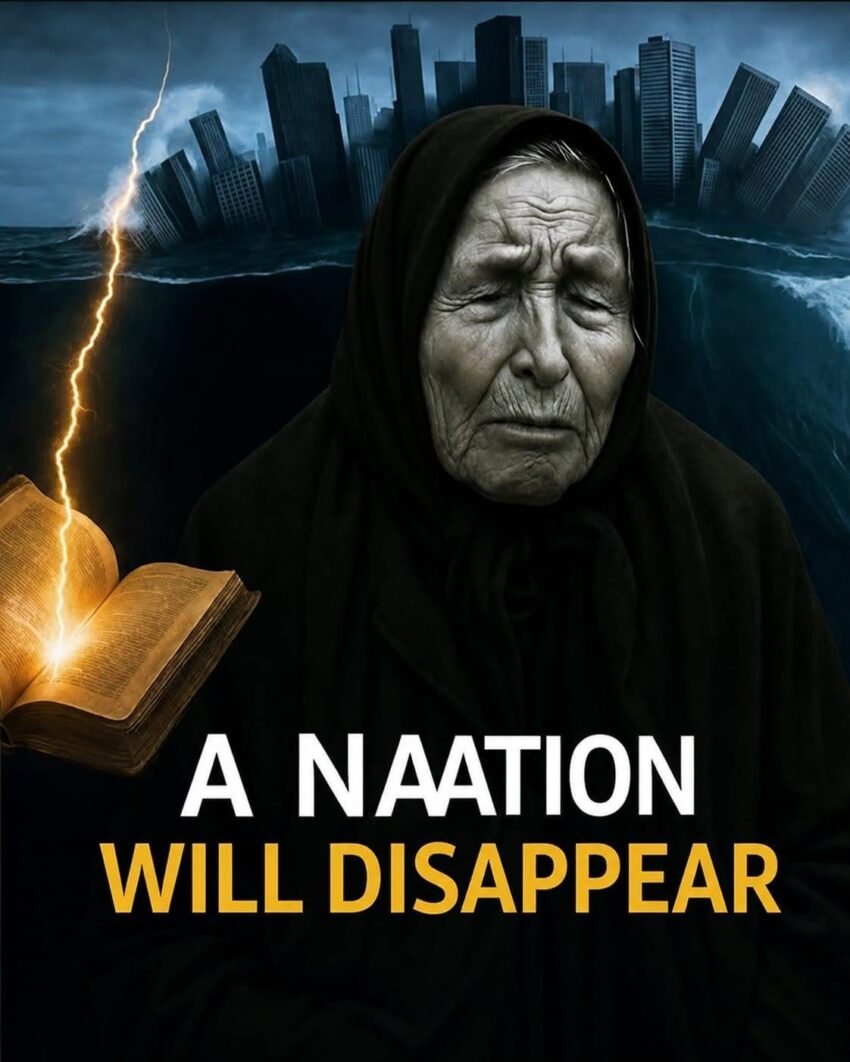
Baba Vanga’s Prophecy Now Makes Sense? The Truth Behind the Predictions That Continue to Fascinate Millions
Baba Vanga’s predictions have sparked global curiosity for decades. Explore the famous prophecies, what is verified, and why people still debate them today.
For decades, one name has appeared again and again in discussions about mysterious predictions: Baba Vanga.
The blind Bulgarian mystic became famous around the world after claims spread that she had predicted major events long before they happened. From natural disasters to political changes and technological developments, countless stories have linked her name to events people say she foresaw.
Now, whenever a major event happens, old predictions attributed to Baba Vanga often resurface online.
People ask the same question:
“Did she really predict this?”
The answer is more complicated than many viral posts suggest.
Some predictions connected to Baba Vanga are widely shared, while others have no reliable documentation showing that she actually made them. Understanding the difference between historical records, internet rumors, and interpretation is the key to looking at her legacy.
Who Was Baba Vanga?
Baba Vanga, born Vangelia Pandeva Gushterova in 1911, was a Bulgarian woman who became known as a mystic and fortune teller.
According to accounts about her life, she lost her eyesight as a child and later gained a reputation among followers who believed she had unusual abilities to predict future events.
During her lifetime, many people visited her seeking advice about personal matters, health, and world events.
After her death in 1996, stories about her alleged predictions spread widely, especially through books, documentaries, and online platforms.
However, many of the specific predictions attributed to her are difficult to verify because there are limited original written records.
Why Do Baba Vanga Predictions Go Viral?
There is a reason these stories repeatedly capture attention.
Humans are naturally drawn to uncertainty.
When something major happens—a global crisis, a scientific breakthrough, or a major political event—people often look backward for patterns that might explain it.
A prediction that seems to match a later event feels meaningful because our brains are designed to recognize connections.
This tendency is sometimes called pattern recognition.
It helps humans survive by finding relationships between events, but it can also make us notice connections that may not be as strong as they appear.
Famous Predictions Often Linked to Baba Vanga
Several predictions are commonly associated with Baba Vanga online.
Major Global Events
Some websites claim she predicted significant world events, including political changes and international conflicts.
However, many of these claims appeared years after the events occurred, making it difficult to confirm exactly what was said beforehand.
Technological Developments
Some followers have connected her name with predictions about future technology, artificial intelligence, or scientific discoveries.
These claims are often broad, making interpretation highly subjective.
Climate and Natural Disasters
Predictions about environmental changes and disasters are also frequently shared.
Because climate-related events occur regularly around the world, people sometimes connect general statements to specific incidents after they happen.
The Problem With Viral Prophecies
A major challenge with famous predictions is that many are not recorded in a clear, dated way.
A reliable prediction usually requires:
- A specific statement
- A documented source
- A date showing it existed before the event
- A clear connection between the prediction and the outcome
Without these details, it becomes difficult to separate genuine historical claims from later interpretations.
Why People Believe Predictions After Events Happen
A common psychological effect is known as hindsight bias.
This happens when people look back at an event and feel that it was more predictable than it actually was.
For example:
Before an event happens:
“Could this happen?”
After it happens:
“Looking back, the signs were obvious.”
This does not mean people are being irrational. It is a normal feature of human thinking.
The Mystery Around Future Predictions
Every year, new claims appear about what Baba Vanga supposedly predicted for upcoming years.
These predictions often involve:
- New technology
- Global conflicts
- Space discoveries
- Environmental changes
- Medical breakthroughs
They spread quickly because they combine curiosity, fear, and imagination.
But predictions should be approached carefully.
A fascinating story is not always the same as a verified fact.
Could Some Predictions Still Come True?
This is one reason the debate continues.
Many statements attributed to famous prophets are vague enough that they can be interpreted in different ways.
A prediction about “changes in the world” could potentially be connected to many different events.
This flexibility allows people to find possible meanings, but it also makes predictions difficult to test objectively.
The Human Fascination With Prophecy
People have searched for predictions about the future throughout history.
Ancient civilizations, religious traditions, philosophers, and modern futurists have all tried to understand what comes next.
The appeal is understandable.
The future contains uncertainty, and predictions offer a sense of preparation.
Even when predictions are not proven, they encourage people to think about possibilities and challenges ahead.
What Experts Say About Predicting the Future
Scientists and researchers generally rely on evidence, data, and tested models rather than individual predictions.
Forecasting does exist in many fields, including:
- Weather science
- Economics
- Public health
- Technology research
But these forecasts are based on measurable information and are updated as new evidence appears.
How to Evaluate a Viral Prediction
Before believing a prediction shared online, consider:
Was it documented before the event?
A prediction written after an event is not a true forecast.
Is it specific?
Vague statements can fit many situations.
Is the source reliable?
Check whether the claim comes from historical records or repeated internet posts.
Are alternative explanations possible?
Sometimes a coincidence may look like a prediction.
Frequently Asked Questions
Did Baba Vanga really predict the future?
Many people believe she did, but many specific predictions attributed to her are difficult to verify due to limited reliable documentation.
What is Baba Vanga famous for?
She became famous as a Bulgarian mystic whose followers believed she predicted future events.
Are Baba Vanga predictions proven?
Some claims are debated, but there is no scientific evidence proving that she could predict future events.
Why do people still talk about Baba Vanga?
Her stories combine mystery, uncertainty, and major world events, which keeps public interest alive.
Did Baba Vanga predict specific modern events?
Many online claims connect her to modern events, but the accuracy and original sources behind these claims vary.
Why do people believe prophecies?
People naturally look for patterns and explanations, especially during uncertain times.
Can anyone accurately predict the future?
Some areas can be forecast using evidence and models, but exact predictions of major future events remain extremely difficult.
Should we believe viral predictions online?
It is best to check sources, look for evidence, and separate documented facts from speculation.
Final Thoughts
Baba Vanga’s predictions continue to capture attention because they touch on one of humanity’s oldest questions:
“What will happen next?”
Whether viewed as mysterious insights, cultural stories, or internet legends, her prophecies remain part of a larger conversation about uncertainty and the human desire to understand the future.
The most valuable lesson may not be predicting tomorrow—it may be learning how to evaluate information today.
Baba Vanga’s predictions remain fascinating, but curiosity works best when combined with critical thinking. A mysterious claim is worth exploring, but evidence is what separates a story from a fact.