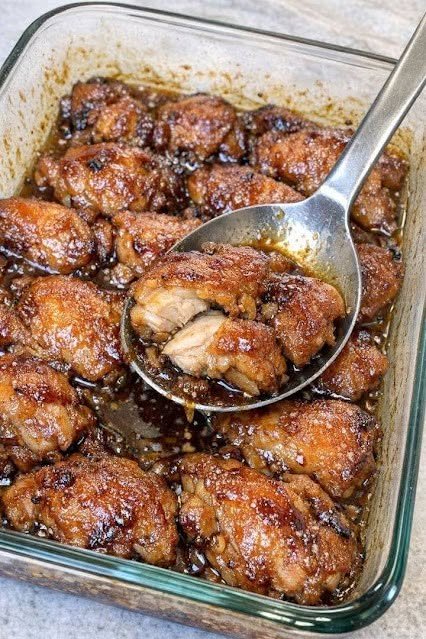
Juicy chicken thighs baked in a rich, savory sauce until golden and tender. This easy oven-baked chicken recipe is comforting, budget-friendly, flavorful, and perfect for busy weeknights or family dinners.
Chicken Thighs Baked With a Savory Sauce
There are some dinners that simply smell like home. You know the ones—the kind where the aroma starts drifting from the kitchen before anyone is ready to eat, and suddenly everyone keeps asking, “Is it done yet?”
These chicken thighs baked with a savory sauce are exactly that kind of meal.
Imagine tender, juicy chicken with beautifully browned edges, sitting in a glossy sauce packed with garlic, onion, herbs, and deep savory flavor. As it bakes, the sauce bubbles around the chicken, slowly thickening while the skin turns golden and irresistible. Every spoonful brings together rich chicken juices and a silky, flavorful sauce that begs to be soaked up with warm bread, rice, or mashed potatoes.
And here is the best part: you do not need fancy ingredients or complicated cooking skills.
This is the recipe I would reach for when I want something that feels special but still works on a busy evening. It is cozy enough for a Sunday family dinner, easy enough for a weeknight, and impressive enough to serve when guests come over.
But there is one simple step that makes these chicken thighs dramatically more flavorful than ordinary baked chicken. Keep reading, because that little trick is where the magic happens.
Why You’ll Love This Recipe
- Quick and easy: Most of the work is simple mixing and seasoning. Your oven handles the rest.
- Budget-friendly: Chicken thighs are usually less expensive than chicken breasts and stay wonderfully juicy.
- Beginner-friendly: No complicated techniques are needed. If you can season chicken and whisk a sauce, you can make this.
- Comfort food: The rich savory sauce and tender chicken make this a warm, satisfying meal.
- Perfect for busy nights: Get everything into one baking dish and let the oven do the heavy lifting.
- Great for guests: The golden chicken and glossy sauce look far more impressive than the effort required.
- Meal-prep friendly: Leftovers reheat beautifully and can be turned into wraps, bowls, or sandwiches.
- Naturally dairy-free: No butter, cream, or cheese is needed for the basic recipe.
- Gluten-free option: Use certified gluten-free soy sauce or tamari.
- Not strictly keto: The sauce contains a small amount of honey, but it can easily be replaced with a keto-friendly sweetener.
Ingredients You’ll Need
This recipe makes 4 servings.
For the chicken
- 8 bone-in, skin-on chicken thighs — about 1.2 kg / 2.6 lb / 42 oz
- 2 tablespoons olive oil
- 1 teaspoon fine salt
- 1 teaspoon smoked paprika
- 1 teaspoon garlic powder
- ½ teaspoon black pepper
- ½ teaspoon dried thyme
- ½ teaspoon dried oregano
For the savory sauce
- 1 medium yellow onion, finely chopped — about 150 g / 1 cup
- 5 garlic cloves, minced
- 1 cup chicken broth — 240 ml / 8 fl oz
- 2 tablespoons low-sodium soy sauce — 30 ml
- 1 tablespoon Worcestershire sauce — 15 ml
- 1 tablespoon honey — 21 g
- 1 tablespoon Dijon mustard — 15 g
- 1 tablespoon tomato paste — 16 g
- 1 teaspoon smoked paprika
- ½ teaspoon dried thyme
- ½ teaspoon black pepper
- 1 teaspoon cornstarch
- 1 tablespoon cold water
For finishing
- 1 tablespoon fresh lemon juice
- 2 tablespoons chopped fresh parsley
- Optional: a pinch of red pepper flakes for heat
Ingredient Notes
Chicken thighs: Bone-in, skin-on thighs give you the juiciest result and plenty of flavor. Boneless thighs work too, but they usually cook faster.
Chicken broth: This creates the base of the sauce. Low-sodium broth gives you more control over the final salt level.
Soy sauce: It adds deep umami flavor and makes the sauce taste like it has been simmering for hours.
Worcestershire sauce: Just a little adds tangy, savory depth. If you do not have it, use an extra teaspoon of soy sauce.
Honey: A small amount balances the salty and savory ingredients. For a lower-carb version, use a suitable sugar-free sweetener.
Dijon mustard: It adds gentle sharpness and helps make the sauce taste richer without adding cream.
Tomato paste: This is one of the quiet heroes of the recipe. It gives the sauce body, color, and concentrated savory flavor.
Pro tip: If you have time, pat the chicken thighs very dry with paper towels before seasoning. Dry skin browns much better than wet skin.
Nutritional Information Per Serving
Approximate values based on four servings and may vary depending on the exact chicken size and amount of sauce consumed.
- Calories: 510
- Protein: 38 g
- Carbohydrates: 12 g
- Fat: 34 g
- Fiber: 1.5 g
- Sodium: approximately 750–900 mg
Chicken thighs provide protein, iron, zinc, selenium, and several B vitamins, especially vitamin B6 and niacin.
Dietary notes: This recipe is naturally dairy-free. It can be made gluten-free by using gluten-free soy sauce or tamari. It is not vegan because chicken is the main ingredient. For strict keto eating, replace the honey with a keto-friendly sweetener and check the labels of your sauces.
For weight loss, portion size matters. Chicken thighs are nutritious and protein-rich but contain more fat than skinless chicken breast. For a lighter meal, remove the skin after cooking and serve the chicken with plenty of vegetables.
Kitchen Tools Needed
You only need a few basic tools:
- Large oven-safe skillet or 9 x 13-inch / 23 x 33 cm baking dish
- Small mixing bowl
- Whisk
- Measuring spoons
- Tongs
- Paper towels
- Instant-read meat thermometer
Optional upgrades
A cast-iron skillet is excellent because it can go from stovetop to oven and helps brown the chicken beautifully.
No oven-safe skillet? No problem. Brown the chicken in a regular frying pan, then transfer everything to a baking dish.
No whisk? A fork works perfectly well for mixing the sauce.
How to Make Chicken Thighs Baked With a Savory Sauce
1. Heat the oven
Preheat your oven to 400°F (200°C).
Give the oven plenty of time to fully heat. Starting with a properly preheated oven helps the chicken cook evenly and encourages better browning.
2. Dry and season the chicken
Pat all eight chicken thighs thoroughly dry with paper towels.
Place them in a bowl and rub with 2 tablespoons olive oil. Sprinkle with salt, smoked paprika, garlic powder, black pepper, thyme, and oregano.
Massage the seasoning over every piece, especially the skin.
What you want: Dry, evenly coated chicken with seasoning covering the entire surface.
What should NOT happen: Do not leave the chicken wet. Excess moisture will steam the skin instead of helping it brown.
3. Brown the chicken
Place a large oven-safe skillet over medium-high heat.
Put the chicken thighs skin-side down in the hot skillet. Cook for about 5–7 minutes, without moving them too much.
You are not trying to cook the chicken through at this stage. You are building color and flavor.
When the skin is deep golden brown and releases easily from the pan, flip the thighs and cook for another 2 minutes.
Remove the chicken and set it aside.
Chef tip: If the chicken sticks badly, it may not be ready to flip. Give it another minute. Properly browned chicken usually releases more easily from the pan.
4. Build the savory sauce
Reduce the heat to medium.
Add the chopped onion to the same skillet. Cook for 3–4 minutes, stirring occasionally, until softened and lightly golden.
Add the minced garlic and cook for 30–45 seconds.
Do not let the garlic turn dark brown. Burned garlic can make the entire sauce bitter.
Add the chicken broth, soy sauce, Worcestershire sauce, honey, Dijon mustard, tomato paste, smoked paprika, thyme, and black pepper.
Whisk everything together.
Let the sauce simmer for 2–3 minutes.
You should notice the sauce becoming darker, more fragrant, and slightly thicker.
Did you know? Browning the chicken and then building the sauce in the same pan allows you to use the flavorful browned bits left behind. Professional chefs often call these browned bits the foundation of deep pan flavor.
5. Return the chicken to the pan
Place the browned chicken thighs back into the skillet, skin-side up.
Spoon some of the sauce around the chicken, but avoid completely covering the crispy skin.
This small detail matters. Keeping the skin exposed gives it a better chance of staying golden and crisp while the sauce cooks underneath.
6. Bake until tender
Transfer the skillet to the preheated 400°F (200°C) oven.
Bake uncovered for approximately 25–35 minutes, depending on the size of your chicken thighs.
The chicken is safely cooked when the thickest part reaches at least 165°F (74°C). For especially tender thighs, many cooks prefer taking them closer to 175–185°F (79–85°C) because dark meat becomes more tender as connective tissue breaks down.
Look for:
- Deep golden-brown skin
- Bubbling sauce
- Tender meat
- Clear or lightly colored juices
- A rich roasted aroma
Important: Do not rely only on cooking time. Chicken thighs vary in size, so a meat thermometer is the most reliable way to check doneness.
7. Thicken the sauce
If your sauce is still thinner than you like, remove the cooked chicken from the skillet.
Mix 1 teaspoon cornstarch with 1 tablespoon cold water until smooth.
Stir this mixture into the hot sauce. Place the skillet over medium heat and simmer for 1–2 minutes, stirring constantly.
The sauce should become glossy and lightly thickened.
What should NOT happen: Never add dry cornstarch directly to the hot sauce. It can form unpleasant lumps.
8. Finish with lemon and parsley
Turn off the heat.
Stir 1 tablespoon fresh lemon juice into the sauce.
Taste and adjust the seasoning if needed.
Sprinkle the chicken with chopped fresh parsley.
That final splash of lemon may seem small, but it wakes up all the rich flavors and keeps the dish from tasting heavy.
Let the chicken rest for 5 minutes before serving.
Chef-Level Tips and Mistakes to Avoid
Do not skip drying the chicken
Moisture is the enemy of crisp skin. Pat the thighs dry before seasoning.
Do not overcrowd the pan
If your skillet is too small, brown the chicken in batches. Crowding traps steam and prevents proper browning.
Do not burn the garlic
Garlic needs less than a minute in a hot pan. If it becomes very dark, start the sauce again rather than carrying that bitterness into the finished dish.
Do not drown the chicken skin
Keep the sauce around the chicken rather than pouring it over the skin. This helps preserve that beautiful roasted surface.
Taste before adding more salt
Soy sauce, Worcestershire sauce, broth, and salt all contribute sodium. Taste the sauce before reaching for the salt shaker.
Sauce too salty?
Add a little extra unsalted chicken broth and a small splash of lemon juice. You can also increase the amount of onion or add a little water.
Sauce too sweet?
Add a small splash of lemon juice or a little extra Dijon mustard.
Chicken skin isn’t crisp enough?
Place the cooked chicken under the broiler for 1–2 minutes, watching it closely. Do not walk away—the skin can burn quickly.
Pro Flavor Hack
For an even deeper flavor, add ½ teaspoon smoked paprika and a tiny pinch of red pepper flakes to the sauce. You will not necessarily taste “spice”; instead, the sauce develops a warmer, fuller finish.
Variations and Customizations
Spicy Chicken Thighs
Add ½–1 teaspoon red pepper flakes, 1 chopped chili, or a dash of hot sauce to the sauce.
For serious heat, add sliced jalapeños with the onions.
Healthy, Lower-Calorie Version
Use boneless, skinless chicken thighs and reduce the olive oil to 1 tablespoon.
Increase the vegetables by adding sliced mushrooms, zucchini, bell peppers, or spinach.
Serve with roasted vegetables or a large green salad instead of mashed potatoes or bread.
Kids-Friendly Version
Keep the sauce mild and reduce the Dijon mustard slightly.
You can also add a little extra honey to create a sweeter, gentler flavor that many children enjoy.
Serve with mashed potatoes, rice, or buttered noodles and let the sauce become the bridge between the chicken and the side dish.
Restaurant-Style Version
Brown the chicken very deeply before baking.
Use homemade chicken stock if available, then finish the sauce with fresh lemon juice and a small spoonful of pan juices.
Garnish with fresh parsley and a few thin lemon slices just before serving.
Mediterranean Fusion Twist
Replace the Worcestershire sauce with extra lemon juice and add:
- ½ teaspoon cumin
- ½ teaspoon oregano
- ½ teaspoon coriander
- Chopped parsley
- A handful of olives
Serve with warm pita, cucumber salad, and rice.
Honey-Garlic Fusion
Increase the honey to 2 tablespoons and add another minced garlic clove. Finish with toasted sesame seeds and sliced green onions.
Serve over steamed rice for a sweet-savory dinner with an Asian-inspired twist.
Storage and Reheating Guide
Refrigerator
Allow the chicken to cool, then store it in an airtight container with some of the sauce.
Refrigerate for up to 3–4 days.
Freezer
Place cooled chicken and sauce in a freezer-safe airtight container.
Freeze for up to 3 months for the best quality.
For easier meal prep, freeze individual portions.
Best Oven Reheating Method
Place the chicken and sauce in a covered baking dish.
Heat at 350°F (175°C) for approximately 15–20 minutes, or until hot throughout.
For crispier skin, uncover during the final few minutes.
Microwave Method
Place one serving in a microwave-safe dish and cover loosely.
Heat in 60–90 second intervals, turning or stirring the sauce between intervals.
The microwave is quick, but the oven does a better job of preserving the chicken’s texture.
Stovetop Method
Put the chicken and sauce into a covered skillet over low to medium-low heat.
Add a tablespoon or two of water or broth if the sauce has become too thick.
Warm slowly until heated through.
Pro tip: Avoid reheating chicken repeatedly. Reheat only the portion you plan to eat.
What to Serve With Baked Chicken Thighs
This savory chicken is incredibly flexible.
For a comforting dinner, serve it with:
- Creamy mashed potatoes
- Steamed white or brown rice
- Roasted baby potatoes
- Buttered noodles
- Warm crusty bread
For a lighter plate:
- Roasted broccoli
- Green beans
- Garlic zucchini
- Fresh cucumber salad
- Mixed green salad
- Roasted carrots
For a complete family-style spread, add rice, a fresh salad, warm flatbread, and a simple yogurt-free herb sauce.
Drink Pairings
Try sparkling water with lemon for a refreshing option.
For something warmer, unsweetened iced tea or fresh mint tea works beautifully with the savory flavors.
Garnishing Ideas
A little fresh parsley can make the entire dish look brighter.
For extra color, add:
- Lemon wedges
- Thinly sliced green onions
- Red pepper flakes
- Fresh thyme
- Toasted sesame seeds for the fusion version
Plating Tip
Place a spoonful of mashed potatoes or rice in the center of the plate. Set the golden chicken thigh on top or slightly to the side. Spoon the glossy sauce around—not completely over—the chicken.
Finish with parsley and a small lemon wedge.
It is simple, but it gives the plate that restaurant-style contrast: golden chicken, dark glossy sauce, bright green herbs, and a fresh pop of lemon.
Frequently Asked Questions
Can I use boneless chicken thighs?
Yes. Boneless thighs work very well, but they cook faster than bone-in thighs. Start checking them earlier, usually around 20–25 minutes depending on their size.
Can I make this recipe with chicken breasts?
Yes, but chicken breasts are leaner and can dry out more easily. Use similar seasoning and monitor the internal temperature carefully. They may require less baking time.
Why are my baked chicken thighs tough?
The most common reasons are overcooking, very small pieces, or not allowing the chicken to rest. Use a meat thermometer rather than relying only on the clock.
How do I make chicken thigh skin crispy?
Pat the chicken very dry, brown it skin-side down before baking, and keep the skin exposed while it cooks. If needed, finish under the broiler for 1–2 minutes.
Can I make this recipe without soy sauce?
Absolutely. Use tamari for a gluten-free option, or replace the soy sauce with a little extra chicken broth and salt. The flavor will be slightly different but still delicious.
Can I prepare the chicken ahead of time?
Yes. You can season and brown the chicken several hours ahead, refrigerate it safely, and prepare the sauce when you are ready to bake. For the best texture, do not leave raw chicken at room temperature.
What can I do with leftover chicken?
Shred the leftover chicken and sauce and use it in wraps, rice bowls, sandwiches, salads, or stuffed baked potatoes. The sauce makes leftovers especially flavorful.
Final Thoughts
There is something wonderfully satisfying about a dinner that looks and tastes like you spent hours making it when, in reality, the oven did most of the work.
These chicken thighs baked with a savory sauce are tender, deeply flavorful, golden on top, and surrounded by a sauce that you will probably want to scoop up with every last piece of bread.
It is the kind of recipe that can become part of your regular dinner rotation—the recipe you remember when you have hungry people to feed, when the weather calls for comfort food, or when you simply want your kitchen to smell amazing.
So grab those chicken thighs, turn on the oven, and let dinner take care of itself for a while.
If you make this recipe, I’d love to hear how it turned out! Leave a comment with your favorite variation, tell me what you served alongside it, and share the recipe with someone who loves a cozy homemade dinner. Save it for your next busy weeknight, too—you may find yourself coming back to it again and again.
Happy cooking, and may your chicken be golden, your sauce be rich, and your dinner table always have room for one more. ❤️