The World’s Deadliest Cancer? 8 Early Warning Signs Every Older Adult Should Know
Learn 8 warning signs of pancreatic cancer, why they can be easy to miss, and when older adults should talk with a doctor.
A little unexplained weight loss. A change in digestion. Back pain that seems to come and go. Feeling unusually tired.
For an older adult, each of these can have an ordinary explanation.
That is precisely what makes pancreatic cancer so difficult to recognize.
Pancreatic cancer is often called one of the deadliest cancers, not because every case is fatal, but because it can develop without obvious symptoms and is frequently diagnosed after it has already spread. The American Cancer Society estimates that about 67,530 people in the United States will be diagnosed with pancreatic cancer in 2026, and about 52,740 will die from it.
There is another uncomfortable fact: there may be no obvious early warning sign at all.
The National Cancer Institute says pancreatic cancer can initially cause no signs or symptoms, while the symptoms that eventually appear can resemble many other common illnesses.
So this isn’t an article about diagnosing yourself from a checklist.
It’s about recognizing changes that deserve attention—especially when they are new, persistent, unexplained, or occurring together.
Here are eight signs older adults should know.
Why pancreatic cancer can be so difficult to catch early
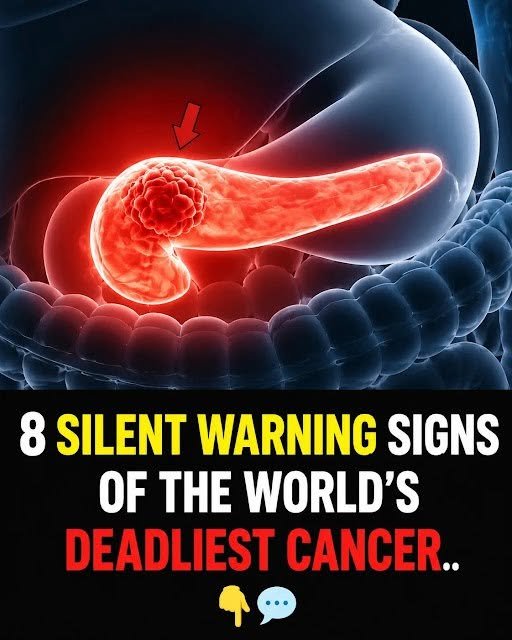
The pancreas sits deep inside the abdomen, behind the stomach.
That location matters.
A tumor can grow without producing a visible lump or an obvious change that someone can feel during an ordinary examination. According to the American Cancer Society, early pancreatic cancers often don’t cause symptoms, and routine screening is not recommended for people at average risk because no screening test has been shown to reduce deaths from the disease.
When symptoms do appear, they can be surprisingly ordinary.
A person may think:
“I’m getting older.”
“My stomach has been bothering me lately.”
“I’ve lost a little weight because I’ve been eating less.”
“My back has been hurting.”
Sometimes those explanations are correct.
But persistent or unexplained changes deserve a closer look.
The goal isn’t to become frightened by every ache.
It’s to avoid automatically dismissing meaningful changes as “just aging.”
1. Yellow skin or yellowing of the eyes
One of the most important warning signs is jaundice.
It causes the skin or the whites of the eyes to turn yellow because bilirubin, a substance normally processed and eliminated through bile, builds up in the body.
Pancreatic tumors—particularly those that develop near the head of the pancreas—can press on or block the bile duct. This can cause bilirubin to accumulate.
But jaundice doesn’t always begin dramatically.
Someone may notice that their eyes look slightly yellow before realizing anything else is wrong.
Other changes can accompany jaundice, including:
- Dark or brownish urine
- Pale or grayish stools
- Itchy skin
- Yellowing of the skin
The American Cancer Society emphasizes that jaundice has many causes, including gallstones, hepatitis, and other liver or bile-duct conditions. So jaundice does not automatically mean cancer.
Still, new unexplained jaundice warrants prompt medical evaluation.
A useful rule
If someone suddenly develops yellowing of the eyes or skin, don’t wait for it to “see if it goes away.”
Get medical advice.
2. Unexplained weight loss
Weight loss can sound positive if someone has been trying to lose weight.
The concern is different when the pounds disappear without an intentional change in diet or exercise.
The American Cancer Society lists unintended weight loss and poor appetite among common symptoms of pancreatic cancer.
Cancer can affect appetite, digestion, metabolism, and the body’s ability to process nutrients.
But again, pancreatic cancer is only one possibility.
Older adults can lose weight because of:
- Dental problems
- Medication side effects
- Depression
- Thyroid disorders
- Gastrointestinal disease
- Difficulty preparing meals
- Changes in appetite
- Other cancers
- Chronic illness
The important clue is not simply a number on the scale.
It’s a pattern that doesn’t have an obvious explanation.
If someone who has maintained roughly the same weight for years suddenly begins losing weight without trying, that’s worth discussing with a healthcare professional.
3. Persistent pain in the abdomen or back
This symptom can be particularly easy to overlook.
Back pain is extremely common as people age. Arthritis, muscle strain, spinal problems, and other conditions can produce it.
Pancreatic cancer can also cause pain in the upper or middle abdomen and back. The American Cancer Society notes that tumors can press on nearby organs or affect nerves around the pancreas.
The location and pattern can vary.
Some people describe discomfort in the upper abdomen that seems to radiate toward the back.
Others primarily notice back pain.
The key isn’t to memorize one specific location.
Instead, pay attention to new, unexplained, persistent, or worsening pain, particularly when it occurs alongside other changes such as weight loss, jaundice, appetite loss, or digestive symptoms.
And don’t assume every new backache in an older adult is simply arthritis.
4. Loss of appetite or feeling full unusually quickly
Sometimes the first change isn’t dramatic weight loss.
It’s food becoming less appealing.
A person who normally enjoys breakfast suddenly eats half of it.
They may say:
“I’m just not that hungry lately.”
Or they may become full unusually quickly.
Pancreatic cancer can cause loss of appetite, and tumors can sometimes interfere with digestion or press against nearby structures.
Again, this symptom is extremely nonspecific.
Medication changes, depression, infections, gastrointestinal problems, dental issues, and many other conditions can reduce appetite.
That’s why the combination of symptoms often matters more than one isolated complaint.
For example:
Reduced appetite + unexplained weight loss + persistent abdominal discomfort
is more concerning than a single skipped meal.
5. Digestive changes, including pale or greasy stools
This is one of the less familiar warning signs.
Pancreatic problems can interfere with the flow of bile or pancreatic enzymes into the digestive tract.
When bile flow is obstructed, stools can become unusually light or gray.
When fat isn’t being digested properly, stools may become greasy, oily, or difficult to flush.
The American Cancer Society notes that pancreatic cancer can cause light-colored or greasy stools when bile and pancreatic enzymes aren’t reaching the intestines normally.
A single unusual bowel movement isn’t a reason to panic.
But a persistent change—particularly if it occurs with jaundice, abdominal pain, weight loss, or dark urine—deserves medical attention.
6. Dark urine or unusually itchy skin
These symptoms can seem unrelated to cancer.
They aren’t.
If a pancreatic tumor blocks bile flow, bilirubin can accumulate in the bloodstream.
That can produce:
Dark urine.
Pale stools.
Itchy skin.
Yellowing of the eyes or skin.
In some people, urine becomes noticeably darker before they recognize the yellowing of their skin.
The American Cancer Society specifically identifies dark urine and itchy skin as related symptoms of jaundice in pancreatic cancer.
But there are plenty of other explanations.
Dehydration can darken urine.
Medications can change urine color.
Liver and gallbladder conditions can also cause jaundice.
The takeaway isn’t “dark urine equals pancreatic cancer.”
It’s:
A new, persistent cluster of these symptoms deserves medical evaluation.
7. New or changing diabetes or blood-sugar problems
This connection is less obvious.
The pancreas plays an essential role in blood-sugar regulation because it contains cells that produce insulin.
Pancreatic cancer can sometimes interfere with insulin production or contribute to diabetes. The American Cancer Society notes that pancreatic cancer can cause diabetes and that changes in blood sugar may sometimes be detected even before obvious diabetes symptoms develop.
This does not mean that having diabetes means you have pancreatic cancer.
Diabetes is extremely common and has many causes.
But a healthcare professional may pay particular attention when diabetes develops unexpectedly in an older adult or when previously stable blood sugar becomes difficult to control without an obvious explanation.
This is one reason medical history matters.
A new diagnosis isn’t interpreted in isolation.
Doctors consider the entire picture.
8. Unusual fatigue or weakness
Everyone gets tired.
But persistent fatigue that doesn’t improve with adequate rest deserves consideration—especially when it appears alongside other unexplained symptoms.
The American Cancer Society lists fatigue or abnormal physical weakness among symptoms that can occur with pancreatic cancer.
The problem is that fatigue is among the least specific symptoms in medicine.
It can result from:
- Poor sleep
- Anemia
- Medication effects
- Depression
- Infection
- Thyroid problems
- Heart disease
- Nutritional deficiencies
- Chronic illness
- Many other conditions
So fatigue alone isn’t a pancreatic cancer alarm.
But unexplained fatigue combined with weight loss, appetite changes, abdominal pain, jaundice, or other persistent symptoms should not simply be written off as getting older.
The symptoms that matter most may occur together
This is perhaps the most useful lesson in the entire article.
Don’t treat the eight warning signs as a scorecard.
You don’t need to have four of them before contacting a doctor.
Instead, think in terms of unexplained change and combinations.
For example:
Pattern A
Unintentional weight loss + reduced appetite
Pattern B
Yellow eyes + dark urine + pale stools
Pattern C
Persistent upper-abdominal pain + back pain + weight loss
Pattern D
New blood-sugar problems + unexplained weight loss
None of these combinations proves pancreatic cancer.
But they give a healthcare professional more information to investigate.
And that’s the point.
Why older adults shouldn’t automatically blame symptoms on aging
There is a subtle danger in the phrase “I’m just getting older.”
Age increases the likelihood of many ordinary aches, digestive changes, sleep problems, and medication effects.
But age also increases the risk of certain cancers.
According to the American Cancer Society, almost all people diagnosed with pancreatic cancer are older than 45, about two-thirds are at least 65, and the average age at diagnosis is 70.
So an older person’s new symptom shouldn’t automatically be dismissed.
A better question is:
“Is this normal for me?”
If the answer is no, mention it.
Who is at higher risk?
Age is only one factor.
The American Cancer Society identifies several known risk factors for pancreatic cancer.
These include:
- Cigarette smoking
- Excess body weight
- Diabetes
- Chronic pancreatitis
- Certain workplace chemical exposures
- Family history
- Certain inherited genetic syndromes
Smoking is particularly important.
The ACS says people who smoke have about twice the risk of pancreatic cancer compared with people who have never smoked, and estimates that roughly one-quarter of pancreatic cancers may be attributable to cigarette smoking.
Family history also matters, although most people who develop pancreatic cancer do not have a family history of the disease.
Having a risk factor doesn’t mean someone will develop cancer.
It simply changes the background probability.
Can pancreatic cancer be screened for routinely?
This is an important question because many people assume that a blood test or scan can simply be done every year.
For people at average risk, that’s currently not the case.
The American Cancer Society says major professional groups do not recommend routine pancreatic cancer screening for average-risk people because no screening test has been shown to reduce the risk of dying from the disease.
High-risk people are different.
People with certain inherited syndromes or strong family histories may be candidates for specialized surveillance, which can involve tests such as MRI/MRCP or endoscopic ultrasound.
That’s a decision made with a healthcare team, often involving genetic counseling.
This distinction matters.
No routine screening for average-risk adults does not mean “ignore symptoms.”
Screening means testing someone who has no symptoms.
Diagnostic testing is different: it’s performed because something has raised a concern.
What happens if a doctor suspects pancreatic cancer?
A doctor won’t diagnose pancreatic cancer based on symptoms alone.
The first step is usually a medical history and physical examination.
Depending on the situation, the evaluation can include:
- Blood tests
- Imaging
- Specialized scans
- Additional diagnostic procedures
- Biopsy when appropriate
- Genetic counseling or testing in selected situations
The American Cancer Society notes that doctors may check for jaundice, examine the abdomen, review medical history and risk factors, and order imaging or other tests when findings warrant further investigation.
That process is important because many symptoms associated with pancreatic cancer have much more common causes.
A good medical evaluation doesn’t assume the worst.
It investigates the possibilities.
What should you do if you notice one of these signs?
Don’t panic.
Don’t search for a diagnosis based solely on an online checklist.
And don’t wait months simply because the symptom seems minor.
Instead, make a note of:
- When the symptom started
- Whether it is getting better or worse
- Any changes in weight
- Changes in appetite
- Changes in bowel movements
- Changes in urine color
- New pain
- New medications
- Changes in blood sugar
- Family history of pancreatic or related cancers
Then discuss the pattern with your healthcare professional.
A written symptom timeline can be surprisingly useful.
It turns:
“I’ve felt off lately.”
into:
“I’ve unintentionally lost 10 pounds over two months, my appetite has declined, and I’ve developed persistent upper-abdominal pain.”
That’s much more actionable.
A common mistake: waiting for severe symptoms
People sometimes assume that cancer must cause severe pain before it becomes worth investigating.
That’s not a safe assumption.
The NCI notes that pancreatic cancer can be difficult to detect because early disease may produce no noticeable symptoms, and later symptoms can resemble other illnesses.
So the absence of severe pain doesn’t necessarily mean there’s nothing worth checking.
Likewise, the presence of mild symptoms doesn’t mean cancer is present.
The correct response is neither panic nor dismissal.
It’s evaluation.
What can lower pancreatic cancer risk?
There is no guaranteed way to prevent pancreatic cancer.
But some risk factors can be changed.
The American Cancer Society recommends not smoking, maintaining a healthy weight, being physically active, following a healthy eating pattern, and avoiding heavy alcohol use.
If you smoke, quitting is one of the most meaningful changes you can make.
And it’s never too late to benefit from quitting.
The ACS notes that pancreatic cancer risk decreases after smoking cessation.
Lifestyle choices cannot eliminate cancer risk.
But reducing avoidable risks is still worthwhile.
A realistic older-adult scenario
Imagine a 72-year-old man named Robert.
He notices that his belt has become loose.
He hasn’t started dieting.
At first, he is pleased.
Then he realizes food doesn’t appeal to him as much as it used to.
A few weeks later, he notices persistent discomfort in his upper abdomen that sometimes seems to reach toward his back.
Robert initially blames his age.
His daughter notices the weight loss and encourages him to call his doctor.
That conversation doesn’t mean Robert has pancreatic cancer.
He could have another gastrointestinal condition, a medication problem, gallbladder disease, or something else entirely.
But now a clinician has a reason to investigate.
That’s the behavior worth copying.
Not assuming cancer.
Not assuming everything is harmless.
Investigating unexplained change.
8 signs worth remembering
If you want the simplest version of this article, remember these eight:
- Yellowing of the skin or eyes
- Unexplained weight loss
- Persistent abdominal or back pain
- Loss of appetite or unusual early fullness
- Pale, greasy, or otherwise persistent stool changes
- Dark urine or unexplained itching associated with jaundice
- New or changing diabetes or blood-sugar problems
- Persistent fatigue or weakness
These symptoms can have many causes.
They are not a diagnostic checklist for pancreatic cancer.
But persistent, unexplained, or multiple symptoms deserve medical attention.
Frequently Asked Questions
What is the earliest warning sign of pancreatic cancer?
There isn’t one universal earliest warning sign. Early pancreatic cancer may cause no noticeable symptoms at all. When symptoms develop, jaundice, unexplained weight loss, abdominal or back pain, appetite loss, and digestive changes are among those that may occur.
Is pancreatic cancer always fatal?
No. Calling pancreatic cancer “one of the deadliest cancers” reflects its historically poor prognosis, particularly because many cases are diagnosed at an advanced stage. It does not mean every person diagnosed with pancreatic cancer will die from it.
Does back pain mean pancreatic cancer?
Usually not. Back pain has many common causes. But persistent or unexplained upper-abdominal or back pain—especially when combined with weight loss, appetite loss, jaundice, or other symptoms—should be evaluated.
Can sudden weight loss be a sign of pancreatic cancer?
Yes, unexplained weight loss is a recognized symptom. But there are many other possible causes, including medication effects, digestive disorders, thyroid disease, depression, and other illnesses.
Is jaundice an early sign of pancreatic cancer?
It can be. Tumors near the head of the pancreas may block the bile duct and cause jaundice while the tumor is still relatively small. However, jaundice has many other causes, so medical evaluation is necessary.
Can diabetes be a warning sign?
Pancreatic cancer can cause diabetes or changes in blood sugar, but diabetes is extremely common and usually has other explanations. A new or unexpectedly changing blood-sugar problem should be discussed with a healthcare professional.
Should everyone over 65 be screened for pancreatic cancer?
No. Major professional organizations do not recommend routine pancreatic cancer screening for average-risk people because no screening test has been shown to reduce pancreatic cancer deaths. People with certain inherited conditions or strong family histories may qualify for specialized surveillance.
What increases the risk of pancreatic cancer?
Important risk factors include age, smoking, excess body weight, diabetes, chronic pancreatitis, certain chemical exposures, family history, and some inherited genetic syndromes.
What should I do if I have several of these symptoms?
Contact your healthcare professional and describe the symptoms, when they began, and how they’ve changed. Seek urgent medical care for severe or rapidly worsening symptoms or other signs of an emergency. Do not assume that having several symptoms means you have cancer—many noncancerous conditions can produce similar symptoms.
Can pancreatic cancer be detected early?
Sometimes, particularly in people who are known to be at high genetic or familial risk and are monitored with specialized testing. For the general population, however, pancreatic cancer is difficult to detect early and routine screening is not currently recommended.
Your Action Checklist
Pay attention to:
- ☐ Unexplained weight loss
- ☐ New loss of appetite
- ☐ Persistent abdominal pain
- ☐ Persistent back pain
- ☐ Yellow eyes or skin
- ☐ Dark urine
- ☐ Pale or greasy stools
- ☐ Persistent unexplained itching
- ☐ New or changing blood-sugar problems
- ☐ Fatigue that doesn’t improve with rest
If something changes:
- ☐ Write down when it started
- ☐ Track whether it’s getting worse
- ☐ Note associated symptoms
- ☐ Review recent medication changes
- ☐ Tell your healthcare professional
- ☐ Mention relevant family history
- ☐ Don’t assume every symptom is “just aging”
- ☐ Don’t assume a symptom automatically means cancer
Remember:
- ☐ Symptoms are clues, not diagnoses
- ☐ Pancreatic cancer can cause no early symptoms
- ☐ Average-risk adults are not routinely screened
- ☐ High-risk individuals may need specialized surveillance
- ☐ Persistent unexplained changes deserve attention
Pancreatic cancer is difficult to detect because it can remain quiet early on, and the symptoms that eventually appear can look like ordinary digestive problems, aging, medication effects, or other common conditions.
That’s why awareness matters.
Yellowing of the eyes or skin, unexplained weight loss, persistent abdominal or back pain, appetite changes, unusual stool or urine changes, new blood-sugar problems, and unexplained fatigue are worth knowing about—but none of them proves cancer on its own.
The smartest response to a new symptom isn’t fear.
It’s attention.
If something about your health has changed and you can’t explain why, tell your healthcare professional. Finding the cause early—whatever that cause turns out to be—is almost always a better strategy than simply hoping it disappears.
Don’t panic over one symptom, but don’t dismiss persistent unexplained changes as “just getting older.” Notice the pattern, write it down, and get it evaluated.
Medical disclaimer: This article is for general educational purposes and is not a diagnosis or substitute for medical care. If you have concerning or persistent symptoms, speak with a qualified healthcare professional. If you develop severe or rapidly worsening symptoms, seek urgent medical attention.