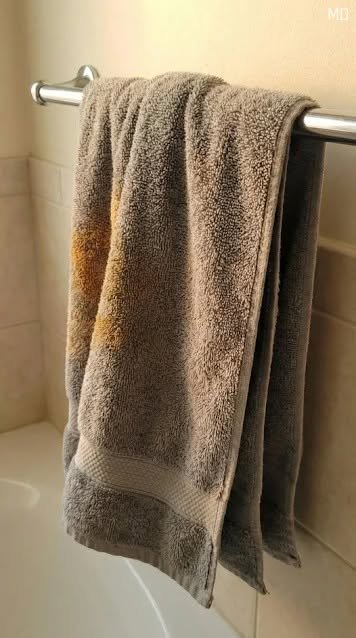
Why Do Towels Develop Stubborn Orange Spots? The Surprising Causes—and How to Remove Them
Discover why towels develop stubborn orange spots, what causes them, and the safest ways to remove stains without damaging your towels.
You wash your towels, dry them, fold them neatly—and then notice it.
A strange orange, rusty, or reddish-brown spot has appeared where there wasn’t one before.
Sometimes it looks like a splash of rust. Other times it resembles a bleach stain, makeup mark, or mysterious discoloration that refuses to disappear no matter how many times you wash the towel.
And here’s the frustrating part: ordinary laundry detergent often doesn’t remove it.
That’s because orange spots on towels aren’t caused by one single thing.
They can come from rust in water, skincare products, cosmetics, hair products, certain cleaning chemicals, minerals, or even reactions between substances already on the fabric.
The good news is that once you identify the likely cause, the stain becomes much easier to deal with.
The Most Common Cause: Rust and Iron in Water
If your towels repeatedly develop orange or reddish-brown marks, iron is one of the first things to consider.
Water can contain dissolved iron, particularly if you’re using well water or have older plumbing.
The iron may be invisible when the water comes out of the faucet.
But once it reacts with oxygen, it can oxidize and leave rusty-looking deposits.
That’s why a towel can come out of the washing machine with an orange stain even though you never spilled anything orange on it.
The problem may not be the towel.
It may be the water.
Clues that iron could be responsible
Look around your home.
Do you see orange or reddish stains around:
- Sink drains
- Toilet bowls
- Bathtubs
- Shower fixtures
- White clothing
- Washing-machine components
If several areas have similar staining, your water supply may be the culprit.
Why the Stain Gets Worse After Washing
This is where the mystery becomes clearer.
Iron can interact with oxygen and moisture and eventually form iron oxide—the same general chemistry responsible for rust.
When water containing iron repeatedly contacts fabric, small amounts can accumulate.
Heat can also make stains more difficult to remove if the wrong cleaning method is used.
That’s why repeatedly washing a stained towel with ordinary detergent may seem useless.
You’re cleaning the fabric, but you’re not necessarily dissolving the mineral deposit causing the discoloration.
Another Surprising Cause: Benzoyl Peroxide
Not every orange-looking towel stain is rust.
If the discoloration appears where your face or hair touches the towel, personal-care products deserve attention.
Benzoyl peroxide, commonly found in acne treatments, is particularly notorious for bleaching or discoloring fabrics.
The result can look orange, yellow, reddish, or lighter than the original fabric.
This is different from a normal stain.
Instead of adding a colored substance to the towel, benzoyl peroxide can chemically alter dyes in the fabric.
That’s why you may wash the towel repeatedly and see absolutely no improvement.
The color itself may have been changed.
Acne Treatments Can Be the Hidden Culprit
Imagine someone uses an acne treatment before bed.
They wash their face in the morning and dry it with a dark towel.
Nothing looks unusual.
A few washes later, pale orange or reddish areas begin appearing around the towel’s center.
The person blames the washing machine.
But the actual culprit may have been the skincare product.
If you use benzoyl peroxide, pay particular attention to towels, pillowcases, washcloths, and clothing that regularly touch treated skin.
Hair Products Can Also Leave Strange Marks
Hair products can contain oils, pigments, dyes, fragrances, or other ingredients that interact with fabric.
Hair color is an especially obvious example.
Semi-permanent and permanent hair dyes can stain towels, sometimes producing orange, copper, red, brown, purple, or other unusual shades depending on the product and the towel’s original color.
If the spots appear after coloring your hair, the timing is a major clue.
Use older, darker towels when applying or rinsing hair dye.
That’s a much easier solution than trying to rescue a brand-new white towel afterward.
Self-Tanner Is Another Major Suspect
Self-tanning products can create orange-brown discoloration on towels.
The active ingredients used in many self-tanning products react with compounds in the outermost layers of the skin to create a darker appearance.
Some of the product can transfer to fabric before it has fully developed or after application.
The result can be especially noticeable on white towels.
If the staining started shortly after you began using a self-tanner, you may have found the explanation.
Makeup Can Create Orange or Rust-Colored Marks
Foundation, concealer, bronzer, tinted sunscreen, and other cosmetics can transfer to towels.
Some products contain pigments or oils that don’t respond well to ordinary laundry detergent.
A towel used to dry the face can therefore develop repeated stains in roughly the same areas.
There’s a simple clue:
Does the discoloration appear around face-sized areas rather than randomly across the towel?
If so, cosmetics or skincare products may be more likely than rust.
Why Bleach Can Make Things Worse
Many people see an orange spot and immediately reach for chlorine bleach.
That isn’t always a good idea.
Bleach can react with certain dyes, chemicals, and residues on fabric.
Instead of removing the discoloration, it can change the color permanently.
This is particularly frustrating when the towel contains colored dyes.
A product intended to make laundry whiter can sometimes produce an even stranger color.
So before using bleach, identify what you’re dealing with.
Rust stains and chemical discoloration are not the same problem.
What About Sunscreen?
Sunscreen can leave yellowish or orange marks on clothing and towels.
Some sunscreen formulations contain organic filters and other ingredients that can interact with minerals in water or remain in fabric after washing.
If you frequently notice yellow-orange staining around the face, neck, shoulders, or areas where sunscreen is applied, sunscreen residue is worth considering.
This is another reason that treating every orange mark as rust can lead you in the wrong direction.
Could the Washing Machine Be Responsible?
Sometimes.
If a washing machine has rusting metal components, old plumbing connections, or mineral buildup, it may contribute to discoloration.
A machine that repeatedly leaves unexplained marks deserves inspection.
Look for:
- Rust around the lid or door
- Damaged metal surfaces
- Brown residue
- Unusual water discoloration
- Mineral deposits
- Stains appearing on multiple loads
If the machine is contributing the problem, treating every towel individually won’t solve the underlying issue.
The Location of the Spot Can Tell You a Lot
This is one of the easiest ways to narrow down the cause.
Random orange spots throughout the towel
Think about water quality, washing-machine issues, or accidental contact with a staining substance.
Spots concentrated around the face area
Consider makeup, sunscreen, skincare products, or acne treatments.
Marks around the hair area
Consider hair dye, styling products, or colored hair products.
Staining that appears after washing rather than before
Water, detergent, machine components, or chemical reactions become more suspicious.
Discoloration that looks like the fabric has lost its original color
Consider a chemical reaction or bleaching rather than an ordinary stain.
The pattern can be more informative than the color itself.
How to Remove Orange Rust Stains From Towels
If you’re reasonably confident the stain is rust or iron-related, don’t automatically use chlorine bleach.
A rust-specific laundry product or an appropriate acid-based stain treatment may be more effective.
Many rust-removal products use acids that dissolve iron compounds.
However, always check the product label and confirm that it is suitable for your specific towel.
A simple approach
- Identify the stain as likely rust.
- Check the towel’s care label.
- Use a fabric-safe rust remover according to its directions.
- Rinse thoroughly.
- Wash the towel normally.
- Inspect the towel before putting it in the dryer.
That last step matters.
Don’t heat-dry a stain until you’re satisfied that it has been removed.
Heat can make some stains more difficult to eliminate.
What About Lemon Juice or Vinegar?
Acidic household ingredients are sometimes recommended for rust stains.
The chemistry makes the idea understandable, but homemade remedies aren’t always predictable.
Vinegar may help with some mineral residues, but it isn’t a universal rust remover.
Lemon juice is acidic too, but its effectiveness depends on the type and severity of the stain.
If you decide to experiment with a household acid, test it on an inconspicuous area first and follow the towel manufacturer’s care instructions.
And never mix cleaning products casually.
In particular, never mix acids with chlorine bleach.
That combination can release dangerous chlorine gas.
Why You Shouldn’t Scrub Aggressively
When a stain refuses to disappear, it’s tempting to attack it with a brush.
But aggressive scrubbing can damage cotton fibers.
You may end up with:
- Frayed fabric
- Fuzzy patches
- Thinner areas
- Permanent texture changes
A chemical stain requires the right chemistry more than brute force.
Treat the cause rather than simply increasing the amount of effort.
What If the Orange Mark Is From Benzoyl Peroxide?
This requires a different mindset.
If benzoyl peroxide has altered the dye in the towel, you may not be dealing with a removable stain at all.
The original fabric color may have been chemically lightened.
In that case, repeated stain removers won’t necessarily restore the original color.
The practical solution is prevention:
- Use white towels when using benzoyl peroxide
- Use an old towel for your face
- Wash your hands after applying the product
- Allow skincare products to dry before contacting colored fabrics
A white towel can be much less frustrating than watching a favorite dark towel slowly develop mysterious pale patches.
How to Prevent Orange Spots From Coming Back
Removing the existing stain is only half the job.
If you don’t address the cause, the spots will return.
If you suspect your water
Consider having your water tested, especially if you’re on a private well.
If high iron is confirmed, a water-treatment professional can recommend an appropriate filtration or treatment system.
If skincare is responsible
Use white towels for products that can bleach or stain fabric.
If hair dye is responsible
Keep separate towels specifically for hair-coloring days.
If makeup is responsible
Remove as much makeup as possible before drying your face.
Wash heavily stained towels promptly rather than allowing residues to accumulate.
If the washing machine is responsible
Inspect the machine and plumbing for corrosion or other problems.
A Quick Orange-Spot Detective Test
Before reaching for a cleaning product, ask yourself these questions:
Did the towel develop the mark after a wash?
If yes, investigate water and the washing machine.
Does the spot appear where your face touches the towel?
Consider skincare, makeup, sunscreen, or benzoyl peroxide.
Does it appear around the hairline?
Think hair products or dye.
Do multiple towels have similar marks?
Water quality becomes more suspicious.
Does the fabric look bleached rather than stained?
Consider a chemical reaction.
This simple process can save you from treating the wrong problem.
A Common Mistake: Using More Detergent
More detergent doesn’t necessarily mean cleaner towels.
Excess detergent can leave residue that isn’t completely rinsed away.
Over time, buildup can make fabrics feel stiff or affect how other substances interact with the fibers.
If your towels smell musty, feel coated, or aren’t rinsing cleanly, check whether you’re using the amount recommended for your washer and detergent.
Clean laundry depends on the right combination of detergent, water, temperature, agitation, and rinsing—not simply “more soap.”
Another Mistake: Overloading the Washer
Towels need room to move.
If you pack the machine tightly, water and detergent may not circulate effectively.
That can leave residues behind and make stain removal less effective.
It also makes it harder for the washer to rinse bulky towels thoroughly.
Give towels enough space to move freely.
Why Towels Are Particularly Vulnerable
Towels are designed to absorb water.
That’s their job.
But that also means they can absorb oils, skincare products, makeup, hair products, minerals, and other residues.
Then they are repeatedly exposed to:
- Warm water
- Detergent
- Heat
- Moisture
- Body oils
- Hard-water minerals
Over dozens of washing cycles, small amounts of residue can accumulate.
So the towel that looks fine after one use may look surprisingly different after months of repeated exposure.
Should You Replace the Towel?
Not necessarily.
If the towel is structurally sound and the discoloration is cosmetic, there’s no health reason to throw it away simply because it has an orange mark.
But if the towel has:
- Persistent mildew
- A strong odor that doesn’t disappear after proper washing
- Significant fabric deterioration
- Contamination that cannot be safely cleaned
replacement may make more sense.
For ordinary discoloration, the towel may still be perfectly usable.
A Simple Towel-Care Routine
You don’t need an elaborate laundry system.
After use
Hang towels so they can dry completely.
Avoid leaving damp towels crumpled on the floor.
During washing
Don’t overload the machine.
Use the recommended amount of detergent.
Follow the care label.
For stains
Treat them before drying whenever possible.
For towels used with skincare or hair products
Consider keeping separate towels.
For recurring unexplained orange stains
Investigate your water and washing machine instead of repeatedly buying stain removers.
Frequently Asked Questions
Why are my white towels turning orange?
Rust or iron in the water is a common possibility, especially if you also see orange deposits around sinks, toilets, or other fixtures. Skincare products, hair products, self-tanner, and cosmetics can also cause orange discoloration.
Can hard water cause orange stains on towels?
Water containing significant amounts of iron can leave orange or reddish-brown deposits on fabric. Hard water itself is more strongly associated with mineral buildup such as calcium and magnesium, while iron is the more obvious culprit when the stain is distinctly rusty.
Does bleach remove orange rust stains?
Chlorine bleach isn’t generally the best choice for rust stains and can sometimes make certain discoloration worse. A product specifically formulated for rust removal may be more appropriate.
Why do my towels turn orange after washing?
If the spots aren’t present before washing but appear afterward, investigate the water supply, washing machine, detergent interactions, and products that may have been absorbed into the fabric.
Can benzoyl peroxide turn towels orange?
Benzoyl peroxide can bleach or discolor dyed fabrics. The resulting marks can appear pale, orange, reddish, or otherwise different from the original towel color.
Can sunscreen stain towels?
Yes. Some sunscreen products can leave persistent yellowish or orange discoloration, particularly after repeated use and washing.
How can I stop my towels from getting orange stains?
Identify the source first. If the problem is iron in the water, address the water supply. If skincare or hair products are responsible, use designated towels or white towels and wash them promptly.
Why do towels get orange spots only around the face?
A concentrated pattern around the face can point toward makeup, sunscreen, skincare products, self-tanner, or acne treatments rather than a problem with the washing machine.
Can vinegar remove orange stains from towels?
Vinegar may help with some mineral residues, but it isn’t a universal solution for rust or chemical discoloration. Use a product specifically designed for the type of stain when possible.
Should I throw away towels with orange stains?
Usually not. If the towel is clean, structurally sound, and free of mildew or persistent contamination, discoloration is generally a cosmetic issue rather than a reason to discard it.
Your Orange-Spot Checklist
If you see orange marks:
- ☐ Check whether the stains resemble rust
- ☐ Look for orange deposits around plumbing
- ☐ Consider whether you use well water
- ☐ Check skincare and acne products
- ☐ Think about sunscreen and self-tanner
- ☐ Consider hair dye and styling products
- ☐ Inspect the washing machine
- ☐ Treat the stain before machine drying
- ☐ Follow the towel’s care label
Avoid:
- ☐ Randomly mixing cleaning chemicals
- ☐ Mixing bleach with acids such as vinegar
- ☐ Aggressive scrubbing
- ☐ Assuming every orange stain is rust
- ☐ Repeatedly using stronger products without identifying the cause
Orange spots on towels aren’t necessarily a sign that your laundry routine is failing.
They are often clues.
Rust-colored stains throughout multiple towels can point toward iron in the water. Face-level discoloration can suggest skincare, sunscreen, makeup, or acne products. Marks associated with hair use may come from dye or styling products.
Once you identify the source, the solution becomes much easier.
And remember: don’t treat a chemical color change like an ordinary food stain, and don’t treat rust like a bleach problem.
The right solution starts with figuring out what actually caused the orange spot.
Before throwing out your towels—or attacking them with more bleach—look at the pattern, consider your water and personal-care products, and match the treatment to the cause.