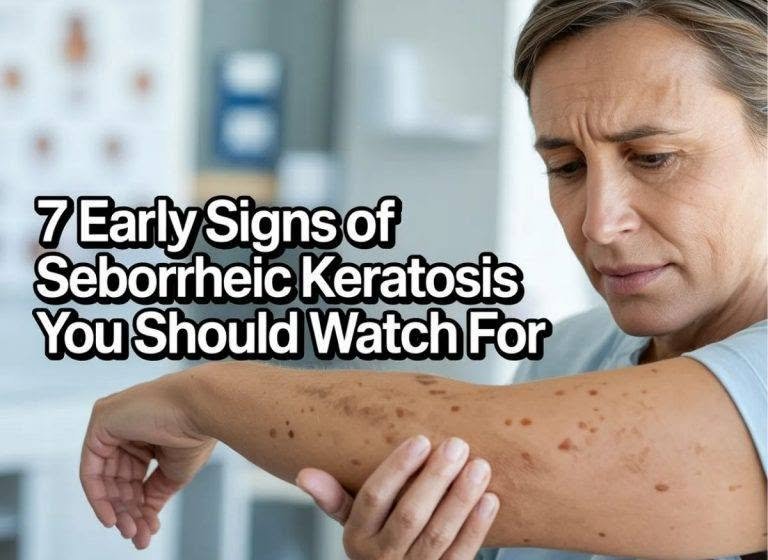
7 Early Signs of Seborrheic Keratosis You Should Watch For
Learn the common early signs of seborrheic keratosis, how these harmless skin growths look, and when a changing spot should be checked.
A new spot on your skin can be unsettling—especially if you’re over 40 and suddenly notice a brown, rough, or raised growth that wasn’t there before.
Sometimes it’s nothing more than a seborrheic keratosis, one of the most common harmless skin growths that develops in middle age and later.
But there’s a catch.
Seborrheic keratoses can look surprisingly similar to warts, actinic keratoses, and even some skin cancers. That’s why knowing the typical appearance is useful—but knowing when not to assume it’s harmless is even more important. The American Academy of Dermatology (AAD) notes that most seborrheic keratoses are harmless, but some growths need examination because they can resemble skin cancer. (AAD)
So what should you look for?
Here are seven common features that may point toward seborrheic keratosis, followed by the warning signs that deserve a dermatologist’s attention.
Medical disclaimer: This article is for general education and cannot diagnose a skin growth. If a spot is new, changing, bleeding, rapidly growing, painful, or simply looks different from your other spots, have it evaluated by a qualified healthcare professional.
What Is Seborrheic Keratosis?
Seborrheic keratosis is a noncancerous skin growth that becomes increasingly common with age.
The AAD describes these growths as sometimes having a wart-like surface or a waxy appearance that can look as though something has been “stuck” onto the skin. They can range in color from white to black, although tan and brown are common. (AAD)
They may appear individually or in groups.
Common locations include the:
- Chest
- Back
- Abdomen
- Head
- Neck
- Face
- Scalp
They generally do not occur on the palms or soles. (AAD)
They’re also not contagious. You can’t catch a seborrheic keratosis from another person. (AAD)
The number of these growths can increase as people get older, and some people have a family tendency to develop many of them. (AAD)
1. It Starts as a Small, Rough Bump
One of the earliest clues can be surprisingly subtle.
Instead of appearing immediately as a thick, raised growth, a seborrheic keratosis may begin as a small, rough-feeling bump.
Over time, it can become thicker and develop a more noticeable, warty surface. (AAD)
You might notice it while showering or drying yourself before you actually see it.
That tactile discovery is common with skin growths:
“What’s that little rough spot?”
At first, it may seem insignificant.
But as it develops, its surface may become increasingly distinct from the surrounding skin.
What to do
Don’t pick at it or scrape it off.
Instead, take a clear photograph when you first notice it. If it changes later, having an earlier image can make the change easier to recognize.
2. It Has a Waxy or “Stuck-On” Appearance
This is one of the classic descriptions of seborrheic keratosis.
A growth may look as though it has been placed on top of the skin rather than growing from underneath it.
The AAD describes seborrheic keratoses as having a waxy, stuck-on-the-skin appearance. (AAD)
Some are smooth and waxy.
Others are thick and rough.
Some barely rise above the skin, while others become quite prominent.
This variation is one reason photographs on the internet aren’t enough to make a diagnosis.
A typical seborrheic keratosis can look quite different from another seborrheic keratosis.
3. The Color Can Range From Light to Very Dark
Brown is probably the color most people associate with seborrheic keratosis.
But that’s not the whole story.
These growths can range from white to black, with tan and brown being common. (AAD)
A single person can even have growths of different colors.
That means color alone doesn’t tell you whether a spot is a seborrheic keratosis.
A dark growth isn’t automatically melanoma.
A light growth isn’t automatically harmless.
And a brown spot shouldn’t be dismissed simply because it resembles an age spot.
Appearance has to be considered as a whole.
4. It Slowly Becomes Thicker or More Textured
Another common pattern is gradual thickening.
A spot that initially felt like a small rough patch may eventually develop:
- A raised surface
- Warty texture
- Flaking
- Crusting
- A thicker appearance
The AAD notes that seborrheic keratoses tend to begin as small rough bumps and slowly thicken, sometimes developing a warty surface. (AAD)
This gradual evolution can be easy to overlook because it may happen over a long period.
You may only notice the difference when you compare an older photograph with how the spot looks today.
5. It Appears on the Trunk, Head, Neck, or Face
Location can provide another clue.
Seborrheic keratoses commonly develop on the chest, back, stomach, scalp, face, and neck. (AAD)
They can appear almost anywhere on the body except the palms and soles. (AAD)
If you discover a new growth on your back, for example, it can be difficult to monitor because you may not see it regularly.
That’s why skin checks become increasingly useful with age.
Ask a partner or family member to help you examine areas that are difficult to see, or ask your healthcare professional about appropriate skin examinations.
6. It Usually Doesn’t Hurt—Although It Can Itch
Most seborrheic keratoses aren’t painful.
However, some can itch or become irritated. (AAD)
A growth may also become annoying when clothing repeatedly rubs against it.
Jewelry, collars, bra straps, belts, or shaving can irritate raised growths.
That doesn’t automatically mean something dangerous is happening.
But there’s an important distinction:
Occasional irritation isn’t the same as unexplained bleeding, rapid growth, or a dramatic change in appearance.
If a growth suddenly becomes very itchy, bleeds, grows quickly, turns unusually dark, or otherwise changes, it deserves professional assessment. The AAD specifically recommends seeing a dermatologist when a suspected seborrheic keratosis grows quickly, turns black, itches, or bleeds. (AAD)
7. You Begin Developing More of Them Over Time
One seborrheic keratosis may be followed by another.
Then another.
Then you notice several on your back or chest.
This can be alarming, but the number of seborrheic keratoses tends to increase with age, and some people have an inherited tendency to develop many. (AAD)
So finding several doesn’t automatically mean something is wrong.
However, a sudden appearance of many new growths is different.
The AAD recommends seeing a dermatologist if numerous new skin growths appear suddenly because, in uncommon circumstances, this pattern can be associated with an internal cancer. (AAD)
That doesn’t mean a sudden crop of spots means you have cancer.
It means the unusual pattern deserves medical attention rather than self-diagnosis.
Seborrheic Keratosis vs. Skin Cancer: Why It Can Be Confusing
Here’s where caution matters.
Seborrheic keratoses are harmless.
But some skin cancers can look similar.
A dermatologist may be able to identify a typical seborrheic keratosis simply by examining it. If the growth looks suspicious, however, the dermatologist may remove it or take a sample so it can be examined under a microscope. (AAD)
That microscopic examination can provide the definitive answer when appearance alone isn’t enough.
This is why online image searches should never be treated as a substitute for professional diagnosis.
When a “Seborrheic Keratosis” Should Be Checked
Make an appointment with a dermatologist if a growth:
Grows quickly
A typical seborrheic keratosis can grow gradually, but rapid growth is a reason to have it evaluated. (AAD)
Starts bleeding
Bleeding isn’t something you should automatically attribute to a harmless growth.
Turns black or changes significantly
Darkening or another noticeable change deserves attention.
Looks different from your other seborrheic keratoses
If you have several similar growths and one suddenly looks completely different, don’t ignore it.
Becomes persistently irritated
Especially if it repeatedly catches on clothing or jewelry.
Looks flat, dry, rough, and scaly
That appearance can be more consistent with an actinic keratosis, a precancerous growth associated with long-term ultraviolet exposure. (AAD)
Appears suddenly along with many other growths
A sudden increase in numerous new growths warrants medical evaluation. (AAD)
Don’t Confuse Seborrheic Keratosis With Actinic Keratosis
The names sound almost identical, but these are different conditions.
Seborrheic keratosis is benign.
Actinic keratosis is considered precancerous.
Actinic keratoses develop in skin damaged by ultraviolet radiation and can sometimes progress to squamous cell carcinoma. (AAD)
An actinic keratosis may feel like a patch of sandpaper.
It can appear as a rough, scaly area that is red, pink, skin-colored, gray, white, brown, or tan.
That’s why a rough patch on a sun-exposed area shouldn’t automatically be labeled “just an age spot.” (AAD)
If you’re unsure, let a dermatologist make the distinction.
What About Warts?
Seborrheic keratoses can resemble warts.
That’s one reason people sometimes try over-the-counter wart treatments on them.
The AAD specifically cautions against treating an uncertain growth at home because seborrheic keratoses can be mistaken for warts, and wart treatments can irritate or damage the skin. (AAD)
If you aren’t certain what the growth is, don’t experiment on it.
What Causes Seborrheic Keratosis?
The exact cause isn’t completely understood.
Researchers know that family history appears to play a role, and the growths become more common with age.
Sun exposure may also contribute in some cases, although seborrheic keratoses can occur on areas that are usually covered, so sunlight cannot explain all cases. (AAD)
What we do know is that these growths are generally associated with aging rather than poor hygiene.
They are also not contagious.
So if you develop one, it isn’t because you failed to wash your skin properly.
Are Seborrheic Keratoses Dangerous?
Usually, no.
Most are benign and don’t require treatment. (AAD)
Treatment may be considered when a growth:
- Becomes irritated
- Gets caught on clothing or jewelry
- Is bothersome
- Looks suspicious
- Is cosmetically unwanted
A dermatologist may use techniques such as freezing, scraping, or removing the growth depending on the situation and diagnosis.
If a growth looks suspicious, removal can also allow a pathologist to examine the tissue for cancer cells. (AAD)
Should You Remove One at Home?
No.
It can be tempting.
You may find online advice suggesting that you can scrape, freeze, burn, or chemically remove a growth yourself.
That’s a bad trade-off when you don’t know exactly what you’re treating.
The AAD advises against trying to remove seborrheic keratoses yourself because of the risk of infection. (AAD)
More importantly, self-treatment can destroy a suspicious growth before a professional has a chance to determine what it actually is.
If you want a growth removed, have a dermatologist evaluate it.
A Simple Skin-Check Habit for Older Adults
You don’t need to stare at your skin every day.
Instead, make skin awareness part of your routine.
Every month or so, take a few minutes to look for anything new or changing.
Check:
- Face
- Scalp
- Neck
- Chest
- Back
- Arms
- Hands
- Legs
- Feet
Use a mirror for areas you can’t easily see.
When you find a spot you’re uncertain about, photograph it in good lighting.
You can then compare its size and appearance later.
A photograph isn’t a diagnosis, but it can make changes easier to notice.
A Quick Example
Imagine you’re 67 and notice a small tan spot on your upper back.
It feels slightly rough.
You don’t remember seeing it before.
Over several months, it becomes thicker and develops a waxy, stuck-on appearance.
That pattern could fit a seborrheic keratosis.
But imagine instead that the spot grows rapidly, begins bleeding, becomes very dark, or looks dramatically different from the other growths around it.
That’s a different situation.
Don’t assume it’s still a harmless seborrheic keratosis.
Get it checked.
The goal isn’t to become an expert at diagnosing skin lesions at home.
The goal is to recognize when professional evaluation makes sense.
7 Signs to Remember
If you’re trying to remember the basics, look for these common features:
- A small rough bump at first
- A waxy or stuck-on appearance
- Tan, brown, or other colors ranging from light to very dark
- Gradual thickening or a warty texture
- Appearance on the chest, back, head, neck, face, or other typical areas
- Usually painless, although sometimes itchy or irritated
- The gradual development of additional growths with age
These features can be consistent with seborrheic keratosis—but they do not prove that a particular growth is one.
Frequently Asked Questions
Is seborrheic keratosis cancerous?
No. Seborrheic keratoses are benign skin growths. However, they can sometimes resemble skin cancer, so an unusual or changing growth should be evaluated rather than diagnosed at home. (AAD)
What does early seborrheic keratosis look like?
It may begin as a small, rough bump and gradually become thicker and more textured. Over time, it can develop the characteristic waxy or stuck-on appearance. (AAD)
Can seborrheic keratosis be black?
Yes. Seborrheic keratoses can range in color from white to black, although tan and brown are common. Color alone cannot determine whether a growth is benign. (AAD)
Can seborrheic keratosis itch?
Yes. Most don’t hurt, but some can itch or become irritated, especially when clothing, jewelry, or shaving repeatedly rubs against them. (AAD)
Do seborrheic keratoses spread?
They aren’t contagious. People may develop more growths as they age, which can make it appear as though the condition is spreading. (AAD)
Should I worry if I suddenly develop many growths?
A sudden appearance of numerous new growths should be discussed with a dermatologist. Although uncommon, this pattern can sometimes be associated with an internal cancer. (AAD)
Can I remove a seborrheic keratosis myself?
It’s best not to. Home removal can cause infection or skin injury, and you may accidentally treat a growth that hasn’t been correctly diagnosed. (AAD)
What is the difference between seborrheic and actinic keratosis?
Seborrheic keratosis is a benign growth. Actinic keratosis is a precancerous lesion caused by cumulative UV damage and can sometimes progress to squamous cell carcinoma. (AAD)
When should I see a dermatologist?
See a dermatologist if a growth grows quickly, changes substantially, becomes very dark, bleeds, looks unusual compared with your other spots, or otherwise concerns you. (AAD)
Seborrheic keratoses are extremely common, particularly as people get older, and most are harmless.
A small rough bump can gradually become thicker. A tan spot can develop a waxy, stuck-on appearance. A growth may be itchy without being dangerous.
But don’t let the word “common” become an excuse to ignore changes.
If a spot is rapidly growing, bleeding, changing color, becoming unusually irritated, or simply doesn’t look like your other growths, have it checked.
You don’t need to diagnose your skin yourself.
You just need to notice changes and know when to ask for help.
And when it comes to a suspicious skin growth, a quick appointment with a dermatologist is far better than weeks of guessing.