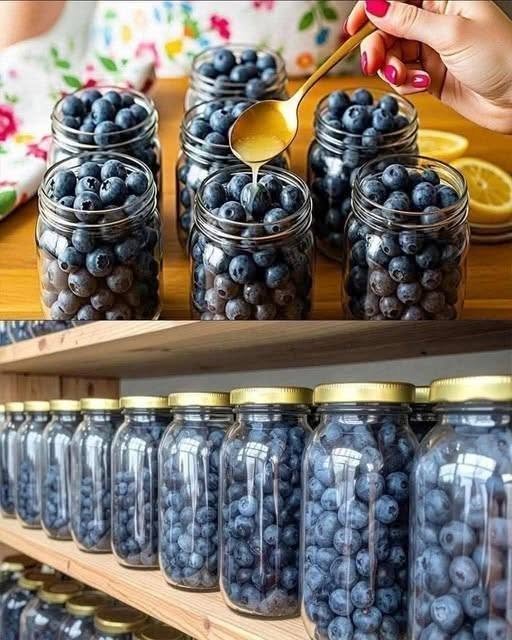
How to Preserve Fresh Blueberries in Jars and Keep Them Fresh Longer
Fresh blueberries are one of those fruits that seem to disappear from the refrigerator almost as quickly as you buy them.
One day you have a beautiful container of plump berries. A few days later, some are soft, leaking juice, or covered with the first signs of mold.
But there is a simple lesson that can dramatically improve blueberry storage:
The goal isn’t just to seal blueberries tightly. It’s to control moisture, temperature, and contamination.
If you want blueberries to last longer, an airtight jar can be useful for refrigerated storage, but simply putting fresh berries into a sealed jar and leaving it at room temperature does not make them shelf-stable.
For long-term room-temperature storage, blueberries need to be preserved using a tested canning method.
Here’s how to approach both options safely.
Why Fresh Blueberries Spoil So Quickly
Blueberries naturally contain a lot of moisture.
That moisture is part of what makes them juicy and delicious—but it also creates an environment where spoilage can develop.
A berry with damaged skin can be especially vulnerable.
One soft or moldy berry can also affect the berries around it.
That’s why preservation starts before the jar ever appears.
If you put bruised, wet, or moldy fruit into a container, sealing the jar doesn’t reverse the problem.
It simply traps everything inside.
The Most Important Rule: Don’t Wash Them Too Early
One of the easiest ways to shorten the life of fresh blueberries is washing them and then storing them while they’re still damp.
Water left on the berries can encourage faster deterioration.
For refrigerated storage, a practical approach is to keep blueberries dry and wash only the amount you plan to eat.
If you’ve already washed them, dry them thoroughly before putting them into storage.
This small step can make a noticeable difference.
How to Store Fresh Blueberries in an Airtight Jar
If your goal is to keep fresh blueberries in the refrigerator for longer—not to create shelf-stable canned fruit—an airtight glass jar can be a useful storage container.
What you’ll need
- Fresh blueberries
- A clean glass jar with a tight-fitting lid
- Paper towels or a clean, dry towel
Step 1: Inspect the berries
Spread the blueberries out and look for:
- Mold
- Crushed berries
- Leaking juice
- Very soft fruit
- Damaged or split skins
Remove anything that looks spoiled.
Don’t store moldy berries with healthy ones.
Step 2: Keep the berries dry
Don’t rinse the entire batch unless you’re ready to dry it thoroughly.
If the berries have already been washed, gently dry them.
Avoid squeezing or rubbing them aggressively because damaged skins spoil more quickly.
Step 3: Prepare the jar
Use a clean, completely dry glass jar.
Any leftover moisture inside the jar works against your goal.
Step 4: Add the blueberries
Place the berries into the jar gently.
Don’t pack them down tightly.
You want to minimize crushing.
Step 5: Add a dry paper towel if appropriate
A small piece of clean paper towel can help absorb excess moisture.
Keep it dry and replace it if it becomes damp.
Step 6: Seal the jar
Close the lid securely and place the jar in the refrigerator.
This is refrigerated fresh-fruit storage, not shelf-stable preservation.
Why an Airtight Jar Can Help
A good storage container can protect blueberries from physical damage and help reduce exposure to the surrounding refrigerator environment.
It also makes it easier to see how many berries you have left.
But airtight doesn’t mean magical.
The jar cannot:
- Stop mold that is already present
- Make old berries fresh again
- Sterilize the fruit
- Make fresh blueberries safe at room temperature
- Replace refrigeration
- Guarantee a specific shelf life
The condition of the berries going into the jar matters enormously.
The Refrigerator Still Matters
Once you’ve sealed your blueberries, keep them refrigerated.
Cold temperatures slow spoilage, but they don’t stop it completely.
Avoid leaving the jar on the kitchen counter for extended periods.
If you’re storing a large batch, consider dividing it into smaller jars.
That way, you’re not repeatedly opening and closing one large container every time you want a handful of berries.
What If You Want Blueberries to Last for Months?
That’s a different process.
If your goal is to preserve blueberries for several months at room temperature, fresh berries simply placed into airtight jars are not enough.
You need a proper preservation method.
For shelf-stable storage, use a tested home-canning recipe and follow the processing instructions precisely.
The National Center for Home Food Preservation provides tested guidance for preserving blueberries and other fruits. (nchfp.uga.edu)
This distinction is extremely important.
There’s a huge difference between:
“I sealed some blueberries in a jar and put them in the refrigerator.”
and
“I processed blueberries in jars using a tested canning method designed for shelf-stable storage.”
The second requires specific procedures.
Why You Shouldn’t Invent Your Own Canning Method
Home preservation can look deceptively simple.
Fill a jar.
Put on a lid.
Boil it.
Done.
Unfortunately, safe canning isn’t that casual.
The acidity of the food, jar size, preparation method, processing time, temperature, and other factors can affect whether a preservation method is safe.
That’s why it’s better to use established recipes from reliable sources rather than modifying random internet instructions.
The USDA also provides food-preservation guidance through its National Center for Home Food Preservation resources.
When it comes to shelf-stable food, tested recipes beat viral shortcuts.
An Easier Long-Term Option: Freeze the Blueberries
If you don’t specifically need jars, freezing is often one of the simplest ways to preserve fresh blueberries for later use.
Start by sorting the berries.
Remove damaged or moldy fruit.
Then wash them if appropriate and dry them thoroughly.
Spread the berries in a single layer on a baking sheet and freeze them.
Once they’re solid, transfer them to a freezer-safe container or bag.
Freezing them individually first helps prevent one giant frozen blueberry block.
You can then remove only what you need.
Frozen Blueberries Are Surprisingly Versatile
Once frozen, blueberries can be used in:
- Smoothies
- Oatmeal
- Muffins
- Pancakes
- Yogurt
- Sauces
- Baked desserts
- Homemade fruit compotes
They may be softer after thawing than fresh berries, but they’re still extremely useful in cooked and blended recipes.
In fact, slightly softened berries can be perfect for smoothies.
What About Vacuum-Sealing Blueberries?
Vacuum-sealing can reduce air exposure, but it isn’t a substitute for proper refrigeration, freezing, or canning.
And fresh berries are delicate.
The pressure can crush them, which may create more damaged fruit and juice—the opposite of what you want.
If you want to vacuum-seal blueberries for longer storage, freezing them first can help preserve their shape.
Again, the storage method depends on the goal.
A Simple Blueberry Preservation Comparison
| Method | Best for | Typical storage environment |
|---|---|---|
| Dry blueberries in airtight jar | Shorter-term fresh storage | Refrigerator |
| Freezing | Long-term home storage | Freezer |
| Tested water-bath canning | Shelf-stable preservation | Pantry |
| Vacuum-sealing | Reducing air exposure | Usually refrigerated or frozen |
The right method depends on how long you want the fruit to last.
Signs Your Blueberries Should Be Discarded
Don’t try to rescue berries that are clearly spoiled.
Watch for:
- Visible mold
- Strong fermented or unpleasant odor
- Excessive leaking
- Slimy texture
- Significant discoloration
- Extensive softness or breakdown
If you see mold on soft, moist fruit, it’s generally safer to discard the affected fruit rather than simply removing the visible spot.
And don’t taste questionable berries to “check” whether they’re safe.
Your eyes and nose aren’t perfect food-safety tests, but obvious spoilage is a good reason not to eat the fruit.
The Mistake of Storing Wet Blueberries
This deserves repeating because it’s so common.
You bring berries home.
You wash the whole container.
You put them straight into a jar while they’re still damp.
You seal the jar.
A few days later, you’re disappointed.
The problem wasn’t necessarily the jar.
It was the moisture.
If you’re storing fresh berries in the refrigerator, keeping them as dry as reasonably possible can help reduce premature spoilage.
Should You Add Vinegar to the Jar?
You may have seen advice recommending a vinegar-water wash to extend berry life.
There are situations where washing produce can reduce some surface microorganisms, but if you use a washing method, the fruit should still be rinsed as appropriate and dried thoroughly before storage.
A vinegar solution is not a substitute for refrigeration or proper food preservation.
And you shouldn’t assume that soaking blueberries in vinegar makes them safe to store indefinitely.
The basic principle remains:
Clean appropriately. Dry thoroughly. Refrigerate or freeze.
Don’t Overfill the Jar
There’s a temptation to pack every available blueberry into one container.
Resist it.
Overfilling increases the chance that berries at the bottom will become crushed.
A shallower container or several smaller jars can be better for delicate fruit.
Handle the berries gently.
Blueberries have a natural protective coating called the bloom on their skin.
That dusty-looking surface is normal.
Try not to rub it away unnecessarily.
The “One Bad Berry” Problem
You’ve probably experienced this.
You open the refrigerator and notice one blueberry has turned fuzzy.
Then you look closer.
A few more aren’t looking great.
That is why inspecting berries before storage matters.
If one berry is damaged or moldy, remove it rather than storing it with the rest.
Then check the remaining berries periodically.
Storage isn’t a “set it and forget it” process.
A Practical Weekly Routine
If you buy blueberries regularly, here’s a simple routine.
Day 1: Bring them home
Inspect the container.
Remove damaged berries.
Keep the good berries dry.
Day 2–3: Check the container
Look for condensation, crushed fruit, or spoilage.
Remove anything that’s deteriorating.
Later in the week
Use the remaining fresh berries first.
If you realize you won’t eat them soon, freeze them rather than waiting until they deteriorate.
This prevents the common cycle of buying berries, forgetting them, and discovering a wasted container in the back of the refrigerator.
What Makes This Method Work Better?
It isn’t one magic trick.
It’s a combination of small habits:
Start with good fruit.
Keep it dry.
Handle it gently.
Use a clean container.
Refrigerate promptly.
Inspect regularly.
Freeze what you won’t eat soon.
That’s much more reliable than believing an airtight jar alone can dramatically extend the life of fresh fruit.
Frequently Asked Questions
Can I put fresh blueberries directly into an airtight jar?
Yes, for refrigerated storage. Make sure the berries and jar are clean and dry, and remove damaged fruit first. An airtight jar does not make fresh blueberries shelf-stable.
Should I wash blueberries before storing them?
You can wash them, but they should be dried thoroughly before storage. Many people prefer washing berries immediately before eating to minimize excess moisture during storage.
How long do blueberries last in an airtight jar?
There isn’t one guaranteed number because freshness depends on the berries, refrigerator temperature, moisture, and handling. Check them regularly and discard fruit showing signs of spoilage.
Can I store blueberries at room temperature in a sealed jar?
Don’t use a sealed jar as a substitute for refrigeration. Fresh blueberries are perishable and should be stored appropriately.
Can I preserve blueberries for the winter?
Yes. Freezing is a straightforward option. For shelf-stable jars, use a tested home-canning recipe and follow its processing instructions precisely.
Can I freeze blueberries without cooking them?
Yes. Blueberries can be frozen for later use. Sort, prepare, dry, freeze, and then transfer them to appropriate freezer packaging.
Why do blueberries get moldy so quickly?
Moisture, damaged fruit, warmth, and microorganisms can all contribute to spoilage. Keeping berries dry and refrigerated can help slow deterioration.
Can I remove mold from one blueberry and eat the rest?
If mold is present, don’t assume that removing only the visible spot makes the surrounding fruit safe. With soft, moist fruits, it’s safer to discard moldy berries and inspect the remaining fruit carefully.
An airtight jar can be a useful tool for keeping fresh blueberries refrigerated, particularly when you start with good-quality fruit and keep excess moisture under control.
But don’t confuse refrigerated storage with canning.
Fresh blueberries sealed in a jar are still perishable.
If you want them to last for months, freezing or using a properly tested canning method is a better approach.
The simplest strategy is often the most dependable:
Choose firm berries, remove damaged fruit, keep them dry, store them cold, and freeze anything you won’t eat soon.
That way, you get more enjoyment from every batch—and far fewer disappointing containers of forgotten blueberries hiding at the back of the refrigerator.