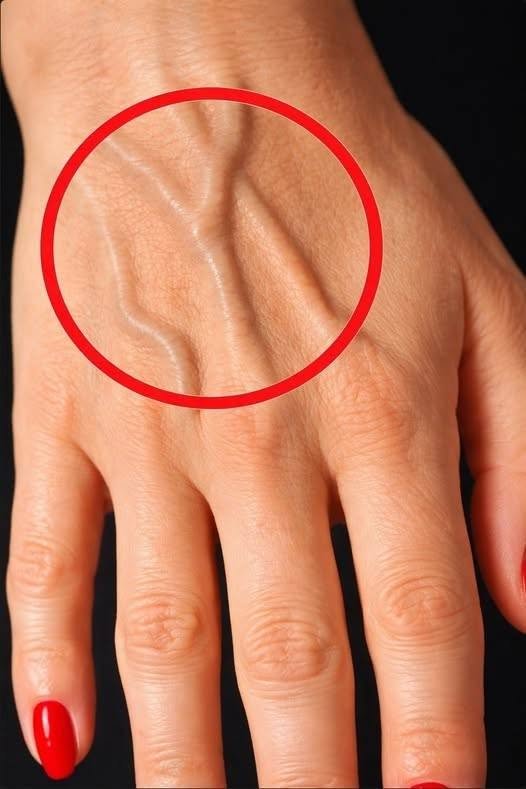
If Your Veins Are Visible, It Means You Are… Here’s What It Can Actually Tell You
Visible veins can be normal, but they may also reflect body composition, exercise, aging, or vein problems. Learn what prominent veins mean and when to worry.
Have you ever looked down at your arms or legs and suddenly noticed your veins seem much more visible than they used to be?
Maybe they’re standing out after a workout. Maybe they’re more noticeable because you’ve lost weight. Or perhaps you’ve started seeing blue or purple veins winding across your legs and wondered:
“Does this mean something is wrong?”
Not necessarily.
Visible veins can be completely normal. In fact, exercise, lower body fat, genetics, aging, skin thickness, temperature, and even the position of your body can make veins easier to see.
But there is an important distinction between normal visible veins and veins that are swollen, twisted, painful, or accompanied by other symptoms.
Prominent veins in your arms after lifting weights are not the same thing as bulging, rope-like veins in your legs accompanied by swelling and aching.
And a small cluster of spider veins isn’t automatically a sign of dangerous disease either.
The key is knowing what your veins look like, where they appear, whether they’ve changed, and what other symptoms are happening at the same time.
Here’s what visible veins may mean—and when it’s worth talking with a healthcare professional.
Medical disclaimer: This article is for general education and isn’t a diagnosis. If you have sudden swelling, severe pain, chest pain, trouble breathing, significant bleeding, or another potentially serious symptom, seek urgent medical care.
So, If Your Veins Are Visible, What Does It Mean?
The short answer is:
It depends.
Visible veins don’t point to one specific health condition.
For some people, prominent veins simply reflect their normal anatomy. Veins close to the surface of the skin are naturally easier to see, particularly when there is less tissue covering them.
Cleveland Clinic notes that bulging veins can become more noticeable with intense exercise, lower body fat, and aging because exercise increases blood flow, muscle development can make superficial veins more prominent, and aging can make skin thinner and less elastic.
On the other hand, veins that become enlarged, twisted, swollen, painful, or associated with leg swelling may indicate a vein disorder such as varicose veins.
So rather than asking, “Are my veins visible?”, a more useful question is:
“Have my veins changed, and do I have other symptoms?”
That distinction can tell you much more.
1. You May Simply Have a Low Amount of Body Fat
One of the most common reasons veins become more noticeable is simple anatomy.
The less tissue between your skin and superficial veins, the easier those veins may be to see.
This is one reason athletes and people with relatively low body fat often have prominent veins in their arms, shoulders, hands, or legs.
It doesn’t necessarily mean you’re healthier than someone whose veins aren’t visible.
It doesn’t necessarily mean you’re unhealthy either.
It’s largely about how your individual body is built.
A simple example
Imagine two people with the same amount of muscle.
One has more tissue covering the superficial veins.
The other has less.
The second person’s veins may appear much more prominent even though both people are perfectly healthy.
That’s why visible veins alone aren’t a reliable measure of fitness, body composition, or overall health.
2. You May Have Just Finished Exercising
Have you ever noticed your veins become much more prominent during or immediately after exercise?
That’s not unusual.
During exercise, blood flow increases to working muscles. Muscle contraction and changes in circulation can make superficial veins more noticeable.
Cleveland Clinic specifically identifies intense exercise as one reason veins may appear to bulge, particularly in the arms and hands.
This can be particularly noticeable after:
- Weightlifting
- Resistance training
- Running
- High-intensity workouts
- Push-ups
- Pull-ups
- Other strenuous exercise
You may notice veins that were barely visible before your workout suddenly looking much larger.
For many people, this is temporary.
As your body returns to its resting state, the veins may become less prominent.
When exercise-related veins deserve attention
The important distinction is whether the change occurs normally during exercise or whether a vein remains unusually swollen, painful, red, or tender afterward.
A persistently painful or abnormal vein should be evaluated rather than automatically blamed on exercise.
3. You May Have Lost Weight
Weight loss can change how visible your veins look.
If you lose a significant amount of body fat, superficial veins may become easier to see because there is less tissue covering them.
This can happen gradually.
Someone might spend months losing weight and then suddenly realize:
“I can see veins on my arms that I couldn’t see before.”
That doesn’t necessarily indicate a problem.
However, unexplained weight loss is different.
If you’re losing weight without trying, especially if the weight loss is substantial or accompanied by fatigue, weakness, appetite changes, digestive symptoms, fever, or other unusual symptoms, talk with a healthcare professional.
The concern in that situation isn’t the visible veins themselves.
It’s the unexplained weight loss.
4. You May Simply Have Naturally Prominent Veins
Genetics play a role in how your veins look.
Some people naturally have veins that sit closer to the skin’s surface.
Others have thicker or less translucent skin, making their veins harder to see.
Family characteristics, body structure, skin tone, age, and body composition can all influence how visible veins appear.
This means there isn’t a universal standard for what “normal” veins should look like.
One useful clue
If your veins have always been visible and haven’t suddenly changed, there’s generally less reason to assume something is wrong based on visibility alone.
A new change deserves more attention than a lifelong characteristic.
5. Aging May Make Your Veins More Noticeable
As you age, skin becomes thinner and loses some elasticity.
That can make structures underneath the skin—including veins—more visible.
Cleveland Clinic notes that aging can make veins easier to see because skin becomes thinner and less elastic over time.
At the same time, aging is also associated with a higher likelihood of developing varicose veins.
So an older adult may notice two different things:
Normal superficial veins becoming easier to see
and
Abnormal veins becoming enlarged or twisted.
They’re not necessarily the same thing.
6. You Could Have Varicose Veins
This is where visible veins become more medically significant.
Varicose veins are swollen, twisted, enlarged veins that usually appear in the legs, feet, or ankles.
They often look blue or purple and may have a rope-like, bulging appearance.
Unlike ordinary visible veins, varicose veins are associated with problems involving the valves inside veins.
Normally, valves help blood move in one direction toward the heart.
When those valves don’t function properly, blood can pool in the veins.
The increased pressure can cause veins to enlarge and become twisted.
Common symptoms of varicose veins include:
- Bulging or twisted veins
- Aching legs
- A feeling of heaviness
- Leg fatigue
- Itching around veins
- Cramping
- Swelling in the ankles or legs
- Skin changes around affected areas
Symptoms can become more noticeable after prolonged standing or sitting.
Are varicose veins dangerous?
Usually, varicose veins aren’t an emergency.
Many people have them without serious complications.
But they can sometimes be associated with problems such as inflammation, bleeding, skin changes, ulcers, and blood clots.
That’s why painful or progressively worsening varicose veins shouldn’t simply be ignored.
7. You May Have Spider Veins Instead
Not every visible vein is a varicose vein.
Spider veins are much smaller.
They can look like:
- Tiny red lines
- Blue or purple branches
- Web-like clusters
- Small networks of visible blood vessels
Cleveland Clinic explains that spider veins are small damaged blood vessels close to the skin’s surface and are usually harmless on their own.
They are often primarily a cosmetic concern.
However, spider veins can sometimes occur alongside chronic venous insufficiency or other circulation problems.
So context matters.
Spider veins vs. varicose veins
| Feature | Spider veins | Varicose veins |
|---|---|---|
| Appearance | Thin, web-like lines | Larger, twisted or rope-like |
| Typical color | Red, blue or purple | Often blue or purple |
| Size | Small | Larger and raised |
| Usually painful? | Often no | May cause aching or discomfort |
| Common location | Legs, face, hands | Legs and feet |
| Usually dangerous? | Usually harmless | Usually not dangerous, but complications can occur |
If you’re uncertain which type you have, a healthcare professional can examine them.
8. Your Veins Could Be Showing Signs of Chronic Venous Insufficiency
Another possibility is chronic venous insufficiency (CVI).
This occurs when veins in the legs have difficulty efficiently returning blood toward the heart.
Blood can pool in the lower legs, increasing pressure inside the veins.
Visible veins can be one sign.
Other symptoms may include:
- Leg swelling
- Aching
- Heaviness
- Skin discoloration
- Itching
- Changes in skin texture
- Varicose veins
- Ulcers in more advanced cases
Cleveland Clinic describes visible blood vessels, including spider veins, as an early visible stage of venous disease, while more advanced disease can involve varicose veins, swelling, skin changes, and ulcers.
The important clue is the combination
Visible veins alone don’t establish CVI.
But visible veins plus persistent swelling, aching, heaviness, skin discoloration, or sores are more worth discussing with a clinician.
9. You May Be Spending a Lot of Time Standing or Sitting
Your daily routine can influence how noticeable your leg veins become.
Long periods of sitting or standing can reduce efficient blood movement through the legs.
Over time, prolonged inactivity can contribute to vein problems, particularly when combined with other risk factors.
Cleveland Clinic and the NHS identify prolonged sitting or standing among factors associated with varicose veins.
This is especially relevant for people who:
- Work at a desk
- Drive for long periods
- Work retail
- Work in healthcare
- Work in factories
- Spend much of the day standing
- Frequently travel long distances
A practical habit
If your job keeps you seated for hours, get up periodically and move around when possible.
If your job requires prolonged standing, changing position and taking appropriate movement breaks may help.
Regular physical activity, including walking, can support circulation and may help reduce symptoms associated with varicose veins.
10. Pregnancy Can Make Veins More Visible
Pregnancy causes major changes in blood volume, hormones, and pressure within the abdomen.
These changes can make veins in the legs more noticeable and can contribute to varicose veins.
Mayo Clinic notes that increased blood volume during pregnancy can make leg veins larger, while hormonal changes can affect vein walls.
For many people, pregnancy-related vein changes improve after delivery.
However, significant pain, swelling, or other concerning symptoms should still be discussed with a healthcare professional.
When Visible Veins Are Probably Not a Problem
Visible veins are generally less concerning when:
- They’ve always been visible
- They’re small and flat
- They aren’t painful
- There is no unusual swelling
- There are no skin changes
- They become more visible after exercise
- They’re symmetrical on both sides
- They aren’t suddenly changing
For example, prominent veins on the hands of a healthy person after a workout can be completely normal.
Likewise, seeing veins more clearly after losing body fat isn’t automatically a medical warning.
The bigger concern is a new, persistent, or symptomatic change.
When You Should Make a Doctor’s Appointment
Consider talking with a healthcare professional if visible veins are accompanied by:
- Persistent leg pain
- Aching or heaviness
- Swelling
- Itching
- Skin discoloration
- Recurrent cramping
- A sore that doesn’t heal
- Bleeding from a vein
- A vein that becomes hard or tender
- Increasingly prominent varicose veins
Mayo Clinic recommends medical evaluation when varicose veins are causing concern or when self-care hasn’t improved symptoms.
The NHS similarly recommends seeking medical advice for symptomatic varicose veins, nonhealing sores, or bleeding veins.
When Visible Veins Could Signal an Emergency
Most visible veins aren’t emergencies.
But a sudden change accompanied by significant symptoms is different.
Seek urgent medical attention for sudden leg swelling or pain, especially if you have risk factors for blood clots.
And if leg swelling or pain is accompanied by:
- Chest pain
- Sudden difficulty breathing
- Fainting
- Severe shortness of breath
- Coughing up blood
seek emergency medical care.
These symptoms can occur with a pulmonary embolism, which requires immediate treatment.
A deep vein thrombosis (DVT) can cause leg pain and swelling and can potentially lead to a pulmonary embolism.
Don’t try to diagnose a blood clot at home.
If symptoms suggest an emergency, seek immediate professional care.
What About Visible Veins on Your Hands and Arms?
This is an important distinction.
Prominent veins in your hands and arms are often associated with completely ordinary factors.
They may become more visible because of:
- Exercise
- Muscle development
- Lower body fat
- Heat
- Genetics
- Aging
- Dehydration
- The position of your arms
Exercise can temporarily increase blood flow and make superficial veins stand out more.
But sudden changes deserve attention
If one arm suddenly becomes swollen, painful, discolored, or noticeably different from the other, don’t simply assume you’ve become more “vascular.”
A sudden one-sided change can have causes that require medical assessment.
Does Having Visible Veins Mean You’re Healthy?
Not necessarily.
This is one of the biggest myths worth clearing up.
Visible veins are not a reliable health score.
You can be very fit and have barely visible veins.
You can also have highly visible veins without being particularly athletic.
And someone with prominent varicose veins may have an underlying vein disorder.
In other words:
Visible veins don’t automatically mean you’re fit, thin, healthy, unhealthy, dehydrated, or sick.
They are simply a physical feature that needs to be interpreted in context.
Does Having Visible Veins Mean You’re Dehydrated?
Not automatically.
You may see prominent veins after exercise or when body composition changes, but visible veins alone aren’t enough to diagnose dehydration.
If you’re concerned about dehydration, pay attention to the broader picture, including fluid intake and symptoms such as significant thirst, dizziness, weakness, or reduced urination.
Don’t use vein visibility as your personal hydration test.
Does Having Visible Veins Mean You Have High Blood Pressure?
Not by itself.
Visible superficial veins aren’t a reliable way to determine whether your blood pressure is high.
High blood pressure often has no obvious symptoms, which is why measuring blood pressure is far more useful than trying to infer it from physical appearance.
If you’re concerned about blood pressure, have it properly checked.
Can Exercise Make Your Veins More Visible?
Yes.
This is one of the most common reasons veins temporarily become prominent.
During exercise, increased blood flow and changes in muscle volume can make superficial veins more noticeable.
This is especially obvious during resistance training.
If the veins become less prominent after you cool down and return to your normal activity level, that’s generally a different situation from a persistently enlarged, painful vein.
Can You Make Visible Veins Less Noticeable?
It depends on why they’re visible.
If your veins are naturally prominent because of genetics or body composition, there may be little reason—or need—to change them.
If you’re dealing with varicose veins, treatment depends on the severity and symptoms.
Lifestyle measures may help symptoms
For people with varicose veins, commonly recommended measures include:
- Regular physical activity
- Avoiding prolonged standing or sitting when possible
- Elevating the legs when resting
- Maintaining a healthy weight
- Avoiding smoking
The NHS recommends regular exercise, leg elevation, maintaining a healthy weight, and avoiding long periods of standing or sitting to help manage symptoms.
These measures may improve comfort, but they aren’t a guaranteed way to eliminate existing varicose veins.
Medical treatment is available
Depending on the condition, clinicians may consider treatments such as:
- Sclerotherapy
- Endovenous procedures
- Other minimally invasive treatments
- Surgery in selected cases
The appropriate option depends on the type and severity of vein problem.
Mayo Clinic notes that healthcare professionals may refer patients with troublesome varicose veins to specialists for evaluation and treatment.
Common Mistakes People Make About Visible Veins
Mistake #1: Assuming visible veins always mean you’re unhealthy
They don’t.
Normal anatomy and body composition can make veins very visible.
Better approach:
Look for associated symptoms and changes.
Mistake #2: Assuming visible veins automatically mean you’re fit
They don’t.
Vein visibility isn’t a fitness test.
Better approach:
Judge fitness using meaningful measures such as strength, endurance, cardiovascular health, physical activity, and medical indicators.
Mistake #3: Ignoring painful bulging veins
A prominent vein that’s painful, swollen, tender, or associated with skin changes deserves attention.
Better approach:
Have persistent or worsening symptoms evaluated.
Mistake #4: Treating every visible vein as a varicose vein
Spider veins, normal superficial veins, and varicose veins aren’t the same thing.
Better approach:
Consider their size, shape, location, and symptoms.
Mistake #5: Searching for a “miracle” vein remedy
Creams and supplements marketed online may promise dramatic results.
Be skeptical of claims that a product can permanently eliminate vein disease without proper evaluation.
Better approach:
Identify the underlying cause first.
A Simple Checklist: Should You Be Concerned?
Ask yourself these six questions:
1. Are the veins new?
A recent change is more noteworthy than a lifelong characteristic.
2. Are they painful?
Pain changes the picture.
3. Are they swollen or twisted?
Bulging, rope-like veins are more consistent with varicose veins than ordinary visible veins.
4. Is your leg swollen?
Persistent or sudden swelling deserves attention.
5. Are there skin changes?
Discoloration, itching, ulcers, or other changes can accompany venous disease.
6. Are symptoms getting worse?
Progressive symptoms deserve medical evaluation.
If the answer to several of these questions is yes, consider making an appointment with a healthcare professional.
Frequently Asked Questions
Is it normal for veins to be visible under the skin?
Yes. Visible veins can be completely normal, particularly in people with lower body fat, during or after exercise, or as skin becomes thinner with age. Genetics also influence vein visibility.
Does having visible veins mean you’re skinny?
Not necessarily. Lower body fat can make superficial veins more visible, but genetics, skin characteristics, muscle development, exercise, and other factors also influence how prominent veins appear.
Does visible veins mean you’re dehydrated?
No. Vein visibility alone cannot tell you whether you’re dehydrated. Other symptoms and your overall fluid intake are more useful when assessing hydration.
Are visible veins a sign of good fitness?
Not necessarily. Athletes may have prominent veins because of muscle development and low body fat, but vein visibility isn’t a reliable measure of fitness.
Why are my veins suddenly more visible?
Exercise, weight loss, heat, changes in body composition, aging, and other factors can make veins more noticeable. A sudden change accompanied by pain, swelling, discoloration, or other symptoms should be evaluated.
When should I worry about visible veins in my legs?
Consider medical evaluation if visible veins are accompanied by pain, swelling, heaviness, itching, skin discoloration, sores, bleeding, or progressive changes. These can occur with varicose veins or chronic venous disease.
Are varicose veins dangerous?
Most varicose veins aren’t dangerous, but complications can occur, including inflammation, bleeding, skin ulcers, and blood clots. Persistent symptoms should be discussed with a healthcare professional.
What causes veins to bulge on your hands?
Exercise, increased blood flow, muscle development, lower body fat, aging, genetics, and other factors can make hand veins more prominent.
Can visible veins disappear?
Sometimes. Veins that become prominent because of temporary factors such as exercise may become less noticeable afterward. Varicose veins, however, may persist and sometimes require medical treatment.
Should I see a doctor for spider veins?
Spider veins are usually harmless and often don’t require medical treatment. However, if they occur with pain, swelling, skin changes, or other symptoms, it’s reasonable to discuss them with a healthcare professional.
Visible Veins Don’t Tell the Whole Story
If your veins are visible, it doesn’t automatically mean you’re sick—and it doesn’t automatically mean you’re exceptionally fit either.
For many people, prominent veins are simply part of their anatomy.
Exercise, lower body fat, genetics, muscle development, aging, and skin characteristics can all make veins easier to see.
But there’s a different category of visible veins that deserves more attention: new, enlarged, twisted, painful, swollen, or symptom-producing veins.
Varicose veins can cause aching, heaviness, swelling, itching, and skin changes. In some cases, vein disease can lead to complications that require treatment.
The most useful rule is simple:
Don’t judge your health by how visible your veins are. Judge the change, the symptoms, and the bigger picture.
If your veins have suddenly changed or you’re experiencing pain, swelling, skin changes, nonhealing sores, or other unusual symptoms, speak with a qualified healthcare professional.
And if you develop sudden leg swelling or pain together with chest pain or difficulty breathing, seek emergency medical attention.
Your veins may be completely normal—but when they start behaving differently, they’re worth paying attention to.