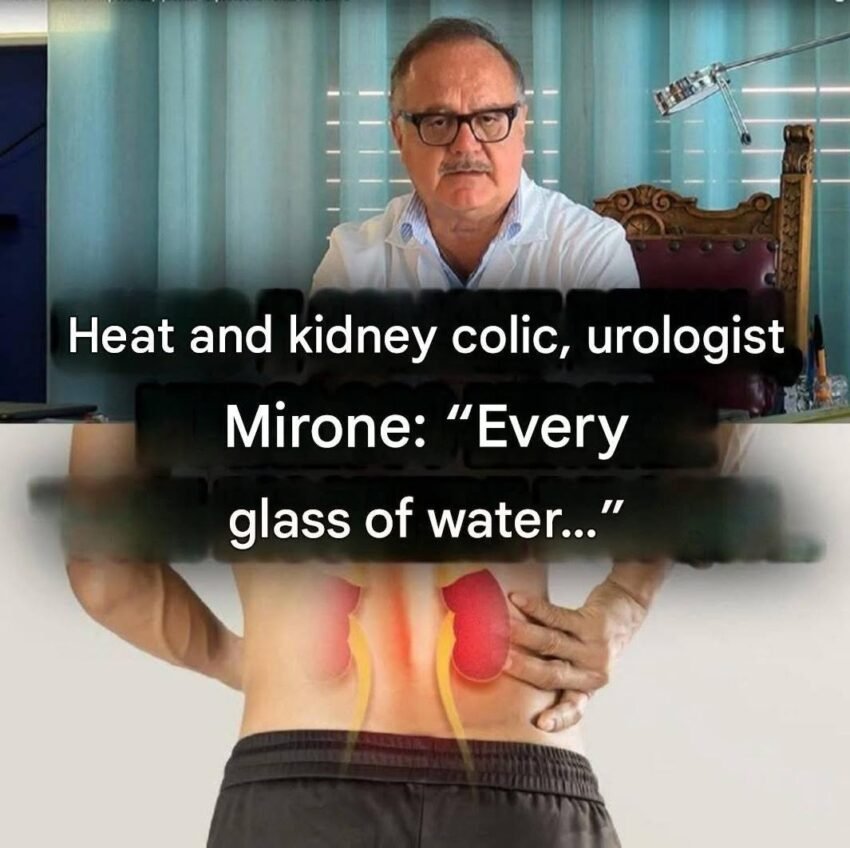
The Stone Age in Your Kidneys: Renowned Urologist Vincenzo Mirone Reveals Why Every Single Glass of Water Matters
We treat hydration like a casual background task. We sip water when our throats feel parched during a workout, grab a glass out of habit when we wake up, or ignore our thirst entirely until a nagging afternoon headache forces us to the kitchen tap.
Because dehydration doesn’t kill you in an hour, we treat it as an inconvenience rather than an existential threat to our cellular architecture.
Ask any leading urologist what happens when we chronically starve our bodies of water, and they won’t talk about dry skin or sluggish energy. They will point straight to the torture chamber of the urinary tract.
Professor Vincenzo Mirone, one of Europe’s most prominent urological surgeons and a towering authority in kidney health, has spent decades extracting jagged mineral weapons out of human bodies. His warning is stark, uncompromising, and scientifically absolute: when it comes to preventing kidney stones, every single glass of water you skip is an invitation to agony.
The Anatomy of a Crystal Prison: How Kidney Stones Form
To understand why Professor Mirone places such absolute importance on hydration, you have to look at what your kidneys actually do. Your kidneys are ultra-sophisticated biological filtration plants. Every day, they process roughly 150 to 200 quarts of blood, filtering out cellular waste, excess sodium, and metabolic toxins, and packaging them into about one to two quarts of urine for excretion.
When you fail to drink enough water, the volume of urine drops, turning that fluid stream into a hyper-concentrated chemical soup.
-
The Mineral Precipitation: Minerals and acid salts—primarily calcium, oxalate, uric acid, and cystine—normally remain dissolved in well-diluted urine. But when concentration peaks and hydration plummets, these microscopic ions can no longer stay suspended. They begin to stick together, forming microscopic crystals.
-
The Growth Cycle: Over weeks and months, these tiny crystalline seeds attract more mineral layers, growing into jagged, coral-like stones. When these stones attempt to pass from the kidney down through the narrow, sensitive ureter (a tube barely wider than a piece of spaghetti), the resulting blockage triggers renal colic—widely described as one of the most intense, blinding pains a human body can experience, often compared to childbirth or gunshot wounds.
The Mirone Perspective: Why Fluid Dynamics Is Your Best Defense
Professor Mirone has repeatedly emphasized in clinical forums and urological congresses that modern society’s shift toward sugary sodas, energy drinks, and highly processed diets has created an epidemic of preventable nephrolithiasis (kidney stone disease).
According to epidemiological data cited by global urology associations, kidney stone prevalence has surged by over 50% in recent decades, driven largely by chronic, low-grade dehydration and excessive dietary sodium.
Mirone’s core clinical philosophy strips away complex medical jargon: urine should look like pale lemonade, never apple juice. When your urine is dark, you are running your biological filtration plant on low tide, leaving sediment to settle in the collection system of your kidneys. Water is not just a thirst-quencher; it is the physical solvent that flushes mineral debris out of your body before it has a chance to crystallize into rock.
The Hidden Triggers: Beyond Just Not Drinking Water
While insufficient water intake is the primary catalyst, modern lifestyles introduce hidden co-factors that accelerate stone formation even if you think you are drinking “enough.”
-
The Sodium Trap: High-sodium diets (prevalent in processed foods and restaurant meals) force the kidneys to dump more calcium into the urine. If you eat salty foods without dramatically increasing your water intake, you are essentially mixing cement inside your kidneys.
-
The Sugar and Fructose Spike: High-fructose corn syrup and refined sugars alter mineral excretion, raising urinary calcium, oxalate, and uric acid levels simultaneously.
-
The Exercise Myth: Many fitness enthusiasts dehydrate themselves during intense gym sessions, losing liters of fluid through sweat without adequately replacing it, creating an acute concentration spike in their urinary tract.
Step-by-Step Guide: The Urologist-Approved Hydration Protocol
If you want to bulletproof your kidneys and eliminate your risk of developing kidney stones, don’t guess at your water intake. Follow this structured, urologist-recommended framework.
-
Calculate Your True Volume Target: Stop aiming for the generic “eight glasses a day.” Weigh yourself and ensure you are consuming enough fluid to produce a minimum of 2.0 to 2.5 liters of urine daily. For most adults, this means drinking between 3 to 4 liters of total fluids daily, depending on climate and activity level.
-
Inspect the “Lemonade Test”: Use the color of your urine as your real-time biofeedback metric. Pale straw or light lemonade indicates safety; dark yellow or amber demands an immediate glass of water.
-
Spread Your Intake Across the Clock: Gulping a massive bottle of water right before bed does not protect you; it just ruins your sleep. Sipping water steadily from morning until evening keeps your urine consistently diluted 24/7.
-
Deploy Citrate Shielding: Ask your doctor about incorporating fresh lemon juice into your water. Citrates bind to calcium in the urine, inhibiting crystal formation and acting as a natural chemical shield against stone development.
-
Monitor Sweat and Climate Adjustments: If you live in a hot climate or engage in heavy physical labor, your sweat loss increases dramatically. Scale up your water intake to compensate for the fluid loss that never made it to your bladder.
Comparative Analysis: Dehydrated Kidney vs. Hydrated Kidney
| Metric | Chronically Dehydrated Kidneys | Properly Hydrated Kidneys (Mirone Protocol) |
| Urine Volume & Color | Low volume, dark amber, highly concentrated | High volume, pale straw, crystal-clear dilution |
| Mineral Behavior | Ions supersaturate and bond into jagged stones | Minerals remain safely dissolved and flushed out |
| Infection Risk | High; stagnant urine breeds bacterial growth | Low; constant flushing prevents bacterial colonization |
| Renal Stress | High filtration friction and cellular strain | Smooth, effortless metabolic clearance |
Pros and Cons of Aggressive Hydration Tracking
Pros:
-
Total Stone Prevention: Effectively eliminates the primary mechanical cause of painful kidney stones.
-
Enhanced Metabolic Efficiency: Improves skin clarity, boosts cognitive focus, and supports overall organ detoxification.
-
Lower Blood Pressure: Proper hydration assists blood volume regulation and reduces cardiovascular strain.
Cons:
-
Inconvenience: Requiring frequent restroom breaks throughout your workday.
-
Overhydration Risk (Hyponatremia): Drinking excessive amounts of plain water without adequate electrolytes can dangerously dilute blood sodium levels (though rare in everyday life).
Common Mistakes and How to Avoid Them
-
Mistake 1: Waiting Until You Feel Thirsty. Relying on thirst as your primary hydration cue.
-
The Fix: By the time your brain registers thirst, your body is already in a mild state of cellular dehydration. Drink water proactively on a schedule.
-
-
Mistake 2: Counting Caffeinated Drinks and Sodas as Water. Assuming coffee, black tea, and sugary sodas hydrate you equally.
-
The Fix: While fluids contribute to total hydration, caffeinated beverages have mild diuretic effects, and sugary sodas actively promote stone formation due to high fructose and phosphoric acid content. Plain, filtered water remains king.
-
-
Mistake 3: Relying on Miracle Supplements. Buying expensive “kidney cleanse” teas or pills while continuing to drink only one glass of water a day.
-
The Fix: No supplement can replace simple physics. Dilution is the only scientifically proven cure for mineral precipitation.
-
Expert-Level Insights: The Biophysics of Crystal Agglomeration
Urological researchers note that kidney stones do not form overnight; they begin as tiny mineral clusters called Randall’s plaques that form deep in the renal papillae. When urine is persistently supersaturated due to low water volume, these plaques erode through the lining of the kidney, acting as a microscopic anchor where circulating calcium and oxalate crystals rapidly latch on and stack up. Maintaining high urinary flow prevents these crystals from finding a stable home to anchor onto, washing them away harmlessly down the drain.
Frequently Asked Questions
What is the single best drink to prevent kidney stones?
Plain, pure water is unmatched. However, adding fresh lemon or lime juice provides an extra layer of protection because citrus contains high levels of natural citrate, which actively prevents calcium crystals from binding together.
Can children get kidney stones from not drinking enough water?
Yes. Pediatric urologists are seeing an alarming rise in kidney stones among children and teenagers, driven heavily by sugary beverage consumption and a widespread lack of plain water intake.
Do calcium supplements cause kidney stones?
Paradoxically, no—provided you take them with meals. Dietary calcium binds to oxalates in your gut, preventing them from being absorbed into your bloodstream and traveling to your kidneys. However, taking calcium supplements without food can increase stone risk.
How do I know if I already have a small kidney stone?
Small stones might rattle around silently in the kidney without causing pain. Once a stone drops into the ureter and blocks urine flow, it triggers severe, wave-like flank pain radiating down to the groin, often accompanied by blood in the urine, nausea, and vomiting.
Does beer really help flush out kidney stones?
This is an old folk myth. While alcohol causes increased urination (diuresis), it also causes mild dehydration and introduces purines that raise uric acid levels, increasing your risk of forming new stones. Water is the only safe flush.
Are certain people genetically predisposed to kidney stones?
Yes. Family history plays a significant role. If your parents or siblings have suffered from kidney stones, your biological predisposition is higher, making strict hydration protocols even more non-negotiable for you.
Can green tea cause kidney stones?
Green tea contains oxalates, but moderate consumption does not typically cause stones unless you are highly susceptible and chronically dehydrated. Balancing green tea with plenty of pure water neutralizes the risk.
What should I do if I experience sudden flank pain?
If you experience severe, agonizing pain in your side and back that doesn’t change when you shift positions, accompanied by blood in your urine, go to urgent care or the emergency room immediately for imaging and pain management.
You hold the power to prevent one of the most agonizing medical emergencies known to humanity right in your hands. Listen to Professor Vincenzo Mirone’s lifelong warning: fill your glass, keep your filtration system flowing, and never underestimate the lifesaving power of water.