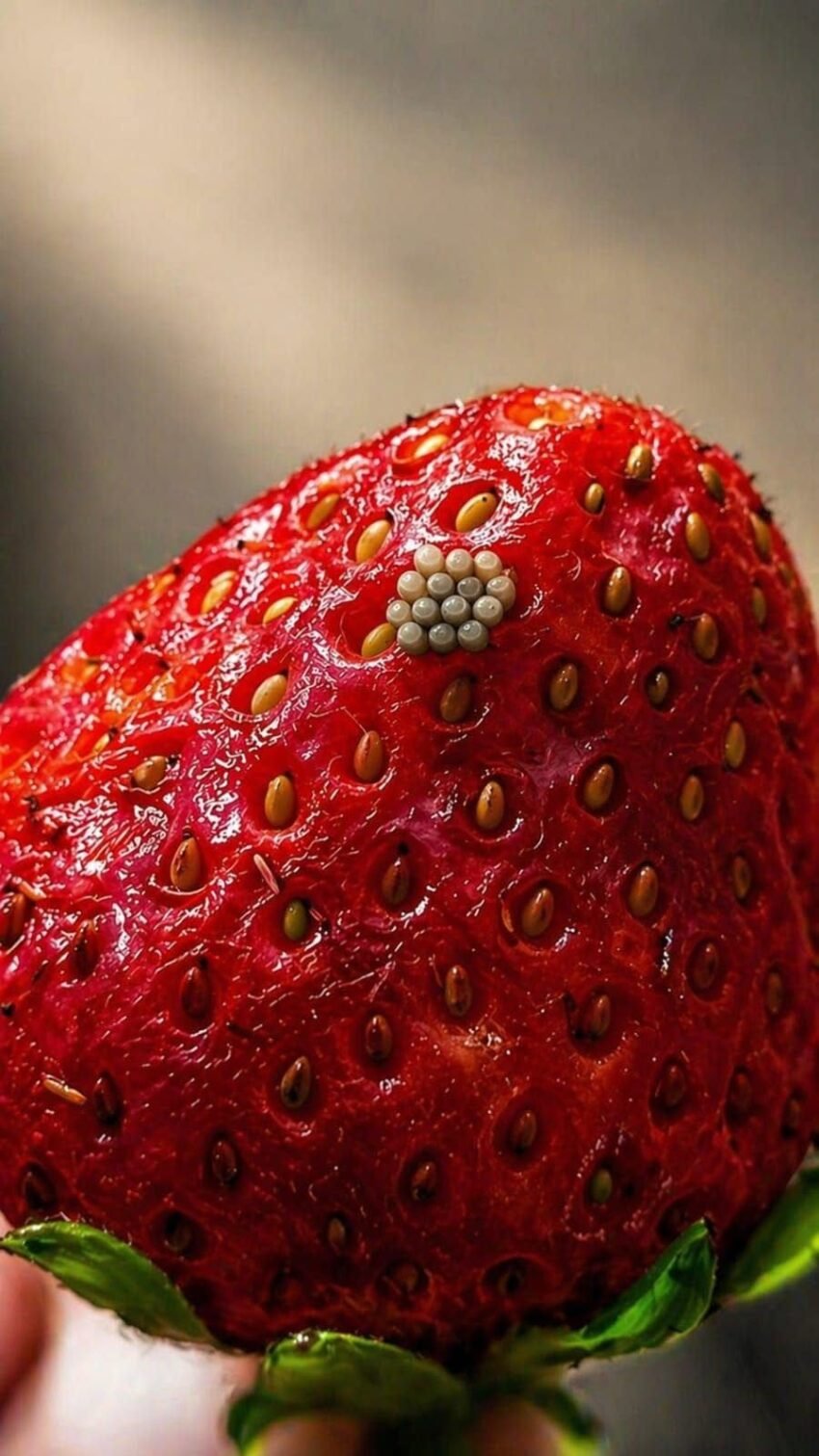
The Great Berry Salt-Water Panic: Should You Eat Them or Toss Them?
Picture this: You just bought a pristine, vibrant basket of fresh raspberries or strawberries from the farmers’ market. Feeling like a dedicated home chef, you decide to follow a popular internet hack: soaking your fresh fruit in a bowl of cold salt water to clean it.
You submerge the berries, step away for ten minutes, and return expecting a sparkling clean snack. Instead, you peer into the water and freeze in horror. Tiny, pale, thread-like things are actively wiggling their way out of the fruit.
Panic sets in. Do I throw out the entire bowl? Will I ever eat a berry again?
Before you pitch your expensive organic fruit straight into the outdoor garbage bin, let’s take a deep breath and look at what is actually happening in that bowl of water.
What Are Those Wiggling White Things?
Those tiny intruders aren’t malicious alien parasites; they are almost certainly the larvae of the Spotted Wing Drosophila (SWD) or a similar small fruit fly.
Unlike standard fruit flies that prefer rotting, overripe fruit sitting on your kitchen counter, the Spotted Wing Drosophila targets perfectly healthy, ripening fruit while it is still growing out in the fields. The female fly uses a saw-like organ to slice open the skin of a pristine strawberry, raspberry, or blackberry and deposit her microscopic eggs directly inside.
By the time you buy those berries from the store, the eggs have hatched into tiny larvae. They burrow deep into the plush flesh of the fruit, feeding quietly and remaining completely invisible to the naked eye—until a concentrated bath in salt water forces them to abandon ship.
Are They Dangerous to Eat?
Here is the truth that the internet sensationalist videos tend to leave out: Finding bug larvae in fresh produce is entirely normal.
Because fruits and vegetables grow outdoors in natural dirt, sunlight, and ecosystems, they are shared living spaces. Microscopic insects, spider mites, and fly larvae live on and inside crops every single day.
From a strict food safety standpoint, accidentally ingesting a few fruit fly larvae is completely harmless. Your stomach acid neutralizes them instantly, and they do not carry dangerous human pathogens. Entomologists and agricultural experts will readily tell you that most people consume small amounts of insect matter regularly without ever knowing it.
The issue isn’t safety—it’s psychology.
To Eat or Not to Eat: Your Three Options
When faced with the post-salt-soak horror, you generally have three choices depending on your personal tolerance levels:
-
The Pragmatist Route (Rinse and Eat): If the berries are still firm, bright, and otherwise fresh, and you can mentally separate a tiny larva from a poison hazard, drain the saltwater, rinse the berries thoroughly under clean running tap water, and eat them. They are structurally fine.
-
The Purist Route (Bake or Cook Them): If the psychological “yuck factor” makes raw snacking impossible, salvage the fruit by cooking it down. Toss the berries into a saucepan to make a homemade jam, bake them into a high-temperature muffin or pie, or blend them into a smoothie. Heat eliminates any lingering squeamishness.
-
The Anxious Route (Throw Them Out): If the sight of wiggling things has permanently ruined your appetite for fruit, throw them away. There is no shame in tossing a container if the thought of eating them is going to make you miserable.
Step-by-Step Guide: How to Properly Wash Fresh Berries
If you want to keep washing your fruit without having a heart attack every time, follow this optimized cleaning routine:
-
Use a Vinegar Bath Instead of Just Salt: While salt water forces bugs out, a mixture of water and white vinegar (about 3 parts water to 1 part vinegar) helps kill mold spores, bacteria, and wild yeast on the surface of the fruit, extending their shelf life.
-
Keep Soak Times Short: Don’t let delicate berries like raspberries soak for more than 5 to 10 minutes. Because berries act like tiny sponges, soaking them too long waterlogs them and causes them to turn mushy and moldy rapidly.
-
Dry Thoroughly Before Storing: After washing, lay your berries out in a single layer on a clean paper towel and pat them completely dry. Excess moisture is the primary cause of premature rotting in the fridge.
Frequently Asked Questions
Do organic berries have more bugs than conventional berries? Often, yes. Because organic farming restricts the use of synthetic chemical pesticides, crops are more frequently visited by local insects, meaning organic fruit is statistically more likely to harbor natural wildlife like fly larvae.
Can I see the larvae before soaking? Usually, no. Unless a piece of fruit is already bruised, soft, or decaying, early-stage larvae are microscopic and burrowed deep within the cell walls, making them completely invisible until a liquid flush forces them out.
Is it safe to feed salt-soaked berries to children? Yes, provided the berries are rinsed well. Kids eat minute amounts of insect matter on outdoor produce all the time; it is a normal part of eating real, un-synthesized food from the earth.
Finding wiggling larvae in a salt-water soak is an unsettling wake-up call about where our food comes from, but it is not a public health emergency. If you can stomach the science, rinse your berries and enjoy them. If not, bake them into a pie or toss them out—and maybe skip the saltwater soak next time for your own peace of mind!