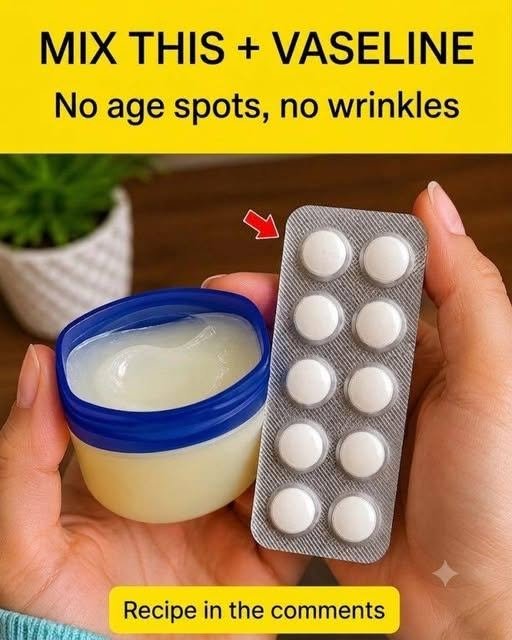
Mix This With Vaseline to Look Younger: The Truth Behind Viral Skincare Trends
Scrolling through social media, you have likely stumbled upon viral beauty hacks claiming that mixing petroleum jelly with specific kitchen ingredients or supplements creates an affordable fountain of youth. From blending Vaseline with vitamin E oil to mixing it with anti-aging serums, the internet is flooded with DIY anti-wrinkle elixirs.
Before raiding your pantry or bathroom cabinet to concoct a homemade anti-aging serum, it helps to understand what petroleum jelly can—and fundamentally cannot—do for aging skin.
The Science of Vaseline in Skincare
Petroleum jelly, originally discovered in 1859 and popularized as Vaseline, is a semi-solid mixture of mineral oils and waxes. Chemically, it functions as an occlusive agent.
-
The Occlusive Barrier: Vaseline does not add moisture to the skin; instead, it creates a waterproof, physical seal over the epidermis that reduces transepidermal water loss (TEWL) by up to 99%.
-
The “Slugging” Trend: This moisture-locking ability popularized the Korean skincare trend known as “slugging,” where a thin layer of petroleum jelly is applied as the final step of a nighttime routine to lock in hydrating serums and moisturizers.
What Happens When You Mix It With Anti-Aging Actives?
DIY skincare recipes often suggest mixing Vaseline with active ingredients like vitamin C, retinol, or crushed vitamin E capsules. Dermatologists advise caution with these mixtures for several structural reasons:
-
Molecule Trapping: Because Vaseline forms an impenetrable barrier, applying active chemicals directly underneath a thick layer of petroleum jelly can increase their penetration unpredictably, leading to severe skin irritation, redness, and contact dermatitis—especially with potent retinoids.
-
Lack of Penetration for Large Molecules: Many anti-aging compounds require specific pH levels or lipid carriers to penetrate the skin barrier effectively. Mixing them into a heavy petrolatum base often degrades their efficacy.
-
Comedogenic Misconceptions: While pure petroleum jelly is non-comedogenic (meaning its molecules are too large to clog pores), trapping heavy formulations or bacteria under an occlusive layer can trigger breakouts in acne-prone or combination skin types.
Safe, Dermatologist-Approved Ways to Use Vaseline for Anti-Aging
Instead of creating unstable chemical mixtures at home, you can leverage petroleum jelly safely within a structured anti-aging routine.
-
Layer, Don’t Mix: Apply your clinically formulated anti-aging serums (like hyaluronic acid, peptides, or low-dose retinoids) to clean skin first, let them absorb fully, and then apply a pea-sized amount of Vaseline lightly over dry areas to lock hydration in overnight.
-
Target Delicate Eye Areas: Use a microscopic amount of petroleum jelly around the outer corners of the eyes over an eye cream to minimize the appearance of fine, dehydration-induced crow’s feet by keeping the skin plump with moisture.
-
Protect Chapped Barrier Skin: Aging skin naturally produces less sebum, making the lipid barrier fragile. Using Vaseline during harsh winter months prevents windburn and micro-tears that accelerate skin aging.
Vaseline is a phenomenal, inexpensive tool for locking in moisture and supporting skin barrier repair, but it is not a biological wrinkle eraser on its own. Skip the messy kitchen chemistry mixtures that risk irritation, and instead use petroleum jelly as a protective topcoat over proven, scientifically backed skincare ingredients.