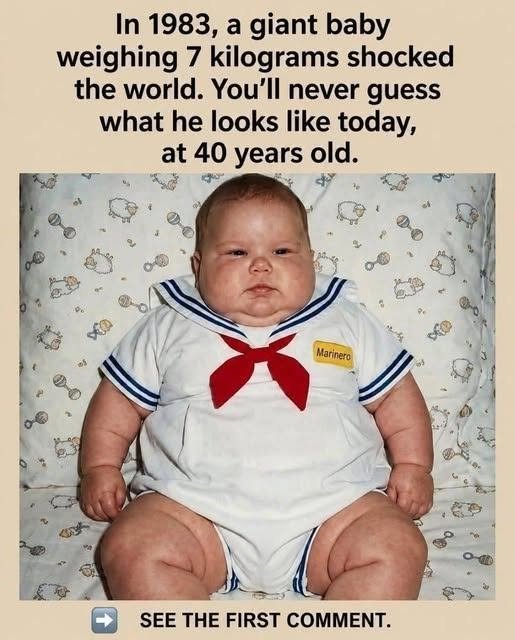
The Anatomy of Viral Misinformation: Unmasking the “7-Kilo Baby” Clickbait Machine
Headlines designed to exploit our deepest sense of shock value have become the dominant currency of the modern digital landscape. Every few weeks, a sensationalized post ripples across social media, featuring a dramatic thumbnail and a hook so bizarre it demands an immediate click. Among the most recurrent variants of this digital phenomenon is the legendary “7-kilo (or 15-pound) newborn” shock piece, engineered to extract maximum outrage, awe, and engagement from unsuspecting scrollers.
Unpacking how these viral loops operate reveals a sophisticated ecosystem of manipulation, shedding light on why hyperbole dictates our feeds and how we can safeguard our attention from manufactured outrage.
The Psychology Behind the Clickbait Hook
Why do extreme outliers—such as a baby the size of a five-month-old infant supposedly entering the world in a dramatic delivery room crisis—spread like wildfire? Behavioral psychologists point to several deeply ingrained cognitive triggers:
-
The Novelty Bias: The human brain is evolutionarily wired to prioritize anomalies. When a headline presents something vastly outside the statistical norm, our curiosity loops fire intensely, compelling us to investigate the discrepancy.
-
Weaponized Empathy: By centering vulnerable subjects—such as newborns and mothers facing medical complications—creators exploit raw protective instincts. Readers feel an immediate emotional investment, making them vastly more likely to share the link to warn or amaze others.
-
The Information Gap Theory: Popularized by behavioral economist George Loewenstein, this theory proves that when we perceive a gap between what we know and what we want to know, it creates a physical sense of deprivation. Clickbait thrives by opening wide gaps and withholding immediate closure.
Fact-Checking the Claims: Where Reality Meets Hyperbole
While medical literature does occasionally document rare cases of fetal macrosomia where infants approach or exceed extreme weight thresholds (often driven by maternal gestational diabetes or complex endocrine factors), the internet storytelling machine rarely deals in medical nuance.
Instead, real-world events are routinely stripped of their actual clinical context, exaggerated with stock photos of unrelated infants, and re-packaged with fabricated details. A legitimate, rare medical report transforms overnight into an amorphous, viral myth designed purely for advertising impressions. The sensationalized angles rely on the fact that most readers will consume the headline and share it without ever vetting the underlying source.
Comparing Ethical Journalism vs. Clickbait Architecture
| Metric / Feature | Ethical Health & Science Reporting | Clickbait Content Farms |
| Headline Tone | Objective, contextual, and medically accurate. | Hyperbolic, emotional, and deliberately vague (“You won’t believe…”). |
| Source Attribution | Cites peer-reviewed journals, verified hospital statements, or named experts. | Relies on anonymous sources, vague “reports,” or unverified social media screenshots. |
| Visual Content | Authentic photos or clearly labeled stock imagery. | Stolen, heavily manipulated, or completely unrelated sensational imagery. |
| Primary Objective | To inform, educate, and provide reliable context. | To maximize click-through rates (CTR) and ad revenue through shock value. |
The Invisible Cost of Engagement Culture
When we reward exaggerated transformation clickbait with our clicks, shares, and comments, we unknowingly fuel an economy that devalues truth. In the medical and wellness sectors, this misinformation can have dangerous downstream effects—ranging from spreading false health fears among expectant mothers to distorting public understanding of actual pediatric science.
Worse, it exhausts our collective attention span. Constant exposure to manufactured crises trains our brains to become cynical, numbing us to genuinely important breakthroughs or real-world crises that require our focus.
Expert-Level Insights: How to Spot and Defeat the Algorithm
-
Check the Source Domain: Legitimate extraordinary claims are covered by established wire services or peer-reviewed medical publications, not obscure lifestyle blogs with sensational domain extensions.
-
Reverse Image Search: If a dramatic photo accompanies a jaw-dropping claim, run a quick reverse image search. More often than not, the photo belongs to an entirely different context from years prior.
-
Pause Before Sharing: The simplest defense against clickbait is a five-second pause. Ask yourself: Does this headline make me feel an intense emotional spike? If the answer is yes, take a breath before amplifying it across your network.
Frequently Asked Questions
Are babies weighing 7 kilograms ever actually born?
Extremely rarely. While medical science documents instances of severe fetal macrosomia where babies are born weighing over 13 to 14 pounds due to severe maternal diabetes or rare genetic factors, a true 15-pound newborn is a profound statistical anomaly.
Why do websites rely so heavily on exaggerated transformation headlines?
Digital advertising models pay publishers based on impressions, clicks, and page dwell time. Shock value and emotional manipulation are proven, albeit manipulative, tactics to drive immediate traffic.
How can I tell if a viral health story is fake?
Look for a lack of specific hospital names, attending physician quotes, or dates. Vague phrases like “doctors were stunned” or “a mother made a shocking discovery” are classic hallmarks of unverified content farms.
Does sharing clickbait do any real harm?
Beyond cluttering social feeds, widespread medical hoaxes can spread dangerous health misconceptions and cause unnecessary anxiety for vulnerable populations like pregnant women.
What is the best way to clean up my social media feed?
Actively unfollow pages that rely on sensationalism, use the “hide” or “report as misleading” features, and consciously support science communicators and journalists who prioritize nuance over noise.
Action Checklist
-
What to do:
-
Verify extraordinary health and science claims through reputable medical databases or major news outlets.
-
Practice digital mindfulness by pausing before reacting to emotionally charged headlines.
-
Support ethical platforms that value depth and factual accuracy.
-
-
What to avoid:
-
Do not share articles based solely on sensational headlines without reading the text.
-
Avoid engaging with or commenting on rage-bait posts, which signals algorithms to distribute them further.
-
Do not substitute social media entertainment for real medical or scientific guidance.
-
The internet runs on attention, and transformation clickbait treats your curiosity as a commodity. By learning to spot the structural hallmarks of manufactured outrage, you can reclaim your feed, protect your peace of mind, and starve the misinformation machine.