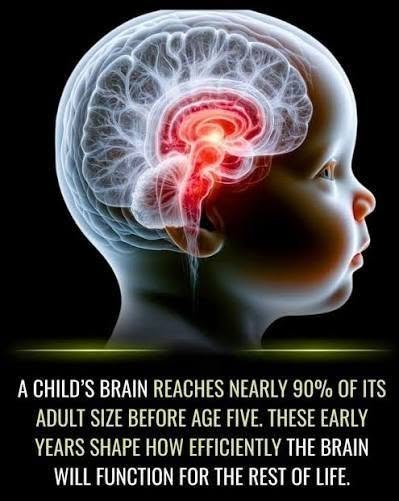
Architects of Tomorrow: How Early Neural Scaffolding and Habits Shape Our Future Actions
The Blueprint of the Mind: Why Initial Architectures Dictate What Comes Next
During early neurodevelopment, the structural pathways, architectural frameworks, and baseline activity patterns established in the human brain do not just support immediate survival—they dictate the trajectory of an entire lifetime.
A tremendous influence is what they have on future behaviors. From the ways we process emotional stress to the subconscious habits that govern our daily decision-making, the foundations laid during formative windows create a self-reinforcing loop that guides our actions decades down the line.
Understanding how these early patterns lock into place provides a profound look into human psychology, revealing why changing deeply ingrained habits feels like scaling a vertical cliff, and how conscious intervention can rewire the brain’s future path.
Phase 1: Synaptic Blooming and the Architecture of Experience
During pregnancy and the first year of life, the human brain undergoes an explosive phase often called “synaptic blooming”. A newborn enters the world equipped with roughly 85 to 100 billion neurons, yet these microscopic cells possess relatively few connections.
Over the subsequent months and years, every sensory input, emotional interaction, and environmental stimulus acts as an electrical current, carving out pathways between neurons.
-
The Use-It-Or-Lose-It Principle: Neural pathways that are repeatedly activated strengthen their myelin sheaths, turning microscopic trails into high-speed superhighways.
-
Pruning Inactive Connections: Pathways that go unused are systematically eliminated through synaptic pruning, streamlining the brain for maximum efficiency based on the specific environment it encounters.
This early biological scaffolding ensures that a child’s early environment leaves a permanent imprint. The brain effectively optimizes itself to survive the specific world it experiences first, baking those early survival strategies into automatic future behaviors.
The Compounding Effect of Behavioral Loops
As neural architectures mature, they transition from physical wiring into psychological habits. Human beings are fundamentally creatures of efficiency; the brain consumes roughly twenty percent of the body’s energy despite accounting for only two percent of its weight. To conserve vital metabolic resources, the brain loves to automate tasks.
When a behavior is repeated within a specific context, the basal ganglia—the brain’s procedural memory center—takes over, shifting the action from conscious thought to automatic execution. This is where early influences exert their greatest power.
-
The Comfort of Familiarity: Even dysfunctional or counterproductive behavioral patterns can feel “safe” to the brain simply because they are familiar and computationally cheap to run.
-
Reactive vs. Intentional Living: Without deliberate disruption, individuals default to the path of least resistance, acting out scripts written years or even decades prior.
Rewiring the Loop: How to Alter Future Trajectories
Recognizing that early architecture and past habits hold immense sway over future actions does not mean human beings are trapped by their biology. Neuroplasticity—the brain’s lifelong capacity to reorganize itself by forming new neural connections—ensures that change is always possible, though it requires intentional friction.
1. Introduce Pattern Interrupts
To break an automatic behavioral loop, you must introduce a conscious pause between a trigger and your response. This disrupts the default firing of established neural pathways, forcing the prefrontal cortex back online.
2. Leverage Micro-Consistency
Building new behavioral frameworks does not happen through massive, single-effort overhauls. Just as early neural pathways were carved through repeated, low-intensity stimuli, new habits are cemented through small, daily acts of consistency that slowly build competing superhighways of thought.
3. Optimize Your Environment
Because environmental cues are the primary triggers for automatic behaviors, redesigning your physical and social surroundings makes desired actions easier and undesired actions friction-heavy.
The architecture built into our minds early on casts a long shadow over our daily choices. By understanding the profound weight these foundational patterns hold, we gain the clarity needed to step out of autopilot, rewrite our automated responses, and deliberately shape the behaviors of tomorrow.