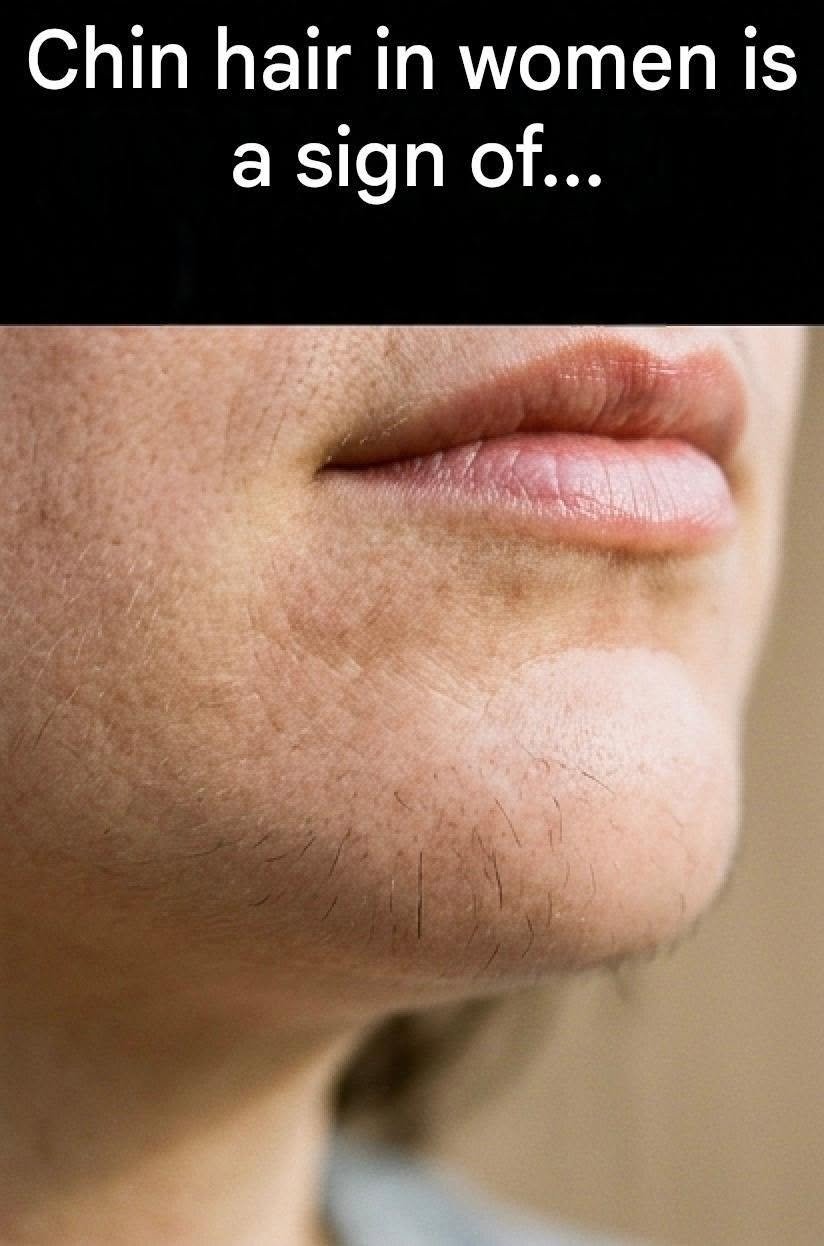
Chin Hair on a Woman Is a Sign of What? 9 Possible Reasons—and When to Get It Checked
A few coarse hairs on the chin can seem like a small thing—until you notice them in the mirror and start wondering what they mean.
Is it simply part of getting older? Could hormones be involved? Is it a sign of PCOS or another health condition?
chin hair in women is common and does not automatically mean something is wrong. But when facial hair becomes noticeably thicker, darker, or more widespread—especially when it appears suddenly—it can sometimes point to changes in hormone levels or another underlying condition.
This guide explains the most common reasons women develop chin hair, what is considered normal, when hormonal testing may make sense, and what you can do about unwanted facial hair.
Health note: This article is for general education and isn’t a diagnosis. If facial hair appears suddenly, becomes rapidly worse, or occurs alongside other symptoms such as irregular periods, severe acne, scalp hair loss, or voice changes, speak with a healthcare professional.
Why Do Women Get Chin Hair?
Women naturally have facial hair.
Fine, light-colored hairs called vellus hairs cover much of the face. As women age or hormone levels change, some of these hairs can become thicker, darker, and more noticeable.
When coarse, dark hair develops in areas where men typically grow terminal hair—such as the chin, upper lip, chest, abdomen, or back—it is often called hirsutism.
A few isolated chin hairs, however, do not necessarily mean hirsutism.
Sometimes it’s simply genetics and normal variation.
That’s why the question isn’t just:
“Do I have chin hair?”
A more useful question is:
“Has my facial hair changed, and are there other changes happening at the same time?”
That distinction can tell you much more.
1. Normal Aging and Hormonal Changes
One of the most common reasons women notice chin hairs is simply aging.
As women approach perimenopause and menopause, estrogen levels change. The balance between estrogen and androgens can shift, making some facial hairs more prominent.
This doesn’t necessarily mean the body is producing an abnormally high amount of testosterone.
Instead, the relative hormonal balance can change enough for certain hair follicles to respond differently.
You may notice:
- A few darker chin hairs
- Coarser hairs around the upper lip
- More facial hair than you had in your 20s
- Changes in body hair
- Thinning scalp hair at the same time
For many women, this is a normal part of aging.
In other words, finding one stubborn chin hair in your 40s or 50s isn’t automatically a medical warning sign.
2. Genetics
Sometimes the simplest explanation is family history.
If your mother, sisters, or other female relatives tend to develop noticeable facial hair, you may be more likely to experience it too.
Hair growth patterns vary significantly between individuals and populations.
Two women with similar hormone levels can have completely different amounts of facial hair because their hair follicles can respond differently to the same hormones.
This is an important point:
Hair growth isn’t determined by hormone levels alone.
Genetics, age, ethnicity, follicle sensitivity, and hormonal changes can all influence what you see.
So if you’ve always had a few chin hairs and nothing else has changed, genetics may be part of the explanation.
3. Polycystic Ovary Syndrome (PCOS)
When facial hair is accompanied by other hormonal symptoms, polycystic ovary syndrome (PCOS) is one possibility doctors may consider.
PCOS is a common hormonal condition associated with increased androgen activity in some women.
Possible signs include:
- Irregular menstrual periods
- Excess facial or body hair
- Persistent acne
- Scalp hair thinning
- Difficulty with ovulation
- Weight changes or difficulty managing weight in some women
But having chin hair doesn’t mean you have PCOS.
A woman can have facial hair without having the condition, and someone with PCOS may have only mild facial hair.
If chin hair appears alongside irregular periods or other symptoms, that’s when discussing the pattern with a healthcare professional becomes more worthwhile.
4. Increased Androgen Activity
Androgens are hormones that include testosterone.
Women naturally produce and use androgens too. Problems can arise when androgen levels become unusually high or when hair follicles become particularly sensitive to them.
Higher androgen activity can cause:
- Coarser facial hair
- Acne
- Increased body hair
- Scalp hair thinning
- Changes in menstrual cycles
Doctors may evaluate androgen levels when facial hair is significant or when other symptoms suggest a hormonal disorder.
But hormone testing isn’t automatically necessary for every woman who finds one chin hair.
The overall pattern matters.
5. Perimenopause
Perimenopause is the transitional period before menopause, and it can bring surprisingly noticeable changes in hair growth.
Hormones fluctuate during this stage rather than changing in one simple, predictable direction.
You may experience:
- Irregular periods
- Hot flashes
- Sleep changes
- Mood changes
- New facial hair
- Thinning scalp hair
- Changes in body-hair distribution
A woman who never had noticeable facial hair may suddenly discover several coarse hairs on her chin.
That can be unsettling.
But in the context of other normal perimenopausal changes, it isn’t necessarily a sign of disease.
6. Certain Medications
Some medications can influence hair growth.
Depending on the medication, dose, and individual response, unwanted hair growth can sometimes occur as a side effect.
Examples of medication categories that may be associated with increased hair growth include certain hormonal medicines, corticosteroids, and some other drugs.
If you noticed a significant change after starting a new medication, don’t stop taking it on your own.
Instead, ask the prescribing clinician whether the medication could be contributing.
There may be alternatives—or the facial hair may have an entirely different cause.
7. Hormonal Conditions Other Than PCOS
PCOS gets most of the attention, but it isn’t the only possible hormonal explanation.
Less commonly, excess facial hair can be associated with conditions affecting the adrenal glands or ovaries.
Examples can include disorders involving excess androgen production.
These conditions are uncommon compared with normal aging, genetics, or PCOS.
That’s why doctors look at the speed and severity of change rather than assuming that every case of chin hair represents a serious hormone disorder.
8. Idiopathic Hirsutism
Sometimes a woman has noticeable coarse facial hair without an obvious hormonal abnormality.
This is sometimes described as idiopathic hirsutism.
In simple terms, the hair follicles may be more sensitive to normal hormone levels.
Blood tests can therefore come back normal even though the hair growth is real and frustrating.
This is another reason not to assume that facial hair automatically means a hormone imbalance.
Your body can have normal laboratory results and still have follicles that respond strongly to ordinary levels of androgen.
9. Rarely, a More Significant Hormonal Problem
Rapidly developing facial hair deserves more attention than a few hairs that have appeared gradually over many years.
If a woman suddenly develops substantial coarse facial or body hair, particularly together with other signs of increased androgen activity, a clinician may investigate for an underlying hormonal condition.
Some warning signs include:
- Rapid progression of facial hair
- Deepening of the voice
- Significant scalp hair loss
- Increased muscle mass
- Severe new acne
- Major menstrual changes
- Increased body hair in previously unusual areas
These symptoms don’t prove that something serious is happening.
They simply make medical evaluation more important.
Is One Chin Hair Normal?
Absolutely.
In fact, many women occasionally discover a random coarse chin hair.
The hair may seem to appear overnight, but it usually didn’t grow from nothing overnight. It may have been too short or light to notice previously.
A single coarse hair doesn’t tell you much about your hormone health.
A sudden change in the overall pattern tells you considerably more.
Think about:
Number: Are there one or two hairs, or dozens?
Speed: Did they develop slowly or suddenly?
Location: Is it limited to the chin, or are other areas changing?
Other symptoms: Are your periods, skin, scalp hair, or voice changing too?
Those details give a much clearer picture.
Does Chin Hair Mean High Testosterone?
Not necessarily.
This is one of the most common misconceptions.
Facial hair can be influenced by androgen levels, but hair follicles also differ in how strongly they respond to those hormones.
A woman can have normal testosterone levels and still develop noticeable chin hair.
Conversely, someone with elevated androgen levels may not necessarily have dramatic facial hair.
That’s why a diagnosis can’t be made simply by looking at the hair.
If a doctor suspects a hormonal issue, they may consider your symptoms, medical history, menstrual pattern, medications, physical examination, and—when appropriate—laboratory testing.
When Should You See a Doctor?
You generally don’t need to panic over an occasional chin hair.
However, make an appointment if facial hair is:
- Appearing suddenly
- Increasing rapidly
- Becoming significantly thicker or darker
- Accompanied by irregular periods
- Accompanied by severe acne
- Associated with scalp hair thinning
- Appearing along with other signs of increased androgen activity
- Causing significant concern or distress
Rapid hormonal changes deserve evaluation because identifying the underlying cause can sometimes lead to effective treatment.
And there’s another reason to seek help: you don’t have to live with unwanted facial hair simply because it isn’t medically dangerous.
Treatment can be considered even when the cause is benign.
What Tests Might a Doctor Consider?
Testing depends on your symptoms.
A clinician may ask about:
- Your menstrual cycle
- When the hair growth started
- How quickly it changed
- Family history
- Medications and supplements
- Weight changes
- Acne
- Scalp hair loss
- Other body-hair changes
If hormonal causes are suspected, blood tests may sometimes be used to evaluate androgen levels and other hormones.
The exact tests depend on the clinical situation.
This is why ordering a large collection of hormone tests online isn’t necessarily useful. The right test at the right time is more informative than testing everything imaginable.
Can You Prevent Chin Hair?
Not always.
If the cause is genetics or normal aging, there may be no realistic way to prevent every new hair.
But treating an underlying hormonal condition may reduce excessive hair growth or prevent it from worsening.
Hair follicles also have their own growth cycles, so even after the underlying cause is addressed, existing coarse hairs may not disappear immediately.
That’s why treatment often involves patience.
The Best Ways to Remove Chin Hair
If your main concern is cosmetic, you have several options.
Tweezing
For a few isolated hairs, tweezing is simple and inexpensive.
Use clean tweezers and avoid repeatedly digging into the skin, which can cause irritation or ingrown hairs.
Shaving
Shaving does not make hair grow back thicker.
That common belief comes from the fact that freshly cut hair has a blunt tip, which can make it feel coarser as it grows.
A facial razor can be a practical option when several hairs need to be removed quickly.
Threading
Threading removes hair from the root and can be useful for facial areas.
It may cause temporary redness or irritation, particularly for sensitive skin.
Waxing
Waxing can remove multiple hairs at once but may irritate sensitive skin.
Be cautious if you’re using certain medications or topical treatments that make skin more fragile.
Laser Hair Removal
Laser treatment can provide longer-lasting hair reduction for appropriate candidates.
Results depend on hair color, skin tone, the type of laser used, hormonal factors, and the treatment plan.
It is best performed by a qualified professional who understands your skin and hair characteristics.
Electrolysis
Electrolysis targets individual hair follicles and can provide permanent hair removal when performed appropriately.
It can be particularly useful for individual facial hairs.
Because treatment requires targeting follicles individually, it can take multiple sessions.
What About Home Remedies?
This is where the internet gets noisy.
You’ll find claims that turmeric, lemon juice, sugar scrubs, toothpaste, egg whites, or other kitchen ingredients can permanently stop facial hair growth.
There is little reason to expect ordinary kitchen remedies to permanently destroy unwanted hair follicles.
Some can also irritate the skin.
Lemon juice, for example, can make skin more sensitive to sunlight and may cause irritation.
If you want lasting hair reduction, evidence-based cosmetic treatments are a better bet than aggressive DIY mixtures.
A Simple Decision Guide
| What you’re noticing | What it may mean | Sensible next step |
|---|---|---|
| One or two chin hairs | Normal variation or genetics | Remove cosmetically if desired |
| Gradually increasing hairs with age | Aging/perimenopause | Discuss if bothersome |
| Facial hair + irregular periods | Possible hormonal issue | Consider medical evaluation |
| Facial hair + acne/scalp thinning | Possible androgen-related changes | Talk with a clinician |
| Rapid, dramatic hair growth | Needs evaluation | Make a medical appointment |
| Facial hair after starting medication | Possible side effect | Ask prescriber |
| Normal hormone tests but persistent hair | Possible follicle sensitivity | Discuss treatment options |
Common Mistakes Women Make
Plucking repeatedly without cleaning tools
Dirty tweezers can introduce bacteria into irritated follicles.
Fix: Clean your tweezers regularly and avoid picking at the skin.
Assuming every chin hair means PCOS
It doesn’t.
Fix: Look at the whole symptom pattern.
Blaming shaving for thicker hair
Shaving doesn’t change the thickness or growth rate of the follicle.
Fix: Choose the removal method that suits your skin.
Taking hormone supplements without medical advice
“Balancing hormones” products can contain active ingredients and aren’t automatically safe.
Fix: Discuss supplements with a qualified healthcare professional.
Ignoring rapid changes
A few hairs over several years are very different from a sudden increase over a few months.
Fix: Pay attention to changes in speed and severity.
Chin hair on a woman is usually not a sign of one specific disease. It can be a completely normal result of genetics, aging, changing hormones, or naturally sensitive hair follicles.
However, significant or rapidly increasing facial hair—especially when combined with irregular periods, acne, scalp hair loss, or other hormonal changes—deserves a conversation with a healthcare professional.
And if you’re simply dealing with a few stubborn hairs, you don’t need to turn them into a health crisis.
Sometimes a chin hair is just a chin hair.
A few chin hairs are common, especially with age. Sudden or excessive facial hair combined with other hormonal symptoms is the situation that deserves medical attention.
If this article answered a question you’ve been quietly wondering about, share it with someone who might find it useful—and explore more evidence-based women’s health guides for practical, trustworthy information.