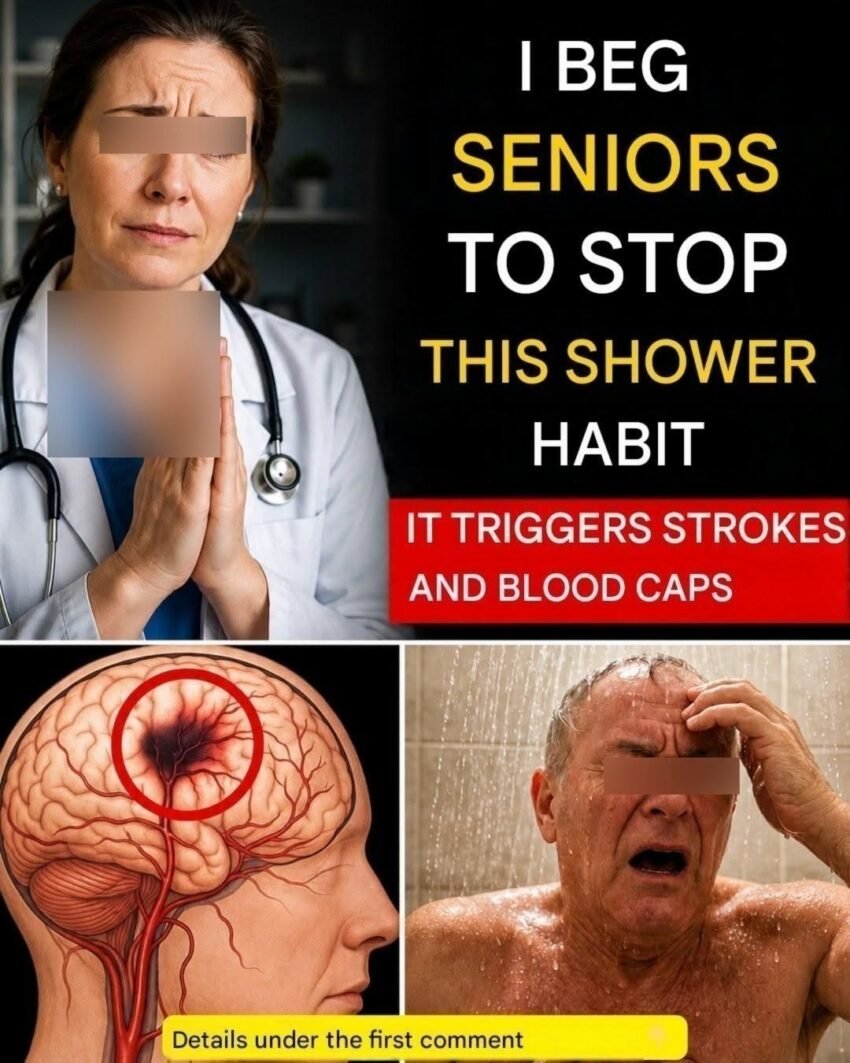
The Brain Doctor’s Warning: Could This Shower Habit Raise Stroke Risk at Night? Health Tips for Seniors
Seniors should know these shower safety tips, from water temperature and standing up slowly to recognizing warning signs that need urgent care.
A shower is supposed to be one of the safest, most relaxing parts of the day.
But for older adults, how you shower—especially late at night—can matter more than you might think.
Very hot water, sudden temperature changes, standing up too quickly, dehydration, and an unsteady bathroom environment can all contribute to dizziness, falls, or changes in blood pressure. For someone already vulnerable to stroke or cardiovascular problems, those risks deserve attention.
But there’s an important distinction that often gets lost in alarming online headlines:
There is no good evidence that one particular nighttime shower habit directly “causes” a stroke.
The bigger concern is that certain shower conditions can trigger dizziness or blood-pressure changes, potentially creating a dangerous situation for an older adult who is already at risk.
So instead of fearing the shower, let’s make it safer.
Why Nighttime Showering Can Be Different for Seniors
Your body doesn’t respond to heat and changes in position exactly the same way at age 70 as it did at 25.
As people get older, several things can affect how the body regulates blood pressure and balance. Medications, dehydration, heart conditions, diabetes, neurological disorders, and reduced balance can all increase vulnerability to dizziness.
Now add a hot shower.
Heat causes blood vessels near the skin to widen. In some people, that can contribute to a drop in blood pressure.
Then imagine turning off the water, stepping out, bending over, standing upright, and walking across a wet bathroom floor.
That’s several physical challenges happening almost at once.
For a healthy person, the body may compensate without a problem.
For a vulnerable older adult, the same sequence can produce lightheadedness—or a fall.
And a fall in a bathroom can be dangerous all by itself.
The Shower Habit Worth Rethinking: Extremely Hot Water
If there’s one nighttime shower habit seniors should reconsider, it’s using excessively hot water.
A steaming shower can feel wonderful, especially when you’re cold or trying to relax before bed.
But extremely hot water can cause blood vessels to dilate and may contribute to a temporary drop in blood pressure.
That matters more if you’re already taking blood-pressure medications or medications that affect fluid balance.
You may notice:
- Lightheadedness
- Weakness
- Feeling faint
- Blurred vision
- Unsteadiness
- A racing or uncomfortable heartbeat
These symptoms shouldn’t simply be dismissed as “getting old.”
They’re signals to stop, sit down somewhere safe, and allow your body to recover.
If this happens repeatedly, talk with your healthcare professional.
Why Standing Up Quickly After a Hot Shower Can Be a Problem
Here’s another detail that is easy to overlook.
You can feel perfectly fine while sitting or standing under warm water, then suddenly become dizzy when you step out.
This may relate to orthostatic hypotension, a drop in blood pressure that occurs when moving from sitting or lying down to standing.
Older adults are more likely to experience this, particularly when taking certain medications or dealing with dehydration or cardiovascular conditions.
A hot shower may make the situation worse for some people because heat can already lower vascular resistance.
A safer approach
When the shower is finished:
- Turn the water down rather than ending with extremely hot water.
- Hold a stable grab bar if one is available.
- Stand still for a moment.
- Make sure you feel steady before stepping out.
- Dry yourself while seated if balance is a concern.
- Move slowly toward your bedroom.
There’s no prize for getting out of the shower quickly.
Does Showering at Night Actually Cause Strokes?
This is where sensational health claims need some context.
A nighttime shower itself is not established as a direct cause of stroke.
A stroke occurs when blood flow to part of the brain is interrupted or when a blood vessel in the brain bleeds. Major stroke risk factors include high blood pressure, atrial fibrillation, diabetes, smoking, high cholesterol, obesity, and certain other medical conditions.
A shower doesn’t create those underlying risk factors.
However, extreme heat, dehydration, sudden blood-pressure changes, or fainting can create problems that are particularly concerning for someone with cardiovascular disease or other medical vulnerabilities.
So the sensible takeaway isn’t:
“Never shower at night.”
It’s:
“Make nighttime showers calm, moderate, well-lit, and safe.”
The Bathroom May Be a Bigger Risk Than the Shower
For seniors, the most immediate danger in the bathroom may not be stroke.
It may be falling.
Wet surfaces become slippery. Balance can deteriorate with age. Vision may be worse in low light. Getting in and out of a bathtub can require significant strength and coordination.
A fall can lead to fractures, head injuries, hospitalization, and loss of independence.
That makes bathroom safety an important part of healthy aging.
Simple improvements can make a big difference
Consider:
- Installing properly secured grab bars
- Using nonslip flooring or appropriate bath mats
- Keeping the bathroom well lit
- Removing loose rugs that slide
- Installing a shower chair if needed
- Using a handheld showerhead
- Keeping frequently used items within easy reach
- Keeping the floor dry
- Having a way to call for help if you live alone
Don’t rely on a towel rack as a grab bar.
It isn’t designed to support your body weight.
What About Showering Right Before Bed?
For many people, a comfortably warm shower before bed can be part of a relaxing nighttime routine.
The concern is not simply the clock.
The bigger issue is how your body responds to the shower.
If you routinely become dizzy after bathing, feel weak when you get out, or have nearly fallen, the routine needs attention regardless of whether it’s 7 p.m. or 11 p.m.
If you’re prone to nighttime dizziness, you may also want to avoid showering when you’re extremely tired.
Fatigue can make balance and reaction time worse.
Seniors Taking Blood Pressure Medication Should Pay Attention
Many older adults take medications that affect blood pressure.
That can be an important factor when evaluating dizziness after bathing.
Medications can include certain:
- Blood-pressure drugs
- Diuretics
- Heart medications
- Medications that affect the nervous system
This does not mean you should stop or change medication because you feel dizzy in the shower.
Quite the opposite.
If you repeatedly experience lightheadedness, tell your healthcare professional.
They can determine whether medication timing, dosage, dehydration, blood-pressure changes, or another problem may be contributing.
Never change prescription medication on your own.
Dehydration Can Make the Situation Worse
Dehydration can contribute to low blood pressure and dizziness.
Older adults may be particularly vulnerable because thirst can become less noticeable with age.
You don’t need to drink excessive amounts of water.
Instead, follow your healthcare professional’s guidance and maintain appropriate hydration throughout the day.
If you have heart failure, kidney disease, or another condition requiring fluid restriction, do not increase your fluid intake simply because a general health article recommends hydration.
Your individual medical instructions take priority.
The “Hot Shower Then Cold Air” Myth
You’ve probably heard that suddenly moving from a hot shower into a cold room can cause a stroke.
That claim is much too simplistic.
Temperature changes can influence blood vessels and cardiovascular responses, but a normal change from a warm shower to a cooler bathroom does not mean you’re going to have a stroke.
Still, older adults with heart or circulation problems may feel uncomfortable or dizzy with dramatic temperature changes.
A moderate bathroom temperature is generally more sensible than deliberately creating extreme heat and cold.
What Temperature Should a Senior Use?
There isn’t one universal “perfect” shower temperature.
The practical rule is simple:
Warm and comfortable—not extremely hot.
If the water makes your skin intensely red, leaves you feeling overheated, or makes you lightheaded, turn it down.
A thermometer can help if you have difficulty judging temperature, particularly if you have reduced sensation from conditions such as neuropathy.
And never use very hot water on areas with reduced sensation without checking carefully first. Burns can occur before you realize the water is too hot.
A Safer Nighttime Shower Routine for Seniors
Here’s a simple routine you can actually use.
Before the shower
Make sure the bathroom is adequately lit.
Remove anything that could cause you to trip.
Have your towel within easy reach.
If you’re prone to dizziness, consider showering when another person is nearby.
During the shower
Use comfortably warm water.
Avoid prolonged exposure to very hot water.
Use a shower chair if standing for several minutes is difficult.
Keep essential items within reach so you don’t have to twist or stretch unnecessarily.
After the shower
Turn the water down before finishing.
Stand up slowly.
Hold a properly installed grab bar if necessary.
Sit down if you feel dizzy.
Dry yourself thoroughly.
Put on secure footwear rather than walking barefoot across a wet floor.
Then move slowly through the house.
This routine takes little extra time but can dramatically improve bathroom safety.
What If You Feel Dizzy in the Shower?
Don’t try to “push through it.”
This is one situation where stopping is smarter than being stubborn.
If you’re dizzy:
Sit down immediately if you can do so safely.
If you can’t sit, hold onto a stable support and avoid walking.
Once you’re safe, give yourself time to recover.
If dizziness is severe, persistent, recurrent, or accompanied by other concerning symptoms, seek medical advice.
And if you actually faint, that deserves medical evaluation.
Fainting can have several causes, some of which require attention.
Stroke Warning Signs Every Senior Should Know
Regardless of when you shower, knowing the warning signs of stroke can save precious time.
A useful approach is BE FAST:
B — Balance: Sudden loss of balance or coordination.
E — Eyes: Sudden vision changes.
F — Face: Ask the person to smile. Is one side of the face drooping?
A — Arms: Ask them to raise both arms. Does one drift downward?
S — Speech: Is speech slurred, strange, or difficult to understand?
T — Time: If these symptoms appear suddenly, call emergency services immediately.
Other possible stroke symptoms include sudden numbness or weakness, particularly on one side of the body; sudden confusion; trouble speaking or understanding; sudden severe headache; or sudden difficulty walking.
Do not wait to see whether the symptoms disappear.
In the United States, call 911 for suspected stroke.
What If Symptoms Go Away?
Don’t assume you’re safe simply because symptoms disappear.
A temporary episode of stroke-like symptoms can represent a transient ischemic attack (TIA), sometimes called a “mini-stroke.”
A TIA can be a warning that a major stroke may follow.
If you experience sudden neurological symptoms that resolve, seek urgent medical evaluation.
The goal is not to diagnose yourself in the bathroom.
The goal is to recognize that sudden neurological changes require immediate attention.
A Realistic Scenario
Imagine a 76-year-old woman who takes medication for high blood pressure.
She showers late at night because it’s part of her bedtime routine.
The water is extremely hot.
She feels relaxed, turns off the shower, stands up quickly, and suddenly becomes lightheaded.
Instead of sitting down, she tries to walk toward the sink.
Her feet slide.
Now what started as an ordinary shower has become a fall risk.
The better routine would have been simple:
Moderate water temperature. Grab bar. Slow transition. Sit down if dizzy. Don’t walk until steady.
That’s the real lesson.
Small environmental changes can prevent big problems.
Common Shower Mistakes Seniors Should Avoid
Taking extremely hot showers
Why it’s a problem: Heat can contribute to blood-vessel dilation and dizziness.
Better approach: Use comfortably warm water.
Standing up suddenly
Why it’s a problem: A rapid position change can cause a drop in blood pressure.
Better approach: Change positions slowly.
Showering in darkness
Why it’s a problem: Poor visibility increases fall risk.
Better approach: Use bright, even lighting.
Holding onto unstable objects
Why it’s a problem: Towel racks and shower doors aren’t reliable support.
Better approach: Install properly secured grab bars.
Locking the bathroom door when you’re vulnerable to falls
Why it’s a problem: If you fall or become ill, someone may have difficulty reaching you.
Better approach: Consider privacy and emergency access based on your circumstances, especially if you live alone.
Ignoring repeated dizziness
Why it’s a problem: Recurring dizziness may have an underlying cause.
Better approach: Tell your healthcare professional.
What Seniors Can Do to Lower Stroke Risk Overall
The most meaningful stroke prevention strategies have little to do with showering.
Focus on the established risk factors.
Keep blood pressure under control
High blood pressure is a major risk factor for stroke.
If you’ve been prescribed blood-pressure medication, take it as directed and monitor your blood pressure as recommended.
Manage atrial fibrillation
Atrial fibrillation can increase the risk of blood clots and stroke.
If you’ve been diagnosed with it, follow your treatment plan carefully.
Don’t smoke
Smoking damages blood vessels and increases cardiovascular risk.
Stopping smoking is one of the most valuable steps you can take for vascular health.
Stay physically active
Regular physical activity can support blood pressure, cardiovascular health, balance, and overall function.
Your activity level should match your abilities and medical situation.
Manage diabetes and cholesterol
Keeping blood sugar and cholesterol in a healthy range can reduce cardiovascular risk.
Work with your healthcare team on targets appropriate for you.
Should Seniors Stop Showering at Night?
No—not simply because it’s nighttime.
If you enjoy an evening shower and it doesn’t cause dizziness or other symptoms, there’s generally no reason to assume that nighttime bathing is inherently dangerous.
The goal is to make the routine safer.
Use moderate water temperature.
Avoid sudden movements.
Keep the bathroom well lit.
Reduce slipping hazards.
Use assistive equipment when appropriate.
And pay attention to unusual symptoms.
That’s far more useful than avoiding nighttime showers altogether.
Frequently Asked Questions
Can a hot shower cause a stroke?
A hot shower is not established as a direct cause of stroke. However, very hot water can contribute to blood-vessel dilation and blood-pressure changes, which may cause dizziness or fainting in susceptible people. Seniors with cardiovascular conditions should avoid excessively hot showers.
Is it dangerous for seniors to shower at night?
Not necessarily. The time of day isn’t the main issue. Bathroom safety, water temperature, balance, medications, hydration, and individual medical conditions matter more.
What is the safest shower temperature for older adults?
Use comfortably warm water rather than extremely hot water. People with reduced sensation should be especially careful because they may not immediately recognize that water is too hot.
Why do I feel dizzy after a hot shower?
Heat can cause blood vessels to widen, which may contribute to a temporary drop in blood pressure. Standing up quickly afterward can make the feeling worse. Repeated or severe dizziness should be discussed with a healthcare professional.
Should seniors sit while showering?
A shower chair can be helpful for someone with balance problems, weakness, fatigue, or a history of falls. Ask a healthcare professional or occupational therapist if you’re unsure what equipment is appropriate.
Can dehydration cause dizziness during a shower?
Dehydration can contribute to low blood pressure and dizziness, and heat may make symptoms more noticeable. However, people with conditions requiring fluid restriction should follow their clinician’s instructions rather than increasing fluids independently.
What are the first warning signs of a stroke?
Sudden balance problems, vision changes, facial drooping, arm weakness, speech difficulties, sudden confusion, or a sudden severe headache can be warning signs. Call 911 immediately if stroke is suspected.
What should I do if I become dizzy in the shower?
Stop moving and get into a safe seated position if possible. Don’t attempt to walk while dizzy. If symptoms are severe, persistent, recurrent, or accompanied by neurological symptoms, seek medical attention.
Can a TIA happen during a shower?
A TIA can occur at any time, including while someone is showering. Sudden stroke-like symptoms that disappear still require urgent medical evaluation.
Is a shower or bath safer for seniors?
It depends on the person’s mobility, balance, bathroom setup, and equipment. A walk-in shower with properly installed grab bars and a suitable shower chair may be safer for someone who has difficulty stepping over a bathtub wall.
Senior Shower Safety Checklist
Before showering
- Check that the bathroom is well lit.
- Make sure the floor is dry.
- Remove loose rugs or other tripping hazards.
- Place necessary items within easy reach.
- Use properly installed grab bars if needed.
- Consider a shower chair if standing is difficult.
- Avoid showering when severely fatigued.
During the shower
- Use warm—not extremely hot—water.
- Don’t stand up or turn suddenly.
- Avoid reaching too far.
- Sit if you feel weak or unsteady.
- Keep a phone or emergency alert system accessible when appropriate.
After the shower
- Turn the water down before finishing.
- Stand slowly.
- Pause before walking.
- Dry yourself carefully.
- Use secure footwear.
- Report recurring dizziness to your healthcare professional.
Remember
- Don’t assume a nighttime shower causes strokes.
- Don’t ignore sudden neurological symptoms.
- Don’t wait for stroke symptoms to disappear.
- Call 911 immediately if a stroke is suspected.
Final Thoughts
The shower isn’t something seniors need to fear.
In fact, bathing can remain a perfectly healthy part of a nighttime routine well into older age.
The important thing is understanding how heat, blood pressure, balance, medications, dehydration, and bathroom hazards can interact.
The most useful change may be surprisingly simple: turn down the water temperature, slow down when getting out, and make the bathroom safer.
And don’t confuse a viral health warning with established medical evidence. A shower itself isn’t known to trigger a stroke simply because it happens at night.
What matters much more is controlling genuine stroke risk factors and recognizing the warning signs when they occur.
Seniors don’t need to avoid nighttime showers. Use comfortably warm water, move slowly, prevent falls, and take sudden neurological symptoms seriously. If someone develops sudden facial drooping, arm weakness, speech difficulty, vision problems, or loss of balance, call 911 immediately.
If this guide helped you or someone you care about, share it with another family member or caregiver. A few simple safety changes can make everyday routines much safer.