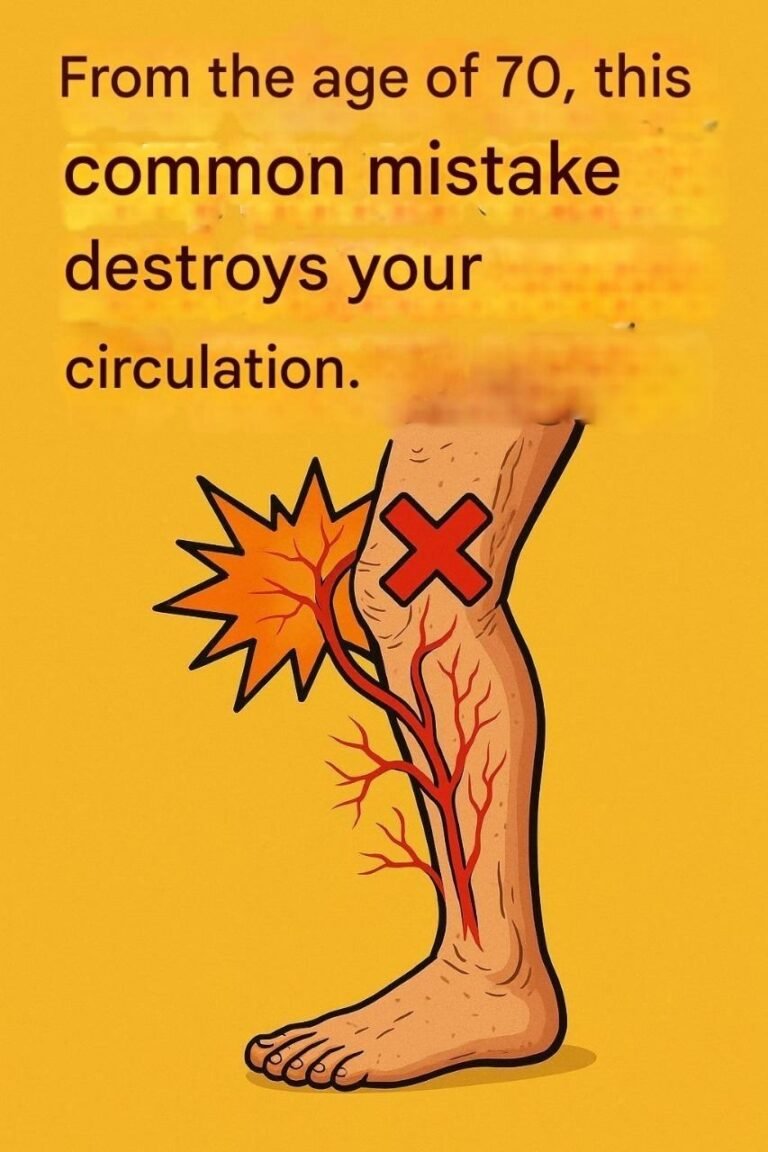
After 70 Years, This Common Mistake Could Be Ruining Your Circulation (And You Don’t Even Realize It)
A surprisingly common daily habit may be harming circulation, especially as we age. Learn what it is, why it matters, and simple fixes to improve blood flow.
We often think circulation problems happen suddenly — heart attacks, cold hands, or numb legs.
But the truth is more subtle.
For decades, a seemingly harmless habit quietly compromises blood flow — and many Americans don’t even notice until later in life.
This is especially true as we hit our 60s and 70s, when circulation naturally slows.
Let’s break down the mistake, why it matters, and how to fix it before it impacts your health.
What Happens to Circulation as You Age
As we get older, several natural changes occur:
-
Blood vessels stiffen
-
Heart efficiency can decrease
-
Veins may weaken, causing swelling or varicose veins
-
Blood flow to extremities slows
Add in a daily habit that compounds these effects, and you can end up with chronic issues like:
-
Cold hands or feet
-
Swelling in the legs
-
Fatigue
-
Tingling or numbness
The Common Mistake That Ruins Circulation
It’s simple, widespread, and often overlooked:
Sitting for prolonged periods without moving.
Research shows that sitting too long — whether at a desk, on the couch, or in a car — significantly slows blood flow in the legs and can increase the risk of:
-
Peripheral artery disease
-
Blood clots
-
Varicose veins
Even small, repetitive interruptions in blood flow over decades can make a noticeable difference by the time you’re 70.
Why Sitting Is So Dangerous
-
Leg Muscles Don’t Contract – When you walk, your calf muscles act as a pump, pushing blood back toward the heart. Sitting stops this natural circulation.
-
Vein Valves Get Strained – Veins have one-way valves. Sitting long-term can weaken them, causing blood to pool.
-
Blood Flow Slows – Reduced movement can increase clotting risk and slow nutrient delivery to tissues.
Signs Your Circulation May Be Compromised
-
Persistent cold feet or hands
-
Swelling around ankles
-
Tingling, numbness, or a heavy feeling in the legs
-
Visible veins that seem more pronounced
-
Fatigue after minimal exertion
Easy Daily Fixes That Restore Blood Flow
1. Stand and Move Every Hour
Even 3–5 minutes of walking or stretching dramatically improves circulation.
2. Elevate Your Legs
Lie down and raise your legs above heart level for 10–15 minutes to encourage venous return.
3. Leg Exercises at Your Desk
-
Ankle circles
-
Heel raises
-
Leg extensions
These activate the calf muscle pump.
4. Stay Hydrated
Proper hydration helps maintain blood volume and flow.
5. Wear Supportive Compression Socks
These gently compress the legs, helping blood move back toward the heart.
6. Prioritize Cardiovascular Activity
Walking, cycling, or swimming several times a week strengthens the heart and blood vessels.
Real-Life Scenario
Meet Jane, 72. She worked a desk job for 40 years.
-
Rarely took breaks
-
Loved binge-watching TV in the evenings
She noticed her legs often felt heavy and cold. After introducing 5-minute walking breaks every hour and leg stretches before bed, she reported:
-
Less swelling
-
Warmer feet
-
More energy
A small habit change made a massive difference.
Quick Lifestyle Checklist for Healthy Circulation
✔ Move every hour
✔ Stretch and flex calves
✔ Walk 20–30 minutes daily
✔ Elevate legs when resting
✔ Stay hydrated
✔ Wear supportive footwear or compression socks
Frequently Asked Questions
1. Is circulation naturally worse after 70?
Yes, but lifestyle habits can either worsen or improve it.
2. Can short walks really help?
Absolutely. Even a few minutes of movement prevents blood pooling.
3. What foods support circulation?
Foods rich in omega-3s, antioxidants, and nitrates — like salmon, berries, and leafy greens — may help.
4. Is sitting on the couch bad if I exercise later?
Prolonged sitting can counteract some exercise benefits, so regular movement throughout the day is key.
5. Can compression socks prevent issues?
They help, especially if combined with movement and leg elevation.
For 70 years, many of us unknowingly compromise circulation with long periods of inactivity.
The good news: small, consistent changes can reverse decades of strain.
-
Stand more
-
Walk more
-
Stretch more
Your legs, heart, and overall health will thank you — and you might be surprised how much better you feel with just a few simple adjustments.
Start today: take a 5-minute walk right now and let your blood flow. Your future self will be grateful.