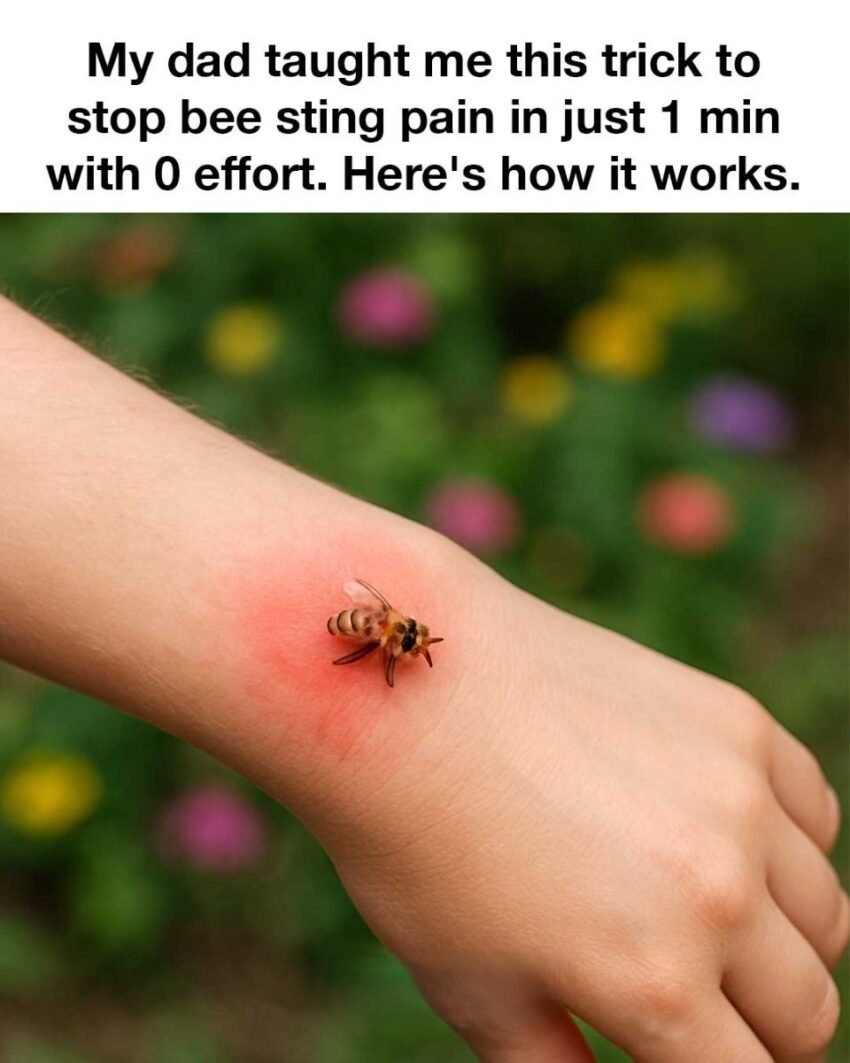
Bee Stings: A Simple Trick That Can Help Ease the Pain Quickly
Got stung by a bee? Learn a simple trick that may help reduce pain quickly, plus safe first-aid steps, when to seek medical help, and common mistakes to avoid.
The Sudden Pain of a Bee Sting
A bee sting can happen when you least expect it — during a walk in the park, gardening in the backyard, or enjoying a summer picnic.
One moment everything is fine, and the next you feel a sharp, burning pain on your skin.
Typical symptoms appear almost immediately:
-
Sudden stinging pain
-
Redness and swelling
-
A small raised bump
-
Burning or itching sensation
For most people, bee stings are painful but temporary. With the right quick response, the discomfort can often be reduced within minutes.
One simple household trick that many people use is surprisingly effective when applied correctly.
The Simple Trick: Use a Cold Compress Immediately
One of the quickest and safest ways to reduce bee sting pain is applying a cold compress or ice pack.
Why It Works
Cold temperatures help by:
-
Reducing inflammation
-
Slowing nerve signals that cause pain
-
Minimizing swelling
-
Numbing the affected area
Because bee venom triggers an inflammatory reaction in the skin, cooling the area can quickly ease discomfort.
How to Use the Cold Compress Method
Follow these simple steps for fast relief.
Step 1: Remove the Stinger
If the stinger is still in the skin, gently remove it as soon as possible.
You can scrape it out using:
-
A credit card
-
Your fingernail
-
The edge of a clean object
Avoid squeezing it with tweezers if possible, as this may release more venom.
Step 2: Wash the Area
Clean the sting site using:
-
Mild soap
-
Cool water
This helps prevent infection and removes surface venom.
Step 3: Apply Ice
Wrap ice or a cold pack in a cloth and place it on the sting.
Leave it there for 10–15 minutes.
Most people notice that the burning sensation starts easing within a minute or two once the area becomes cool.
Other Simple Remedies People Use
While ice is often the quickest solution, several other common home remedies may help soothe a sting.
Baking Soda Paste
Mix baking soda with a few drops of water to create a paste.
Apply it to the sting area to help neutralize irritation.
Honey
Honey has natural soothing properties and may help calm the skin.
Apply a small amount and cover loosely with a bandage.
Aloe Vera
Aloe vera gel can help:
-
Cool the skin
-
Reduce redness
-
Soothe itching
Over-the-Counter Creams
Some people use anti-itch creams or mild antihistamines if swelling or itching becomes uncomfortable.
Why Bee Stings Hurt
Bee venom contains compounds that trigger pain and inflammation.
The body reacts by sending immune cells to the area, which causes:
-
Swelling
-
Redness
-
Warmth
-
Tenderness
For most individuals, this reaction improves within a few hours to a day.
When a Bee Sting Can Be Serious
Although most bee stings are harmless, some people may experience severe allergic reactions.
A serious reaction is called **Anaphylaxis.
Symptoms can include:
-
Difficulty breathing
-
Swelling of the face or throat
-
Rapid heartbeat
-
Dizziness
-
Hives across the body
If these symptoms appear, seek emergency medical care immediately.
Normal Symptoms vs. Warning Signs
| Normal Reaction | Possible Allergic Reaction |
|---|---|
| Mild swelling | Severe swelling |
| Local redness | Hives across body |
| Temporary pain | Breathing difficulty |
| Small bump | Throat tightness |
Any unusual or severe symptoms should be evaluated by a medical professional.
Common Mistakes People Make After a Bee Sting
Some reactions get worse because of small mistakes.
Waiting Too Long to Remove the Stinger
The longer the stinger remains, the more venom can enter the skin.
Scratching the Sting
Scratching may irritate the skin and increase swelling.
Applying Ice Directly to Skin
Always wrap ice in cloth to prevent frost irritation.
Ignoring Allergic Symptoms
Even if someone has never had a severe reaction before, it can still happen.
Tips to Avoid Bee Stings in the Future
Preventing stings is always better than treating them.
Helpful precautions include:
-
Avoid wearing strong perfumes outdoors
-
Wear shoes in grassy areas
-
Keep food covered during outdoor meals
-
Stay calm if a bee approaches
-
Avoid swatting at bees
Bees usually sting only when they feel threatened.
Frequently Asked Questions
How long does bee sting pain last?
Most pain improves within 30–60 minutes, though mild swelling can last a day or two.
Should you remove a bee stinger immediately?
Yes. Removing it quickly reduces the amount of venom entering the skin.
Can vinegar help bee stings?
Some people use vinegar to soothe irritation, but evidence is limited.
Why does a bee sting burn?
The venom stimulates nerve endings and causes inflammation.
Can swelling spread?
Mild swelling around the sting site is normal and may expand slightly.
Is it safe to use pain relievers?
Over-the-counter pain relievers may help if discomfort persists.
What if a child gets stung?
Follow the same basic first-aid steps and monitor for allergic reactions.
Can bee stings leave scars?
Most heal completely without leaving marks.
Quick Bee Sting First Aid Checklist
If you get stung:
✔ Remove the stinger quickly
✔ Wash the area with soap and water
✔ Apply a cold compress
✔ Avoid scratching
✔ Monitor for allergic symptoms
Bee stings can be painful, but for most people they’re temporary and manageable with simple first aid.
A quick trick like applying a cold compress can help reduce the burning sensation and swelling within minutes.
Just remember: if symptoms go beyond a mild local reaction, especially breathing problems or severe swelling, seek medical help immediately.
With the right knowledge and quick action, a bee sting can go from alarming to manageable in just a few minutes.