Cilantro Isn’t Just a Garnish: The Surprising Science Behind This Powerful Green Herb
Discover the real health benefits of cilantro, from antioxidants to detox support. Learn what science actually says and how to use it daily.
Introduction: That Little Green Herb on Your Plate? It’s Doing More Than You Think
Most Americans see cilantro as a simple garnish.
It’s sprinkled over tacos, blended into guacamole, or tossed into salsa. Some people love it. Others say it tastes like soap (yes, there’s a genetic reason for that).
But here’s what’s surprising:
Cilantro isn’t just a flavorful herb. It has been used for centuries in traditional medicine — and modern research is starting to explore why.
You may have heard bold claims online calling it a “natural detoxifier.” But what does that really mean? Can it actually support your body’s cleansing systems? Or is it just another wellness trend?
In this in-depth guide, we’ll break down:
-
What cilantro really is
-
The science behind its health properties
-
Whether it truly helps with detox
-
How to use it safely and effectively
-
Common myths and mistakes
-
Practical ways to add it to your diet
Let’s dig in.
H1: What Is Cilantro, Really?
Cilantro comes from the plant Coriandrum sativum, a fast-growing herb in the parsley family.
In the United States:
-
Cilantro refers to the fresh green leaves and stems.
-
Coriander usually refers to the dried seeds of the same plant.
Globally, the terminology varies. In many countries, the entire plant is simply called coriander.
Both the leaves and seeds are edible, but they have very different flavors and nutritional profiles.
H2: Why Some People Think Cilantro Tastes Like Soap
If you’ve ever heard someone say cilantro tastes like dish soap, they’re not exaggerating.
Research suggests this reaction may be linked to genetic variations in smell receptors. Certain people are more sensitive to aldehyde compounds — the same compounds found in soap.
It’s a fascinating example of how genetics influence taste perception.
H2: The Nutritional Profile of Cilantro
Despite being light and leafy, cilantro packs surprising nutrients in small servings.
It contains:
-
Vitamin K
-
Vitamin A
-
Vitamin C
-
Potassium
-
Folate
-
Antioxidant compounds
Because it’s typically eaten in small amounts, it’s not a major calorie source — but it can contribute meaningful micronutrients to your overall diet.
H2: Is Cilantro Really a Natural Detoxifier?
Now let’s address the big claim.
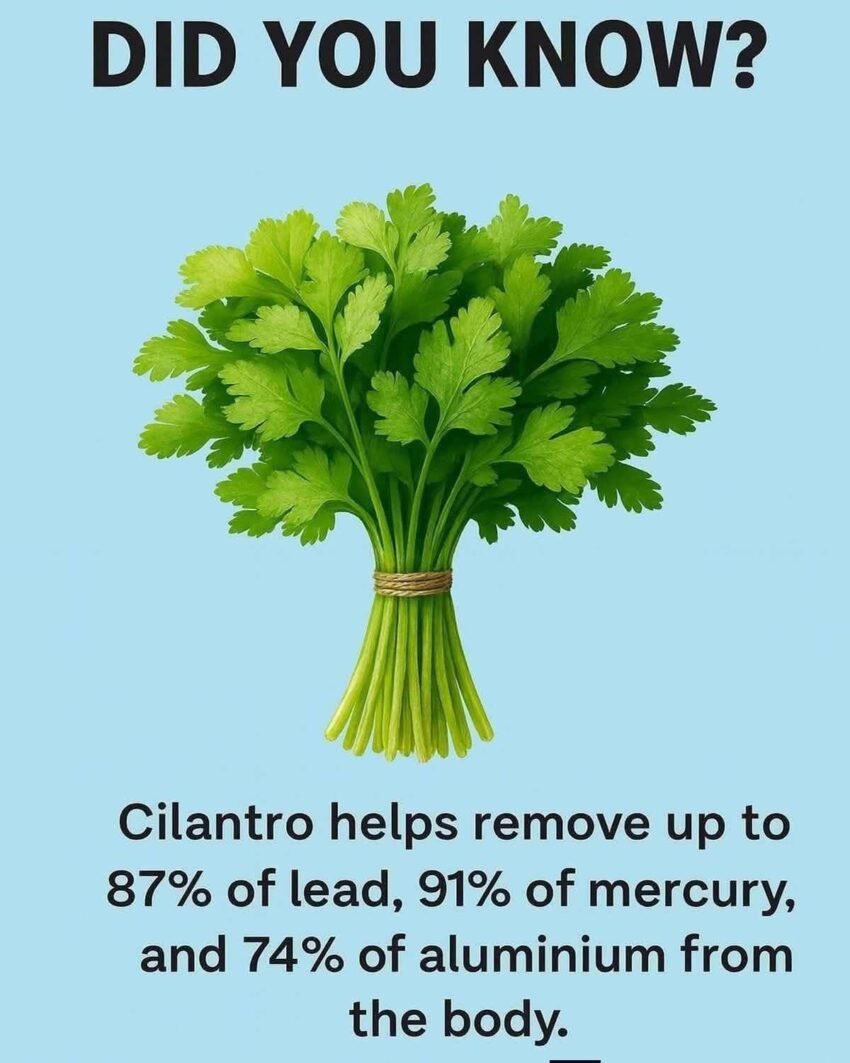
You’ve probably seen smoothies marketed as “heavy metal detox drinks” featuring cilantro.
Here’s what we know.
H3: Your Body Already Has a Detox System
Your body detoxifies naturally through:
-
The liver
-
The kidneys
-
The digestive tract
-
The lungs
These systems work around the clock to filter waste and eliminate toxins.
No herb replaces that function.
However…
H3: Where Cilantro Fits In
Some laboratory and animal studies suggest compounds in cilantro may bind to certain heavy metals like:
-
Lead
-
Mercury
-
Aluminum
This has led researchers to explore its potential supportive role in heavy metal elimination.
But here’s the important reality:
Large-scale human clinical trials are still limited.
That means cilantro may support detox pathways — but it should not be viewed as a standalone cleansing solution.
H2: Scientifically Supported Health Benefits
Let’s focus on benefits backed by stronger evidence.
H3: 1. Rich in Antioxidants
Cilantro contains polyphenols and flavonoids that help combat oxidative stress.
Oxidative stress is linked to:
-
Aging
-
Inflammation
-
Chronic disease risk
Adding antioxidant-rich foods to your diet supports long-term health.
H3: 2. Anti-Inflammatory Potential
Preliminary research indicates that coriander extracts may reduce inflammatory markers in controlled environments.
Chronic inflammation plays a role in many modern health conditions, so anti-inflammatory foods are valuable additions to your diet.
H3: 3. May Support Blood Sugar Balance
Some studies suggest coriander seed extract may assist in regulating blood glucose levels.
While fresh cilantro leaves are different from the seeds, both come from the same plant and share beneficial compounds.
H3: 4. Digestive Support
Traditionally, cilantro has been used to:
-
Reduce bloating
-
Ease indigestion
-
Stimulate appetite
Many cultures incorporate it into meals specifically for digestive comfort.
H2: Practical Ways to Add Cilantro to Your Diet
If you want benefits, consistency matters more than quantity.
Here are easy, realistic ways Americans can use cilantro daily:
✔ Fresh Salsa
Chop cilantro into tomato salsa for tacos or grilled chicken.
✔ Smoothies
Blend with spinach, pineapple, lemon, and ginger.
✔ Salads
Add chopped leaves to grain bowls or quinoa salads.
✔ Chimichurri Sauce
Combine cilantro, olive oil, garlic, and vinegar for a flavorful topping.
✔ Soups & Stews
Stir in at the end of cooking to preserve nutrients.
Pro tip: Add cilantro at the end of cooking. Heat can reduce its delicate flavor and some nutrients.
H2: Common Mistakes People Make
❌ Assuming More Is Better
Mega-dosing herbs doesn’t accelerate results.
❌ Relying on Cilantro Alone for “Detox”
A balanced diet, hydration, sleep, and exercise matter far more.
❌ Ignoring Food Safety
Always wash fresh herbs thoroughly to remove pesticides and bacteria.
❌ Using Unregulated Supplements
Stick to reputable brands if purchasing extracts.
H2: Who Should Be Cautious?
Most people can safely eat cilantro as a food.
However:
-
Individuals with herb allergies should be cautious.
-
Those on blood-thinning medications should consult a healthcare provider (due to vitamin K content).
-
Pregnant or breastfeeding individuals should speak with a medical professional before using concentrated supplements.
When used in normal culinary amounts, cilantro is generally considered safe.
H2: Cilantro vs. Coriander Seeds — What’s the Difference?
Although they come from the same plant, their uses differ:
| Cilantro (Leaves) | Coriander (Seeds) |
|---|---|
| Fresh, citrusy flavor | Warm, nutty flavor |
| Used in salsas & salads | Used in spice blends |
| Rich in vitamin K | Rich in essential oils |
Both offer unique benefits.
H2: The Growing Popularity of Herbal Wellness in the U.S.
Americans are increasingly turning toward food-based wellness strategies.
Instead of extreme cleanses, people are focusing on:
-
Whole foods
-
Antioxidant-rich plants
-
Functional herbs
-
Sustainable habits
Cilantro fits perfectly into this trend because it’s:
-
Affordable
-
Accessible
-
Easy to incorporate
-
Backed by emerging research
H2: Frequently Asked Questions
1. Can cilantro remove heavy metals from the body?
Some early studies suggest potential binding properties, but strong human evidence is limited.
2. How much cilantro should I eat daily?
There is no official dosage. Culinary use in meals is safe for most people.
3. Is cilantro better raw or cooked?
Raw preserves more nutrients and flavor.
4. Does cilantro help with bloating?
Traditionally it has been used for digestive support.
5. Can cilantro lower blood sugar?
Some research suggests coriander extracts may help, but it should not replace medical treatment.
6. Why does cilantro taste like soap to some people?
Genetic variations in smell receptors can influence perception.
7. Is cilantro safe every day?
Yes, in normal food amounts.
8. Are cilantro supplements effective?
Evidence is limited; consult a healthcare professional.
9. Does cilantro help with weight loss?
There’s no direct evidence it causes weight loss, but it supports a healthy diet.
Conclusion: A Small Herb with Big Potential
Cilantro may not be a miracle cure — and it shouldn’t be marketed as one.
But it is:
-
Nutrient-rich
-
Antioxidant-packed
-
Traditionally valued
-
Supported by emerging research
When combined with a balanced diet and healthy lifestyle, this simple green herb can absolutely play a supportive role in overall wellness.
Instead of chasing extreme detox trends, focus on sustainable habits.
Add fresh herbs. Eat whole foods. Stay hydrated. Sleep well.
If you found this guide helpful, share it with someone who loves healthy cooking — or someone who still thinks cilantro is “just a garnish.”
Want more evidence-based wellness breakdowns? Let me know what topic you’d like next.