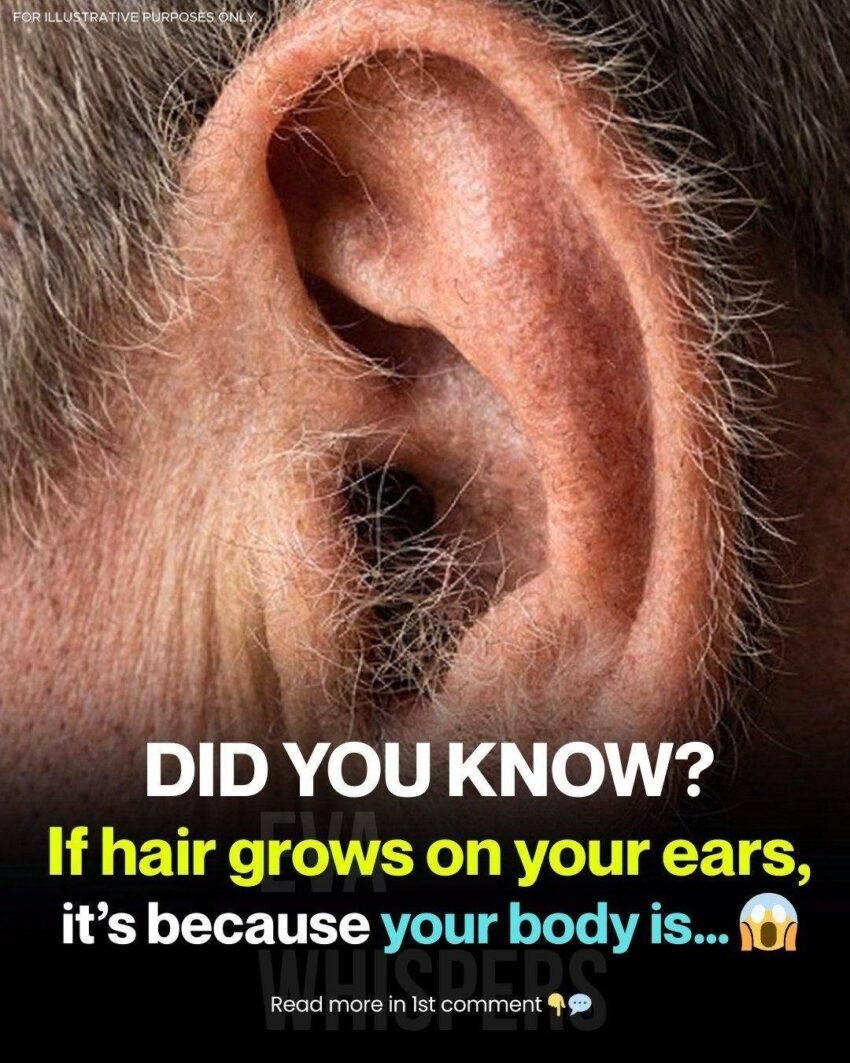
Did You Know? If Hair Grows on Your Ears, It’s Because Your Body Is…
Discover why ear hair appears, what it signals about your health, and safe ways to manage it naturally. Surprising facts backed by experts.
Have you ever noticed hair growing on your ears and wondered why it’s happening? Most people dismiss it as just a cosmetic issue, but in reality, ear hair can reveal interesting insights about your body’s health—especially as you age.
Why Ear Hair Appears
Ear hair growth is natural, but its intensity can vary depending on several factors:
1. Hormonal Changes
-
Testosterone levels can influence hair growth in men and women
-
Increased androgens may trigger hair growth in unusual areas, like ears, nose, or eyebrows
2. Aging
-
As people age, hair follicles respond differently to hormones
-
Ear hair tends to become thicker and more noticeable after 50
3. Genetics
-
Some families are more prone to ear hair growth
-
Genetics determine where and how much hair grows
4. Health Signals
-
In some cases, excessive hair growth could indicate hormonal imbalance
-
Rarely, it may signal metabolic or endocrine issues
Most of the time, ear hair is a normal sign of aging, especially in men, and isn’t dangerous.
Is Ear Hair a Health Concern?
Generally, no. Ear hair itself does not indicate disease. But if you notice:
-
Sudden increase in hair growth
-
Other unusual symptoms like fatigue, weight changes, or skin changes
…it’s worth consulting a healthcare provider to rule out hormonal imbalances.
How to Manage Ear Hair
1. Trimming
-
Use safe ear hair trimmers designed for small areas
-
Avoid scissors or sharp objects inside the ear
2. Waxing or Threading
-
Can remove hair from the external ear safely
-
Only done by trained professionals
3. Laser Hair Removal
-
Effective for long-term reduction
-
Consult a dermatologist or licensed clinic
4. Acceptance
-
Ear hair is a normal part of aging
-
Many choose to leave it alone; it does not affect health
Fun Facts About Ear Hair
-
Men are more likely than women to have thicker ear hair
-
It’s thought that ear and nose hair help trap dust and bacteria, protecting the inner ear
-
Some cultures consider ear hair a symbol of wisdom or longevity
FAQs About Ear Hair
1. Does ear hair grow faster with age?
Yes, hormonal changes in men and women can accelerate growth after 50.
2. Can women get ear hair?
Yes, but it is usually thinner and less noticeable.
3. Is it safe to pluck ear hair?
Occasionally yes, but avoid deep plucking to prevent irritation or infection.
4. Can diet or supplements affect ear hair?
Not directly; growth is mostly hormonal and genetic.
5. Should I see a doctor for ear hair?
Only if growth is sudden, excessive, or accompanied by other symptoms.
Ear hair is a natural part of the aging process, influenced by hormones, genetics, and health.
-
Usually harmless and more cosmetic than medical
-
Safe trimming or professional removal is recommended for appearance
-
Excessive or sudden growth can sometimes signal hormonal changes, so monitoring is wise
So next time you notice it, remember: your body is just adapting naturally, and ear hair is nothing to fear—just a little quirk of human biology.