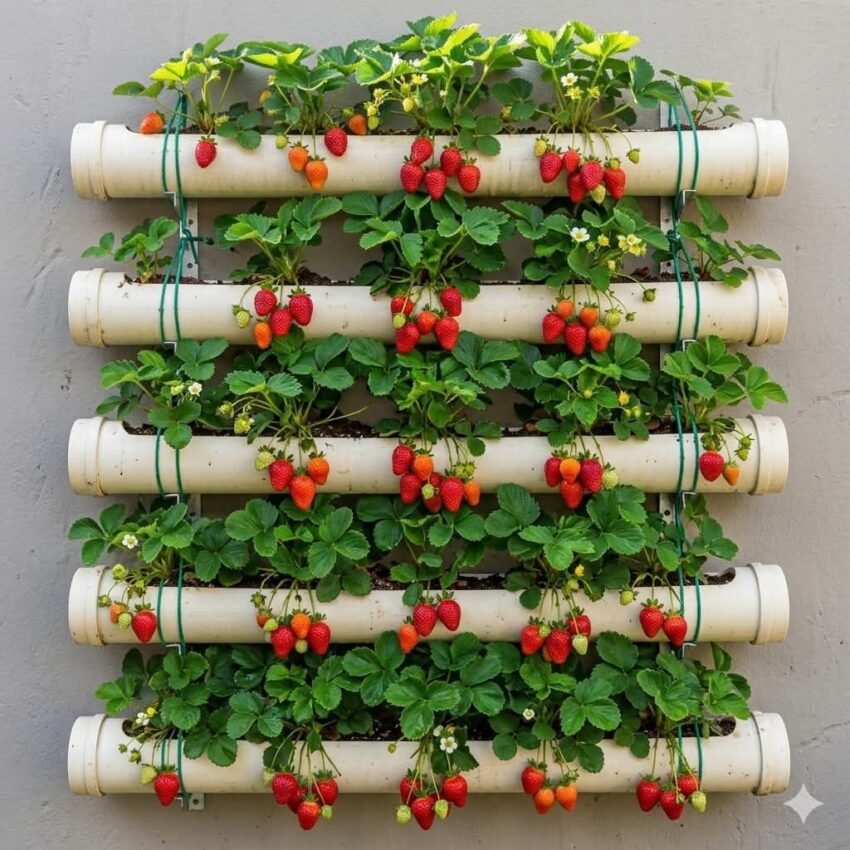
How to Build a Vertical Strawberry Garden Using PVC Pipes (Step-by-Step Guide for Bigger Harvests in Small Spaces)
Learn how to build a vertical strawberry garden using PVC pipes with this step-by-step US-friendly guide. Save space, boost yield, and grow cleaner fruit.
The Backyard Problem Most Strawberry Growers Face
If you’ve ever tried growing strawberries in a traditional garden bed, you already know the struggle.
They spread everywhere.
They get muddy.
They attract pests.
And somehow… you still don’t get as many berries as you expected.
Now imagine stepping outside to a clean, compact tower filled with ripe, bright-red strawberries—easy to pick, elevated off the ground, and thriving in a small space.
That’s exactly what a vertical PVC strawberry garden can do.
Whether you live in a suburban home in Ohio, a townhouse in California, or an apartment with a patio in Texas, this method is one of the most efficient ways to grow strawberries in the United States today.
In this guide, you’ll learn not just how to build one—but how to make it thrive season after season.
What Is a Vertical Strawberry Garden Using PVC Pipes?
A vertical strawberry garden is a space-saving planting system where strawberries grow in openings along upright PVC pipes filled with soil.
Instead of spreading across the ground, the plants grow vertically, allowing:
- More plants in less space
- Better air circulation
- Cleaner fruit
- Easier harvesting
Think of it as turning a single square foot into a multi-level growing system.
Why This Method Works So Well in the United States
Vertical gardening isn’t just trendy—it solves real problems specific to American gardeners.
1. Limited Space in Urban & Suburban Homes
Many US homeowners deal with:
- Small yards
- HOA restrictions
- Limited garden beds
A vertical system fits on patios, decks, or even balconies.
2. Better Pest Control
Ground-grown strawberries attract:
- Slugs
- Snails
- Soil-borne diseases
Elevating plants reduces these risks significantly.
3. Climate Adaptability
From Florida heat to Midwest frost, PVC systems:
- Drain well in rainy climates
- Warm up faster in spring
- Can be moved or insulated in winter
4. Water Efficiency
With proper setup, water flows downward through the system, reducing waste—a growing concern in drought-prone states like California and Arizona.
Materials You’ll Need
Before starting, gather everything. Most of these are available at hardware stores like Home Depot or Lowe’s.
Essential Materials
- 4–6 inch diameter PVC pipe (4–5 feet tall)
- End cap for the bottom
- Drill with hole saw attachment (2–3 inch holes)
- Potting mix (lightweight, well-draining)
- Strawberry plants (June-bearing or everbearing)
- Gravel or small stones (for drainage)
- Watering pipe (optional but recommended)
- Zip ties or brackets for support
Optional Upgrades
- Drip irrigation kit
- Organic fertilizer
- UV-resistant paint (to prevent overheating)
Step-by-Step: How to Build Your Vertical Strawberry Garden
Step 1: Cut and Prepare the PVC Pipe
Choose a height that fits your space—typically 4 to 5 feet.
- Mark hole spots in a staggered pattern
- Leave 6–8 inches between holes
- Avoid placing holes directly above each other
This spacing prevents overcrowding and ensures each plant gets sunlight.
Step 2: Drill Planting Holes
Using a hole saw:
- Cut 2–3 inch openings
- Smooth edges to prevent plant damage
Pro Tip: Slightly angle the holes upward so soil doesn’t fall out easily.
Step 3: Create a Drainage Base
At the bottom of the pipe:
- Attach the end cap
- Add 2–3 inches of gravel
This prevents root rot—one of the most common causes of failure.
Step 4: Install a Watering System (Game-Changer)
Insert a smaller perforated pipe inside the main pipe.
- Drill tiny holes along its length
- Wrap with landscape fabric
This allows water to distribute evenly from the inside out.
Without this step, top plants often thrive while bottom ones struggle.
Step 5: Fill with Soil and Plant
Start layering:
- Add soil
- Insert plants through holes
- Continue upward
Gently spread roots inside the pipe.
Best soil mix:
- 60% potting soil
- 30% compost
- 10% perlite
Step 6: Secure the Structure
Vertical systems can tip over.
Secure your pipe:
- Attach to a fence
- Use a heavy base
- Anchor with brackets
Safety matters—especially in windy states.
Step 7: Water Thoroughly
Water from the top and through the inner pipe.
You’ll notice water trickling down—this ensures all levels are hydrated.
Best Strawberry Varieties for Vertical Gardens
Not all strawberries perform equally in vertical systems.
Top Picks for US Growers
Everbearing varieties (best for beginners):
- Albion
- Seascape
- Quinault
Why they work:
- Produce fruit multiple times per season
- Compact growth habit
- Adapt well to containers
Real-World Example: Small Backyard Success
A homeowner in Denver converted a 3×3 foot patio corner into a vertical strawberry setup using three PVC towers.
Results after one season:
- Over 8 pounds of strawberries
- Minimal pest issues
- 70% less watering compared to ground beds
The biggest surprise?
Harvesting took minutes instead of bending over for half an hour.
Pros and Cons (Honest Breakdown)
Pros
- Saves space dramatically
- Cleaner fruit
- Easier harvesting
- Reduced pest exposure
- Efficient water usage
Cons
- Requires careful watering setup
- Can dry out faster in hot climates
- Initial setup takes effort
- PVC may heat up in extreme sun
Common Beginner Mistakes (And How to Avoid Them)
1. Using Garden Soil Instead of Potting Mix
Heavy soil compacts and suffocates roots.
Fix: Always use lightweight potting mix.
2. Skipping the Internal Watering Pipe
This leads to uneven growth.
Fix: Install a simple irrigation tube—it’s worth it.
3. Overcrowding Plants
Too many plants = smaller berries.
Fix: Stick to proper spacing.
4. Ignoring Sunlight
Strawberries need 6–8 hours of sun daily.
Fix: Place your system in full sun.
5. Not Anchoring the Structure
A strong wind can topple your garden.
Fix: Always secure it.
Expert Tips Most People Don’t Know
- Rotate your pipe weekly for even sunlight exposure
- Use reflective surfaces nearby to boost light
- Add mulch at openings to retain moisture
- Paint pipes white in hot states to prevent overheating
- Feed with liquid fertilizer every 2–3 weeks
2026 Trends in Vertical Gardening
Vertical gardening is evolving fast in the US.
What’s New:
- Smart drip irrigation systems
- Self-watering vertical towers
- Eco-friendly recycled materials replacing PVC
- Integration with hydroponics
According to recent urban gardening trends, vertical systems are becoming a standard solution for food-growing in small spaces.
Future Outlook: Is This Worth It Long-Term?
Absolutely.
As more Americans shift toward:
- Sustainable living
- Homegrown food
- Space-efficient gardening
Vertical systems are no longer a novelty—they’re becoming essential.
Expect more innovation, better materials, and even higher yields in the coming years.
Frequently Asked Questions (People Also Ask)
1. How many strawberry plants fit in one PVC pipe?
Typically 8–20 plants depending on pipe height and spacing.
2. How often should I water a vertical strawberry garden?
Usually every 1–2 days in warm weather; less in cooler climates.
3. Can I grow strawberries vertically indoors?
Yes, but you’ll need strong grow lights to replace sunlight.
4. Do strawberries grow well in PVC pipes?
Yes—if drainage, soil, and watering are properly managed.
5. How long do strawberry plants last in this system?
Most produce well for 2–3 years before needing replacement.
6. Is PVC safe for growing food?
Food-grade PVC is generally considered safe for gardening.
7. What’s the best fertilizer for vertical strawberries?
Balanced liquid fertilizer (10-10-10) works well.
8. Can I use recycled PVC pipes?
Yes, as long as they’re clean and non-toxic.
9. Do vertical gardens produce more strawberries?
They can produce more per square foot—not necessarily per plant.
10. Can I use this system for other plants?
Absolutely—lettuce, herbs, and even small peppers work well.
Action Checklist: Build Your Vertical Strawberry Garden
Before you start, run through this quick checklist:
- ✔ Choose a sunny location (6–8 hours daily)
- ✔ Use 4–6 inch PVC pipe
- ✔ Drill staggered holes
- ✔ Add gravel at the base
- ✔ Install internal watering pipe
- ✔ Use high-quality potting mix
- ✔ Select everbearing strawberry varieties
- ✔ Anchor your structure securely
- ✔ Water consistently
- ✔ Fertilize every few weeks
Final Thoughts: A Smarter Way to Grow Strawberries
Building a vertical strawberry garden isn’t just a DIY project—it’s a smarter, cleaner, and more efficient way to grow food at home.
It solves real problems: space, pests, maintenance, and yield.
And once it’s set up, it becomes one of the most satisfying systems you’ll ever use.
There’s something incredibly rewarding about stepping outside and picking fresh strawberries at eye level—no bending, no mess, just pure enjoyment.
A vertical PVC strawberry garden is one of the best investments you can make for small-space gardening in the United States.
It’s practical.
It’s scalable.
And it works.
If you’re thinking about building one, start small. Try a single pipe. Learn how it behaves in your climate. Then expand.
And if you’ve already tried this method—or plan to—share your experience. What worked? What didn’t?
Your insights might help someone else grow their first successful harvest.